Exploring the Impact of Generative AI on Graduate Education at the University of Michigan
The University of Michigan recently hosted a significant discussion on the implications of Generative AI in graduate education, highlighting both opportunities and challenges. This event attracted nearly 150 faculty, staff, and academic leaders to the Michigan Union on May 13, marking a continuation of a conversation that began the previous November.
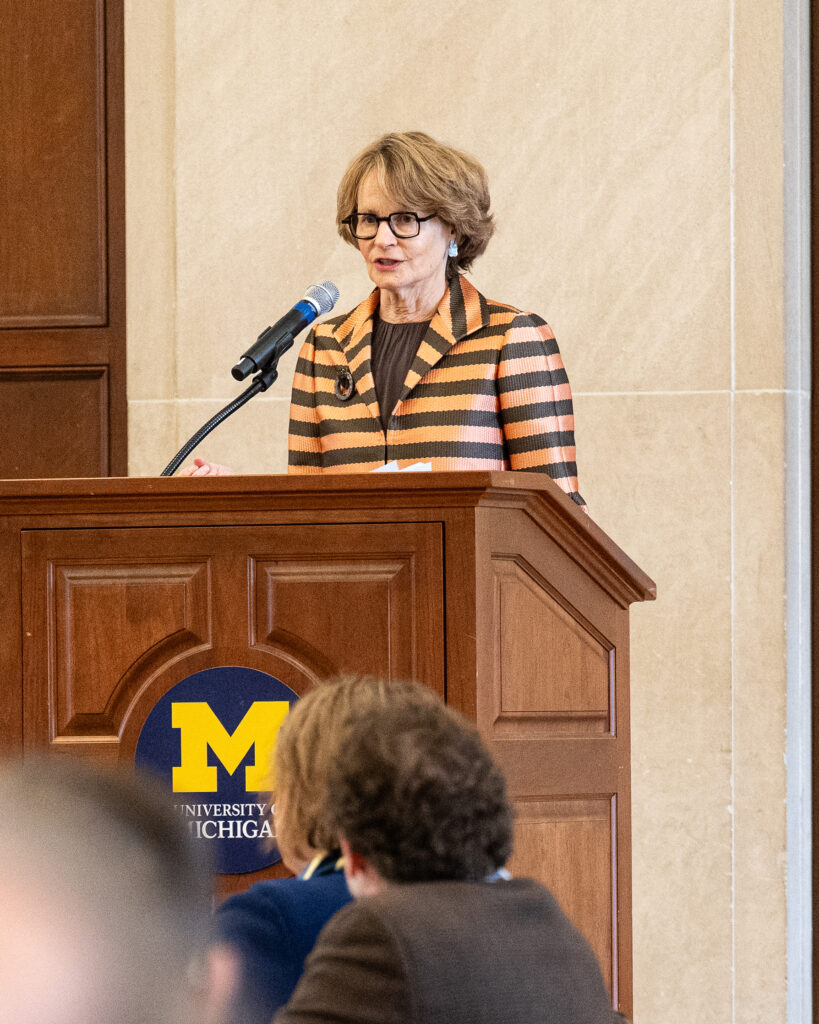
The Provost’s Seminar on Teaching, co-organized by the Provost’s Office and the Center for Research on Learning and Teaching (CRLT), offered a platform for dialogue on how this new technology is reshaping the educational landscape for graduate students. Laurie McCauley, provost and executive vice president for academic affairs, posed a thought-provoking question to attendees, asking, “Which parts of graduate education really matter, and why?”
Matt Kaplan, associate vice provost, learning and teaching, and executive director of CRLT, opened the seminar by acknowledging the complexity of incorporating GenAI into graduate education due to the diverse roles graduate students play. Kaplan noted, “It became clear that this is in many ways a more complex topic [than GenAI in undergraduate education], given the multiple roles played by graduate students.”
McCauley emphasized the need for more than just policy or technical discussions, stating, “A moment like this requires more than a policy conversation, although we know policy matters. It requires more than a technology conversation, although technical understanding also matters.” She underscored the importance of cultivating intellectual habits that encourage responsible use of AI, while maintaining authentic human cognitive processes.
An expert panel, led by Michael Solomon, vice provost for graduate studies and dean of the Rackham Graduate School, delved into historical changes in education and shared insights from a working group of graduate students focused on AI. The panel included:
- Ann Austin, University Distinguished Professor of Higher, Adult, and Lifelong Education at Michigan State University
- John Carson, associate professor of history, LSA
- Keanu Heydari, PhD candidate in history, LSA
- Nigel Melville, associate professor of technology and operations, Stephen M. Ross School of Business
Austin highlighted the transformative nature of the current period, drawing parallels to post-World War II changes in higher education. She noted the increased skepticism and polarization affecting higher education, along with changing dynamics between educational institutions and the federal government.
Heydari provided insights from the AI working group, revealing that while less than 20% of students used AI for writing assistance, over 50% used it for ideation and execution tasks like brainstorming and data analysis. He mentioned an “uneven baseline” in AI preparedness among students and instructors, complicating the transition.
Melville stressed the importance of developing informed perspectives on AI, remarking, “We all have a responsibility to develop an informed and educated point of view about AI.” He also highlighted that graduate students often possess more knowledge about GenAI than their professors, advocating for a collaborative and humble approach to learning.
Carson referenced the dual nature of AI’s impact, citing Dickens’ “It was the best of times, it was the worst of times,” to illustrate how AI’s efficiency can have both positive and negative effects. He encouraged educators to resist the pressure for rapid answers, emphasizing that meaningful work requires time.
Subsequent roundtable discussions focused on the various roles of graduate students at U-M, exploring the impacts of GenAI on their roles as learners, teachers, researchers, and participants in experiential settings. These sessions, facilitated by CRLT consultants, captured suggestions and concerns, which were later shared with attendees via posters during lunch.
The event concluded with an interactive session with Dean Solomon, where faculty highlighted key points from their discussions. In the coming days, CRLT plans to release a video of the panel discussion and a summary of the roundtable conversations for further reflection and guidance.