Exploring Technology’s Role in Bridging Political Divides
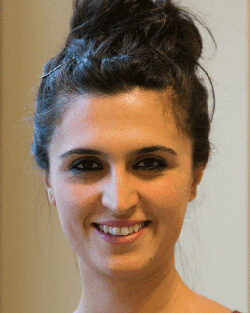
In a landscape where political polarization influences much of online and offline interactions, a notable initiative aims to harness technology to mend these divides. This endeavor is championed by Ceren Budak, an associate professor at the University of Michigan, who has been recognized as one of the latest Andrew Carnegie Fellows.
Budak, who specializes in information, electrical engineering, and computer science, joins a group of 24 distinguished scholars. Each fellow will receive a substantial $200,000 research grant to delve into the roots of political polarization and explore potential remedies.

“I am honored to be named an Andrew Carnegie Fellow,” Budak expressed. Her roles extend to serving as associate director of the Center for Social Media Responsibility and as a faculty fellow at the Center for Political Studies at the Institute for Social Research.
With a background in computational social science, Budak’s research focuses on public discourse and group behaviors on digital platforms, emphasizing political polarization, misinformation, and collective action. Her methodological approach combines large-scale experiments, machine learning, and network science.
Her scholarly contributions have been featured in top-tier journals spanning various disciplines, including general science, computer science, and political science. Budak has led significant multi-institutional studies on the impact of social media interventions. She also contributed to a National Academies of Sciences, Engineering, and Medicine committee exploring social media’s effects on youth and was a faculty fellow at Stanford University’s Center for Advanced Study in the Behavioral Sciences for 2023-24.
The project titled “User Agency and the Trade-offs of Reducing Polarization Online” extends her research, focusing on how algorithmic interventions differ in effectiveness across individuals and platforms and the trade-offs they present. Budak criticizes the oversimplified narratives often seen in public discussions about social media and polarization, stating, “The discourse oversimplifies a complex problem, leading to ineffective allocation of attention and resources.”
Budak aims to create educational resources based on rigorous scholarship to enlighten the public on the complexities and trade-offs of social media interventions. “Most such interventions have also been top-down, designed by researchers or platforms without user or community input,” she notes, expressing enthusiasm for testing a model that empowers users and communities to address these challenges independently.
Since 2024, Carnegie has allocated $18 million to support research on polarization, funding 78 fellows. This initiative allows scholars to take sabbaticals of up to two years to focus on their research endeavors.
“Andrew Carnegie saw it as his mission to encourage, in the broadest and most liberal manner, investigations, research, and discovery, and the application of knowledge to the improvement of mankind,” stated Dame Louise Richardson, president of Carnegie Corp. of New York and chair of the Andrew Carnegie Fellows jury. “Through support of our fellows, we are continuing that mission and seeking to harness the insights of scholars of all ages, stages, and disciplines to help us understand the nature of political polarization in the United States today and to devise a means of mitigating its impact on American society.”