Viola Smith, a pioneering drummer, captivated audiences with her extraordinary talent and broke barriers in a male-dominated field. Her illustrious career lasted nearly a century, leaving an indelible mark on the music world.
Author Dean Robbins retraces her roots in Fond du Lac County, bringing her story to life in a children’s picture book, “The Fastest Drummer: Clap Your Hands for Viola Smith!”
From Small Town Beginnings to National Recognition
Despite its small population, the town of Mount Calvary, Wisconsin, witnessed the rise of a drumming sensation born in 1912—Viola Smith. Her legacy remains alive among locals who still revere her name today.
Her journey began with the family orchestra, led by her father who owned a ballroom in Mount Calvary. He initiated the Smith Sisters Orchestra, a jazz ensemble featuring a variety of instruments. At the age of 13, Viola joined the band, filling the crucial role of drummer in a family lineup that was missing percussion.
“He had these eight girls all playing piano, and then he’d put them on different instruments, and I was so lucky to be the sixth one. As the sixth one, I was the drummer,” Smith recalled in the “Women in Rock Oral History Project.”
Six members of the Schmitz Sisters Orchestra of Mt. Calvary, Wisconsin, pose with their instruments. The group later changed their name to the Smith Sisters Orchestra. Viola Smith is on the left at the drums. (Courtesy of University of Wisconsin’s Mills Music Library)
Her passion for drumming ignited when she first struck the snare and cymbals. This enthusiasm drove her and her sisters to tour as an all-female band across Wisconsin fairs and vaudeville stages in the 1920s.
Breaking Barriers and Innovating in Jazz
As her sisters moved on from music, Viola’s determination to continue was met with challenges, as female instrumentalists were often excluded from male-dominated orchestras. In response, she and her sister Mildred founded The Coquettes in 1939, a women’s jazz band that showcased her dynamic drumming style.
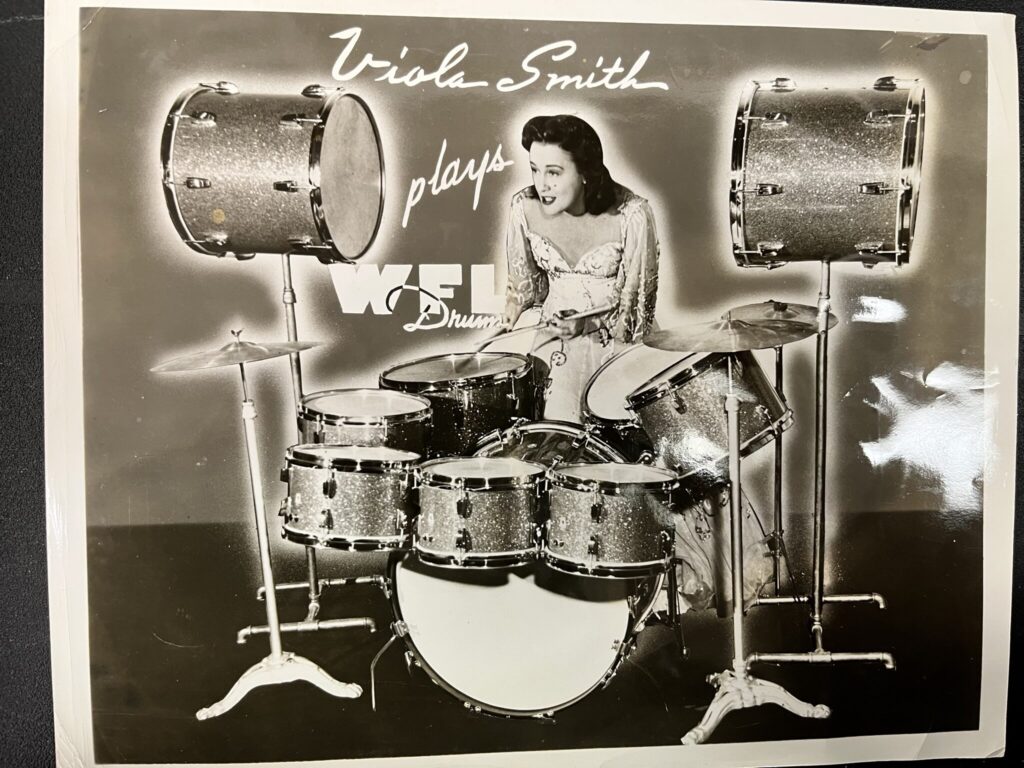
Her innovative approach included a twelve-piece drum kit positioned on a high platform, complete with tom-toms towering over her shoulders. Audiences were mesmerized by Smith’s rapid rhythms and her dramatic stick toss and catch finale.
Her prowess earned her the title “The Fastest Girl Drummer in the World,” and in 1940, she graced the cover of “Billboard” magazine.
“I was doing something that no one else was doing, and that’s what helped me a lot, I’m sure,” Smith reflected in the “Women In Rock Oral History Project” interview in 2021.
Advocacy and Recognition
During World War II, with many male musicians enlisted, Viola advocated for female musicians through her 1942 “Down Beat” magazine article “Give Girl Musicians a Break!” This piece encouraged bandleaders to consider female talent.
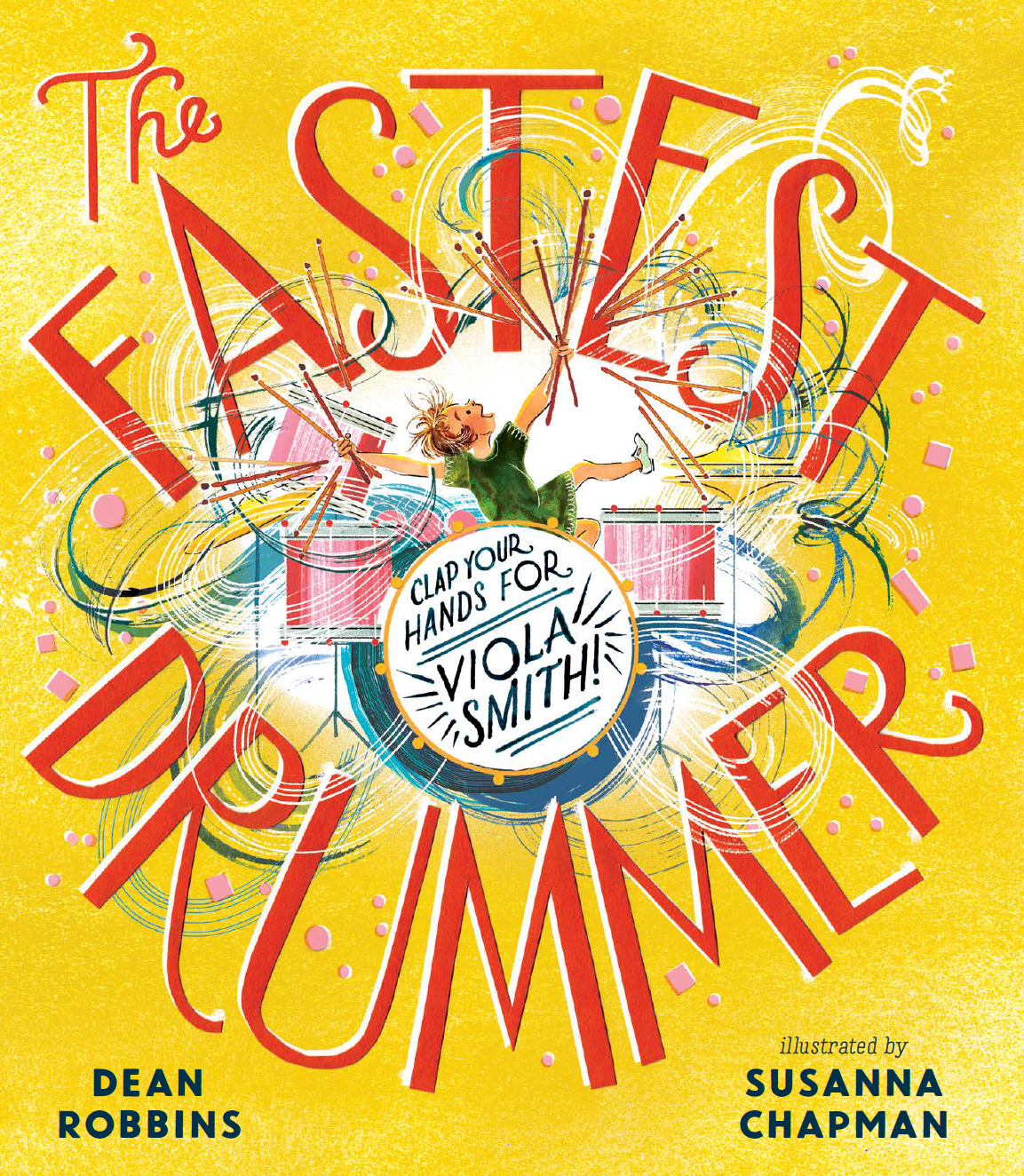
The cover of the children’s picture book, “The Fastest Drummer: Clap Your Hands for Viola Smith!” by Madison author Dean Robbins. (Courtesy of Dean Robbins)
“Oh, the girl musicians were so happy about it, because I mentioned so many girls’ names, all the girls I knew. Good musicians!” Smith said.
Viola’s career included solo performances with a spectacular seventeen-piece drum kit, classical studies at Juilliard, and a role as timpanist with the National Symphony Orchestra.
The Lincoln Center for the Arts recognized her as a jazz legend in 2000. Viola continued drumming past 100 years of age, challenging age-related stereotypes, until her passing in 2020 at 107. She remains a source of inspiration for countless female musicians.
“It was all fun. Drumming is fun,” she reflected on her enduring passion.
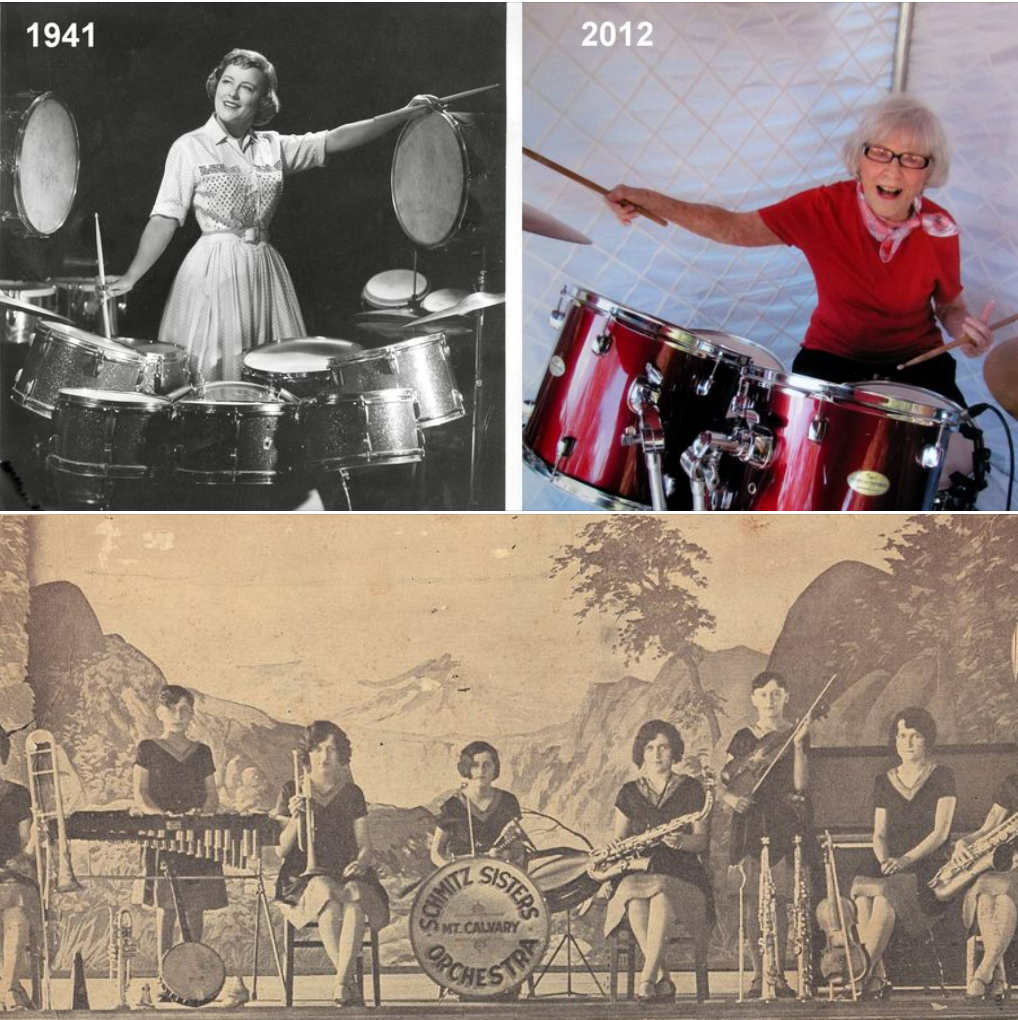
A photo montage of Viola Smith throughout her career, which spanned nearly 100 years. (Courtesy of Malone Area Heritage Museum)