Elementary Students Learn Financial Skills Through School Banking Program
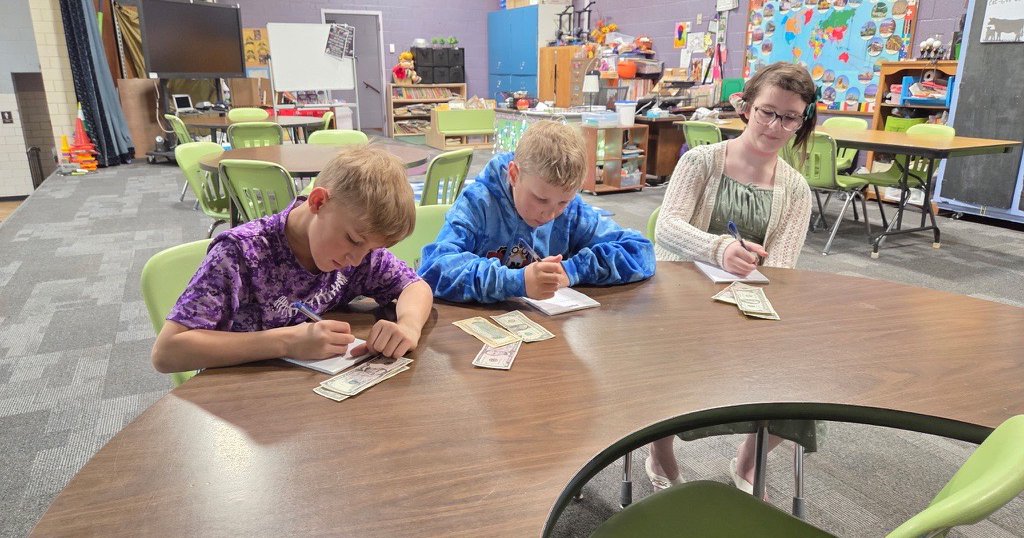
At Garden County Elementary in Oshkosh, Nebraska, financial literacy is taking root early. Every Thursday, a trio of fifth graders runs the Eagle Branch, a school bank where peers can deposit their savings. This initiative is part of a broader effort to instill financial knowledge in young students.
Assistant Principal Emily Russell notes that even the youngest students, some as young as kindergarten, participate eagerly. “Sometimes they’ll bring in their tooth fairy money, or they’ll just bring in change they found or they got for Easter,” Russell shared, highlighting the enthusiasm for saving.
April marks Financial Literacy Month, and schools across Nebraska, including Garden County, have embraced the occasion by enhancing financial literacy education. This is achieved through collaborations with local banks, establishing in-school savings programs. Since its inception in 2002, the initiative has expanded to include 90 school-bank partnerships, according to Jennifer Davidson, president of the Nebraska Council on Economic Education.
“I get to work with the best teachers across the state of Nebraska, and our bankers across the state are just so wonderful,” Davidson said. “They’re really in it for the right reasons. They’re really about the education and wanting to do something for their community, and it is just such a joy to get to do this work day-in and day-out.”
Davidson’s research into the program reveals that students involved are more likely to maintain their own checking accounts and develop regular saving habits.
Each participating school partners with a local bank. At Garden County Elementary, the collaboration is with Nebraska State Bank. The bank and the school track deposits made by students, who earn rewards such as small toys or treats instead of interest.
By the conclusion of their fifth-grade year, students receive a check reflecting their total savings during their elementary tenure. Russell emphasizes the program’s goal: “We know a lot of students, lot of young kids, as soon as they get money in their hands, the first thing they want to do is go spend it, and usually on candy or something like that. So what we do is we tell them the importance of what you can do if you save it.”
Denise Callihan from Nebraska State Bank describes the partnership as a community engagement opportunity that teaches children about the power of saving. “For them to realize that even if you save $1 or $2 or $3, it does add up in the end,” Callihan explained.
Fifth-grade students have the chance to apply for the role of teller at the school branch. This involves a basic application, a demonstration of math skills, and an interview. Hannah Rockafellow, also from Nebraska State Bank, notes the responsibilities undertaken by the tellers. “They have to take the money from the students who are depositing,” Rockafellow said. “They write, essentially it’s a deposit slip that they’re writing out for each student. Then, they’re balancing their checkbook to make sure that their balance follows what we have listed at the bank in our spreadsheet.”
Overall, the program encourages students to think about future financial goals, whether saving for college, their first car, or even a drone. Rockafellow adds, “It just brings a perspective to the students for them to start thinking about college, saving for their first car. Some students have in mind that they want to buy a drone with their savings from the Eagle Branch, so just to get them starting to think about money and truly saving it for their future.”