Nevada, known for its vast and remote landscapes, is increasingly becoming a destination for stargazers. The recent buzz around the Artemis II mission has shone a spotlight on the state’s unique position, emphasizing its status as one of the darkest areas in the United States.
Pam duPre- Friends of Nevada Wilderness
Pam duPre from the Friends of Nevada Wilderness highlights the state’s potential for stargazing thanks to its expansive open spaces and dry, high desert air. However, these advantages are overshadowed by urban lighting.
“With our wide open spaces, our sparse rural population, and our dry, high desert air, we can see more stars on a clear night than about 90% of the country’s population,” duPre remarked. “But that is only if we venture out of our urban areas. And that’s because of all of the artificial light in our residential and commercial areas, which is not dark sky-friendly.”
Beyond obstructing views of the night sky, artificial lighting affects both human and environmental health.
“We’re all impacted: wildlife, plants, birds, humans,” duPre noted. “Our health and our ability to thrive are being compromised because we have all these lights on all night long. And so what we’re trying to do is help educate the public about all the many benefits of turning down the lights. You don’t have to turn them off necessarily, but turn them down.”
Efforts to combat light pollution are being championed by initiatives like the Nevada Starry Skies Certification Program, led by Chelsea Kincheloe from the Nevada division of Outdoor Recreation. This program aims to encourage communities to adopt better lighting practices.

“We are looking to implement the five principles of responsible outdoor lighting, which means we want to have like nice warm tones, shielded lights, dimmers, timers, and overall just making sure that our lights are pointed down on the ground where they need to be,” Kincheloe explained.
Jordan Stone, Vice President of the Astronomical Society of Nevada, highlighted that a significant portion of outdoor lighting is inefficient.
“A lot of our light is unshielded,” he said. “I believe a statistic is 30% of the energy used for exterior illumination in the country is entirely wasted just into the sky. One of the things we like to say is it’s about dark sky, not about dark ground.”

Pam duPre- Friends of Nevada Wilderness
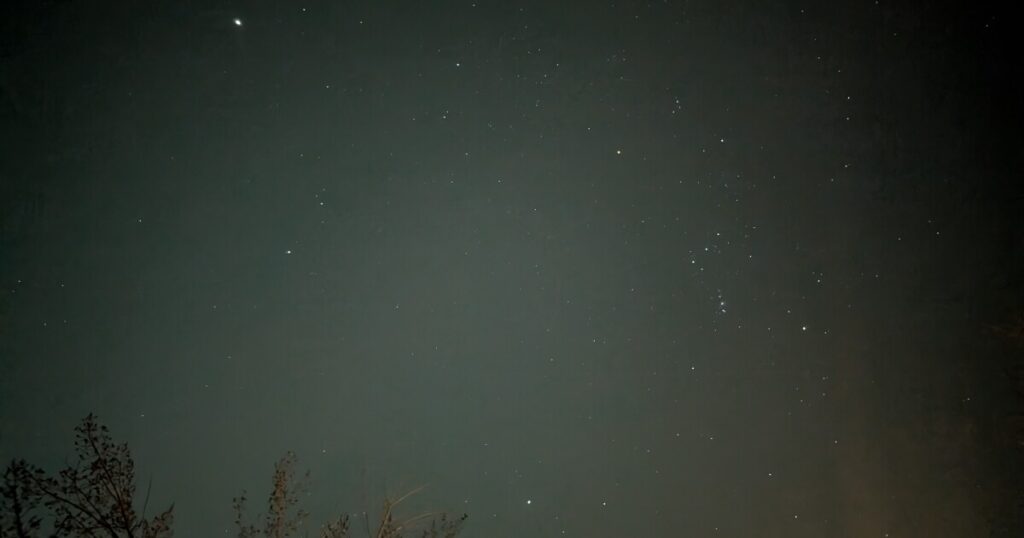
Bradley Cooper, president of the Astronomical Society, expressed concern over people’s unfamiliarity with truly dark skies. When individuals view images of the night sky, many assume they’re artificially generated.
“It’s surprising how often people are convinced that these are AI-generated, which shows you about people understanding and knowing what the night sky looks like,” Cooper observed. “Seeing the Milky Way for many people is a once-in-a-lifetime experience, which is really sad.”
Astrotourism, or traveling to experience stargazing, is on the rise in Nevada. DuPre emphasized the importance of preserving the state’s dark skies, which are a significant draw for tourists.
“Astrotourism is becoming more of an attraction for people who live in cities and states where they don’t have all of these dark skies. If they don’t ever get out of the city, they don’t know what they’re missing,” she added.
Kincheloe noted that the timing of the Artemis II mission, coinciding with International Dark Sky Week, has reignited public interest in the night sky.
“I kind of hope that is what they planned,” she said. “Our inner child is now looking up at the night sky again, renewed with this energy of just wonder and excitement about the night sky.”
For those eager to stargaze, experts recommend being patient and choosing the right time. The best conditions are during a new moon, with minimal moonlight interference. Kincheloe advises that no special equipment is needed; simply step outside, away from city lights, and allow your eyes 15 to 30 minutes to adjust.
Mark your calendars for Astronomy Day on April 25th, where members of the Astronomical Society will gather at the Fleischmann Planetarium to share insights on stargazing and the night sky.