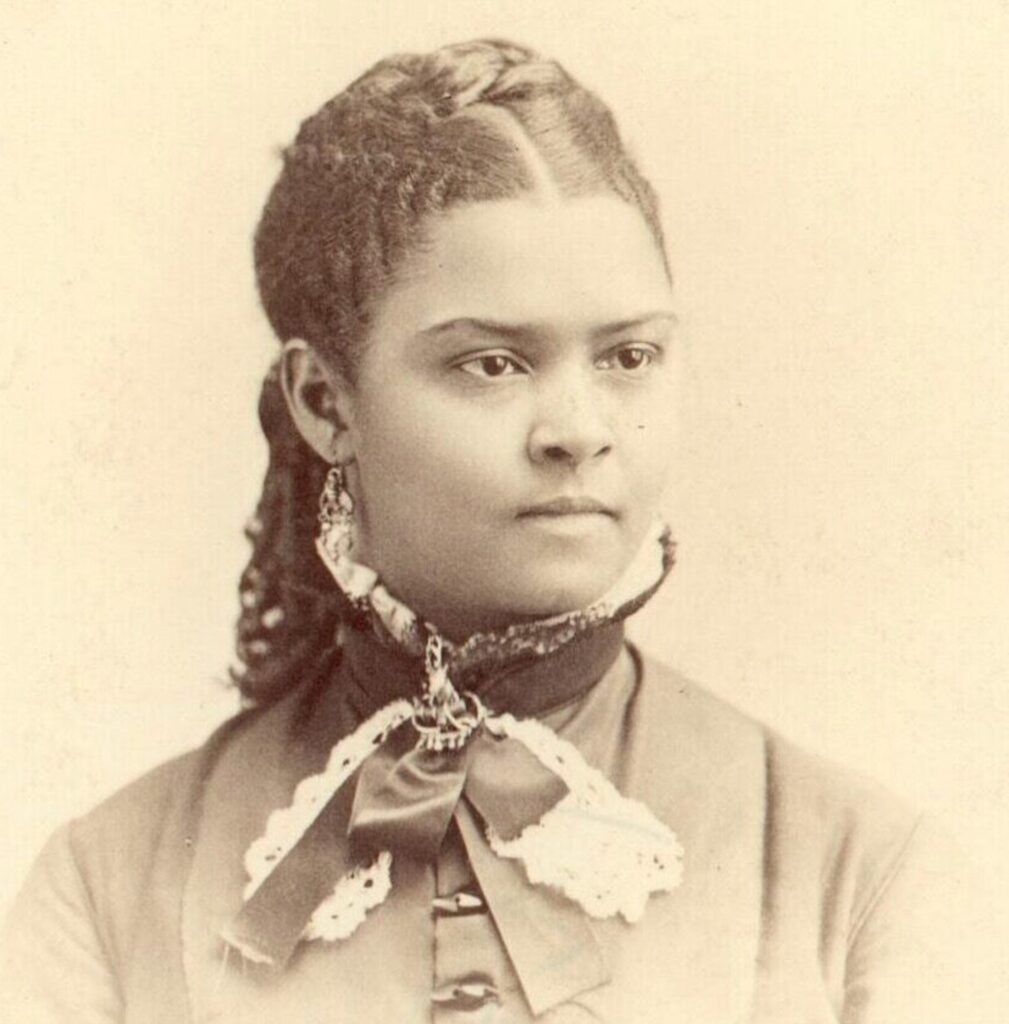
Trailblazer in Education: The Remarkable Journey of Mary “Mollie” Henrietta Graham
In an era when educational opportunities for Black women were exceedingly rare, Mary “Mollie” Henrietta Graham emerged as a pioneering figure. Aged 22, Graham was poised to graduate from the University of Michigan in the spring of 1880, marking a significant milestone as the first Black woman admitted to the institution. Her academic pursuits included Latin and science, alongside proficiency in German and French, with aspirations toward a career in journalism.

Born in Windsor, Ontario, in 1857, Graham was the daughter of Sarah, a white Englishwoman, and Levi, a Black man from Illinois who co-owned a grocery store in Windsor. As one of at least four siblings, Graham relocated to Flint as a teenager, although it remains uncertain if her family accompanied her.
Having graduated from Flint High School in 1876, Graham’s path led her to the University of Michigan, at a time when Black students were scarcely seen on its predominantly white, male campus. Her enrollment was facilitated by a policy granting automatic admission to graduates from Michigan’s certified high schools.
The Fenton Independent noted her pioneering status: “Miss Mary Graham, a young colored girl, who graduated from the Flint High School last month, intends entering the University next fall. She is the first applicant of that persuasion.” Her enrollment was formalized by U-M President James Burrill Angell on September 21, 1876.
Details of Graham’s student life are sparse, but records describe her as being 5 feet tall with braided dark hair. She resided in Ann Arbor with her mother and sisters, avoiding student organizations that excluded women, possibly due to shyness or a strategic low profile as the only Black woman present.
Upon graduating in 1880 with a Bachelor of Philosophy, Graham was lauded by the Ann Arbor Courier for her intellect and perseverance. “She has proven herself to be a person of unusual intellect and is entitled to much credit for her perseverance in pushing her way through the university,” the newspaper proclaimed.

Post-graduation, Graham embarked on a teaching career at Missouri’s Lincoln Institute, a post-Civil War institution for Black students. Her commitment saw her promoted to matron, supervising 60 young women within a year.
Graham’s journey took another turn when she returned to Ann Arbor to wed Ferdinand L. Barnett Jr., a graduate of Northwestern University and a distinguished lawyer and journalist in Chicago. Barnett was the founder of The Conservator, Chicago’s first Black newspaper, and led the National Colored Press Association. The couple settled in Chicago, where Graham Barnett thrived in the city’s vibrant Black community.
The Conservator praised her: “Mrs. Barnett has the reputation of being an accomplished scholar, a clever musician, and an agreeable lady,” emphasizing her welcome presence in Chicago’s social scene. She actively participated in church and social organizations, including the choir at St. Thomas Episcopal Church and the elite Prudence Crandall Club.
Graham Barnett balanced motherhood with her role at The Conservator, advancing from typography to editor in chief by 1888. Her dream of becoming a journalist was realized, placing her among the Black elite in one of the nation’s largest cities.
Tragically, Graham Barnett’s life was cut short in 1889 at the age of 31, believed to be due to heart disease. Her unexpected death left a deep void in her community and family, survived by her husband and two sons, Ferdinand III and Albert.
A Chicago publication lamented the loss: “No woman in Chicago was more useful in many ways and more beloved and appreciated.” An obituary declared, “At the time of her death, she was in the prime of useful vigorous life, the blow coming without a moment’s warning … During her short career of usefulness, she had come to be regarded not only as a woman of highest moral integrity, but of splendid ability and brilliant promise.”
— By Kim Clarke, for the Heritage Project. A longer version of this story may be found online at myumi.ch/rARn6.