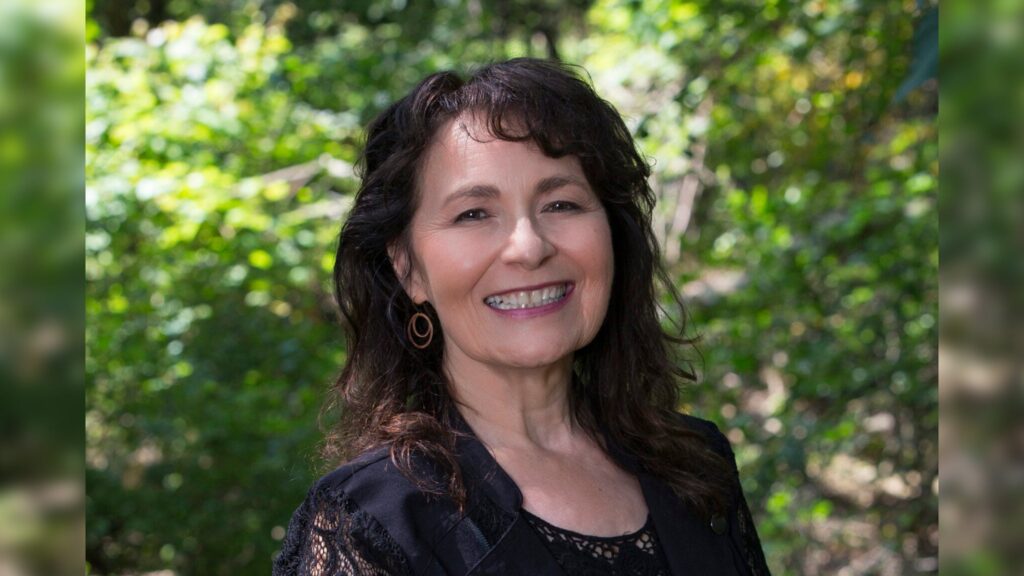
Kimberly Blaeser, an influential voice in poetry and former poet laureate of Wisconsin, spent her childhood in a unique setting—one without modern conveniences like running water or electricity. Raised on the White Earth reservation in northwestern Minnesota, she was immersed in a community that deeply valued traditional Indigenous knowledge and practices.
“All of that is embedded in who I am as a person and as a writer,” Blaeser shared on “Wisconsin Today.” “There are very specific callouts in some poems to my ancestors who have influenced me and whose stories I want to honor and carry.”
Recently, Blaeser received accolades from the National Book Foundation for her sixth poetry collection, “Ancient Light.” This work draws inspiration from ancestral teachings and aims to reclaim Indigenous narratives while confronting issues of environmental harm and violence towards native communities.
An event at Madison Central Public Library on April 9 will feature Blaeser reading from her collection and discussing the interplay between poetry, science, and contemporary issues. The event, titled “Science + Literature: The Science of Hope,” is organized by the National Book Foundation and the Wisconsin Academy of Sciences, Arts and Letters.
Exploring the Connection Between Science and Poetry
Kate Archer Kent: The National Book Foundation is recognizing how your work brings together science and literature. How does this connect to your poetry?
Kimberly Blaeser: I think that my poetry has always been about paying attention to the natural world. Sometimes that means literally pulling in details that people might call science because I don’t think of the different kinds of ways of knowing in the world as being separate.
Blaeser identifies as Anishinaabe and emphasizes an interconnected worldview, which she integrates into her writing. Her upbringing in the lush, watery landscapes of the reservation fostered a deep connection to nature, sparking her curiosity and influencing her art.
Messages for Future Indigenous Writers
KAK: The last poem in “Ancient Light” is titled “Legacy.” What do you want to say to Indigenous poets and writers who come after you?
KB: The collection at large begins looking at all that colonization has wrought, and to try to understand that it’s a frame of mind, not just actions. It has influenced not only Indigenous people, but the state of our natural world.
The book seeks to address the broader reality of our world and explores what elements can aid in healing and thriving. It questions how we can emerge as a more caring society, emphasizing the importance of nurturing our communities and environment.
“Ancient Light” draws from ancestral wisdom, suggesting that adopting these teachings can transform our relationship with the planet and mitigate some of the damages inflicted upon it. Blaeser encourages a shift in perspective, advocating for a lifestyle that prioritizes care and compassion, which, in turn, enriches our lives.
The Power of Small Things
KAK: There’s a phrase that comes up repeatedly through your poetry collection, “the way we love something small.” What is this love?
KB: There’s a group of poems in the collection called “The Way We Love Something Small.” I’ve always said that poetry is an act of attention and poetry is a gesture. So those poems are doing both of those things. They’re paying attention to the most minute of everyday things, and they are also gesturing toward them. Everything cannot be contained in the poem. So they are asking the reader to see more than I can say.
The poems, influenced by the Anishinaabe dream song tradition and haiku, capture transformational moments. They invite readers to find deeper meaning and spiritual transformation in everyday observations, like the delicate claws of mice or faint tracks in the snow.