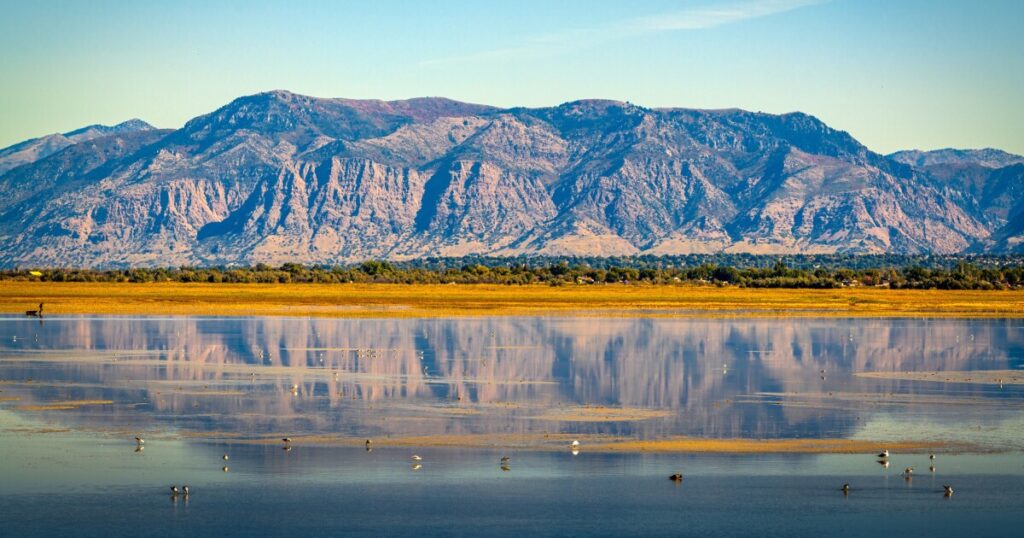
The Global Struggle of Salt Lakes: A Call for Rethinking Water Use
As salt lakes around the globe face unprecedented challenges, Tracey’s extensive study reveals the profound effects of human actions and climate change on these ecosystems. Her work sheds light on how these environments are being reshaped by water diversions and rising global temperatures.
“Salt lakes are impacted by a mixture of water diversions and climate change,” Tracey explained in an interview with the Mountain West News Bureau. “For decades, humans have been diverting the rivers that lead to the lakes for a lot of alfalfa and other crops.”
In regions like the Mountain West, these practices have led to the shrinking of the Great Salt Lake, uncovering lake beds that release toxic dust threatening both human health and wildlife. The situation is similarly dire for smaller lakes in the Great Basin, and the Salton Sea in California is also receding, affecting its role as a crucial habitat along the Pacific Flyway.
Tracey draws parallels between these occurrences and the global situation, such as the drastic transformation of the Aral Sea in Central Asia, which has turned into a toxic dust basin due to extensive river diversions. Her work combines scientific research, personal narratives, and cultural histories, illustrating the broader environmental and societal issues symbolized by salt lakes.
Through her exploration, Tracey suggests that the preservation of these lakes requires a reevaluation of water management practices and a focus on maintaining the fragile balance essential for these ecosystems’ survival. Her book “Salt Lakes: An Unnatural History” is available March 17.
This article is a contribution by the Mountain West News Bureau, a joint initiative involving KUNR, Wyoming Public Media, Nevada Public Radio, Boise State Public Radio in Idaho, KUNC in Northern Colorado, KANW in New Mexico, Colorado Public Radio, KJZZ in Arizona, and NPR, with support from partner newsrooms across the region. The Mountain West News Bureau receives funding from the Corporation for Public Broadcasting and Eric and Wendy Schmidt.