
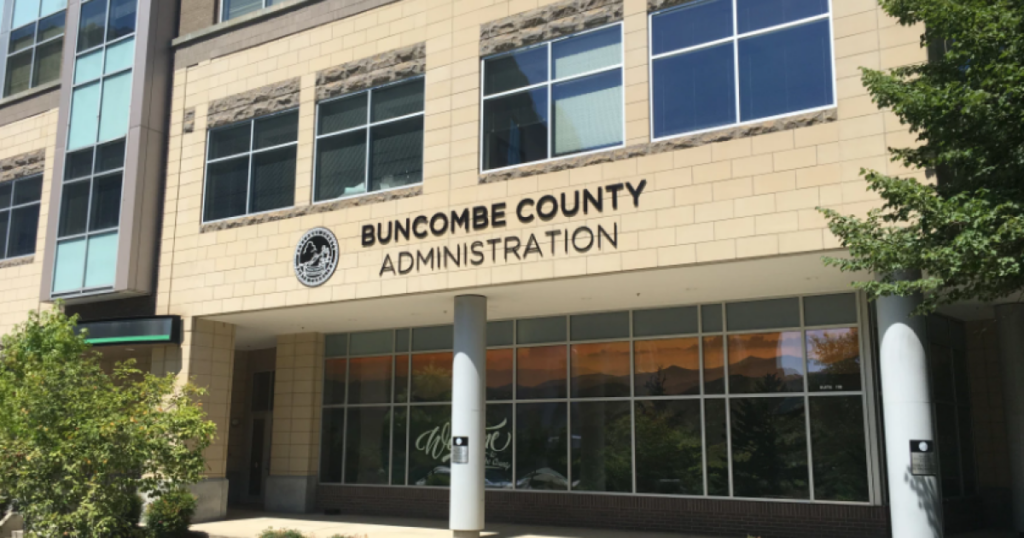
Buncombe County is set to streamline its patchwork quilt of varied fire districts into a cohesive system for more uniform emergency service coverage. This initiative aims to replace the existing array of fire districts with a singular, countywide fire tax district, excluding Asheville, Black Mountain, and Weaverville.
At a recent Board of Commissioners meeting, Fire Marshal Kevin Tipton proposed this new approach, which would consolidate the county’s 20 separate fire tax districts that currently exist in unincorporated areas and certain municipalities. Presently, property tax rates for fire services differ significantly across districts, ranging from 8.36 cents to 22.70 cents per $100 of assessed property value. For instance, a $400,000 home in the Asheville Special District incurs an annual fire protection tax of $334.40, whereas the same property in the French Broad District would face a $908 tax bill.
Tipton highlighted disparities not only in tax rates but also in service quality and response times across districts. Peripheral districts like Broad River experience higher tax rates but longer response times. “The rural departments that have the highest tax rate unfortunately have the shortest staff. Most of them have the oldest apparatus,” Tipton noted. Currently, 40 of the county’s fire trucks are over two decades old, with replacement costs estimated at $63 million.
Creating a unified tax rate and distributing the pooled funds as needed could stabilize the financial underpinnings of fire departments. Buncombe would join 20 other North Carolina counties, such as Transylvania and Jackson, that have adopted similar models.
The ultimate goal of this realignment is to standardize service levels throughout the county. Tipton’s vision includes having 22 firefighters at the scene of a structure fire within 10 minutes in suburban areas and 25 minutes in rural areas, 80% of the time. Achieving this benchmark, however, depends on the county’s fiscal health, as only a few departments currently meet these standards.
Details on how the new unified tax rate will financially impact taxpayers remain undisclosed. The Buncombe County Fire Services’ website states that the specific effect on property taxes will be known only after the FY27 budget is finalized.
County Manager Avril Pinder is expected to present a recommended budget, including the new fire tax rate, on May 5, subsequent to the commissioners’ vote on April 21 to approve the unified fire district. A public hearing is also scheduled for April 21.
Additional Developments
- The commissioners supported the Buncombe County Board of Education’s request for flexibility in the school calendar to avoid the challenges posed by a late start date. Although legislative attempts for calendar flexibility failed, some boards have independently adopted non-compliant calendars.
- A $278,000 contract was approved with McGill Associates for designing a backup generator at A.C. Reynolds High School, aimed at enhancing its role as an emergency shelter.
- The Helene Resource Center will shift to appointment-only operations starting March 30 to aid storm survivors, with additional support available via the Buncombe County Long-Term Recovery Group.
- Buncombe County proclaimed March 24 as Agricultural Awareness Day, committing to preserve 20% of its land as farmland or open space by 2030.
The Buncombe County Board of Commissioners meets bi-monthly at 200 College St., Asheville, with the next regular meeting scheduled for April 21 due to the county’s spring break.



