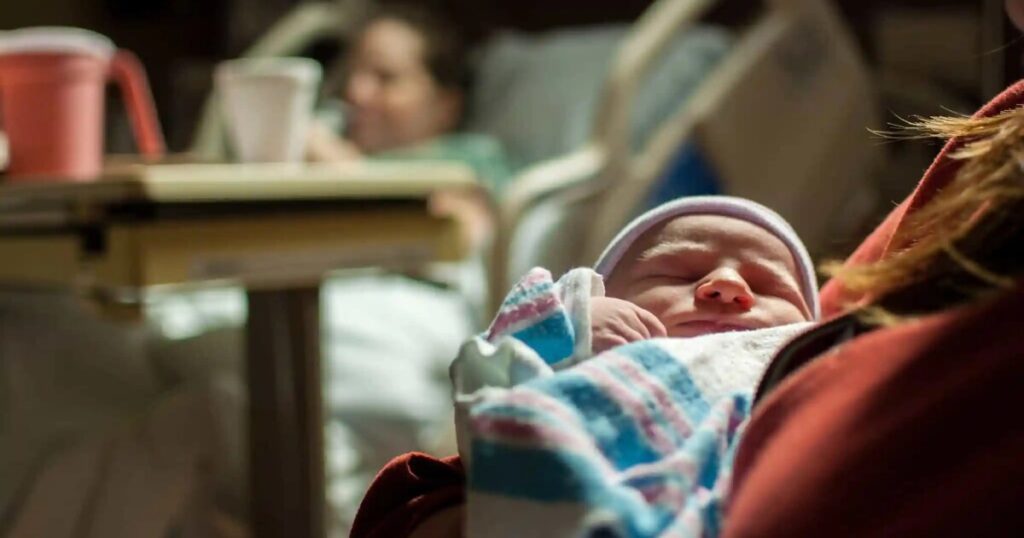
For expectant mothers in North Carolina, the location of their healthcare provider can be crucial. This state faces significant disparities in maternity care access, with many counties lacking local obstetrics services entirely.
Residents in these under-served areas often have to travel extensive distances for childbirth, a factor linked to increased rates of cesarean sections, preterm births, and other maternal health complications. North Carolina’s struggle with maternal and infant health is evident; the state received a D+ grade in the 2025 report card from the March of the Dimes, and it ranks 11th highest in the U.S. for infant mortality rates.
Interestingly, the obstacle isn’t a lack of healthcare providers. As highlighted in a recent legislative committee hearing, the issue is more about the distribution of these professionals throughout the state. Erin Fraher from the Sheps Center for Health Services Research at UNC Chapel Hill emphasizes, “This is not a supply issue. This is a distribution issue.”
More Clinicians, Uneven Access
Despite an increase in the number of doctors providing obstetric deliveries from 2005 to 2024, access remains uneven. Erin Fraher noted to lawmakers that the workload per physician has decreased, indicating growth in the workforce. Still, the geographical spread of these professionals is imbalanced.
Certified nurse midwives play a vital role as well, attending 16 percent of births in 2024. A 2023 legislative change now allows experienced certified nurse midwives to practice without physician supervision, aiming to enhance care in underserved regions. This change has led to an increase in independently practicing midwives, from 425 in 2023 to 501.
Standalone birth centers, which offer maternal care without requiring a hospital setting, have also expanded from one to six since 2023. Yet, 28 counties are still without any facilities or professionals for childbirth, with some residents facing travel distances of up to 60 miles.
The Geography of Maternity Care
Most maternity care professionals are concentrated in urban centers. Only a small fraction of physicians (13.4 percent) and certified nurse midwives (17.3 percent of collaborative and 11.7 percent of independent) serve rural areas. Representative Grant Campbell remarked on this trend, observing a migration back to urban areas even when independent practice is permitted.
Fraher suggests that the lack of facilities willing to hire midwives could be a factor in this urban concentration. The closure of rural hospitals compounds the issue, with estimates suggesting 12 to 18 have shut down, further limiting local access to maternity services.
Such closures have significant impacts, as highlighted by a study mapping maternal care deserts, which found longer travel distances correlate with worse maternal and infant health outcomes. Concerns about high infant mortality rates are personal for many, including Rep. Ya Liu, who emphasized the challenges faced by families in her remarks.
Looking Ahead
Addressing these challenges requires more than just increasing the number of providers. Fraher advocates for broader solutions, such as expanding graduate medical education programs that encourage new physicians to stay and practice in underserved areas.
Efforts to improve maternal and infant health outcomes also saw setbacks with the winding down of the Perinatal Quality Collaborative of North Carolina, a program that had been working successfully since 2009 until its funding was cut. Rep. Campbell highlighted the need for such initiatives, stressing that the core challenge remains ensuring that clinicians practice where they are most needed.
“The fundamental issue,” Fraher emphasizes to lawmakers, “is distribution.”
North Carolina Health News is an independent, non-partisan, not-for-profit, statewide news organization dedicated to covering all things health care in North Carolina. Visit NCHN at northcarolinahealthnews.org.