Heightened Wildfire Risks in Western North Carolina Amidst Staffing and Equipment Challenges
Western North Carolina is facing a significant wildfire threat due to ongoing staffing shortages at the N.C. Forest Service and damaged equipment, as highlighted by state fire officials. The situation is exacerbated by the vast areas of downed trees, remnants of Hurricane Helene, which have dried out and increased the fire risk.
Brian Taylor, North Carolina’s state fire marshal, expressed concerns about the state’s readiness to handle future fire risks, stating, “The fires service manages in chaos and we will not fail, that’s just our mentality. But I don’t feel that we are currently ready for the fire risk, fire danger that we have in the next 15 years.” Taylor’s comments came after a session with the Joint Legislative Oversight Committee on Emergency Management.
The N.C. Forest Service, tasked with wildfire management, alongside Taylor, emphasized that Helene’s impact on over 822,000 acres of forest has significantly altered the landscape. This damage complicates access to fire breaks and old lumber roads traditionally used for firefighting.
The Forest Service is grappling with a vacancy rate of 15 to 20%, particularly in entry-level positions like county-level foresters and fire equipment operators. These roles are crucial as they are often the first responders in wildfire situations. Greg Hicks, the state forester, highlighted the issue of stagnant salaries, noting, “A forester with 11 years of experience makes the same $46,597 annual salary as someone on their first day.”
Hicks explained that the Forest Service’s budget for salaries, approximately $47 million, has remained unchanged for years, leaving little room for pay increases without reducing staff. Training new hires costs between $27,000 and $30,000, yet about a third leave before completing the two-year ranger training program.
Adding to these challenges, the Forest Service is short one helicopter, reducing their fleet to five. This loss is significant as helicopters are vital for water drops in areas inaccessible by land, especially in the post-Helene landscape. The broken helicopter, a 2001 Airbus Eurocopter Astar, is deemed beyond economical repair.
Escalating Wildfire Incidents
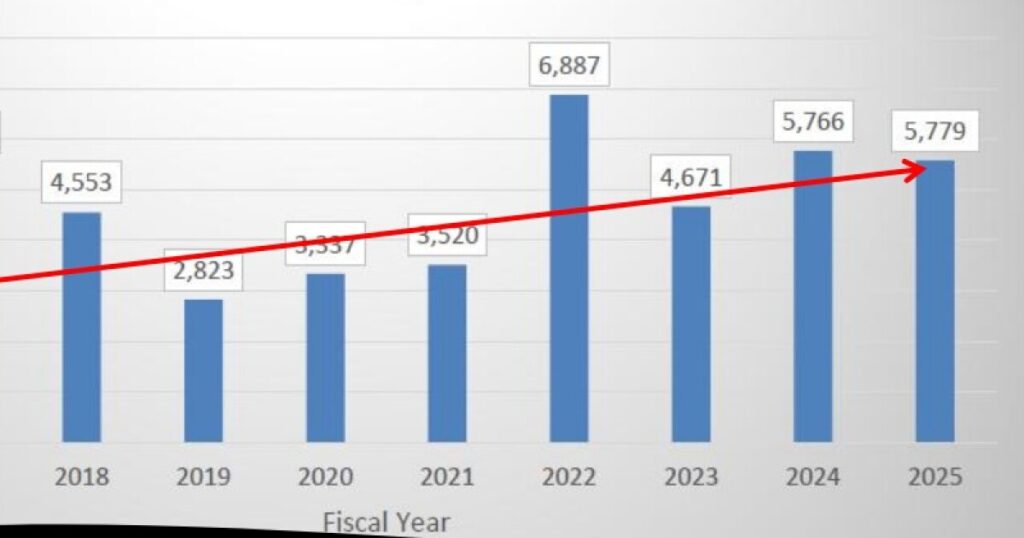
North Carolina has seen a rise in wildfire occurrences, with the Forest Service responding to 5,579 fires last year, nearly matching a 2016 peak. On a single day recently, 94 fires were recorded, burning 494 acres. The monthly tally reached 518 fires, consuming 2,759 acres.
Western North Carolina is of particular concern due to the damaged forests from Helene, which hinder firefighting efforts. Kevin Harvell, deputy state forester, warned, “We’re going to have to go around these highly damaged areas. That means larger fires, that means more smoke, that means safety, that means concerns for the general public with that smoke.”
He cited the Black River Cove Fire as an example, which burned over 7,700 acres in Polk and Henderson counties, fueled by downed trees from Helene, and took weeks to contain.
State officials, including Agricultural Commissioner Steve Troxler, advocate for proactive budgeting for wildfire response, suggesting the allocation of disaster funds in advance. Last year, $15 million was allocated for wildfire preparedness and contract firefighter expenses.
The Office of the State Fire Marshal is also pushing for more structural firefighters to receive wildfire training due to the Forest Service’s staffing issues. Taylor emphasized the importance of preparedness, stating, “They have a recruitment issue and a retention issue across the state, and I feel like we have to supplement that to be prepared in the coming years.”