Unequal Access to Nature: Communities of Color Face the Brunt of Nature Loss
An insightful analysis by the Center for American Progress, alongside Justice Outside, has unveiled a stark disparity: communities of color are three times more likely than their white counterparts to reside in areas marked by significant nature loss. These areas often lack parks and trees and endure higher pollution levels.
The report underscores how these disparities align with historical patterns of mining and oil and gas exploitation prevalent in communities across the Western United States.
Rena Payan, a co-author of the report from Justice Outside, stated, “Nature deprivation isn’t just about the aesthetics of who has access to ‘big nature.’ It’s also about who has access to clean air and clean water.”
Particularly affected are Indigenous communities, where local landscapes are integral to cultural practices, subsistence food systems, and environmental stewardship. The report celebrates Indigenous-led initiatives, such as those by the Navajo Nation to revive native grasslands and wildlife habitats, and efforts in Alaska to safeguard salmon streams and coastal ecosystems vital for subsistence.
Payan further elaborated on the broader implications of nature loss, emphasizing its impact on generational wealth and health. “We’re talking about an issue with generational wealth. We’re talking about an issue of generational health,” she added. “And we’re talking about an issue where communities of color are bearing the brunt of the consumerism that exists in our country.”
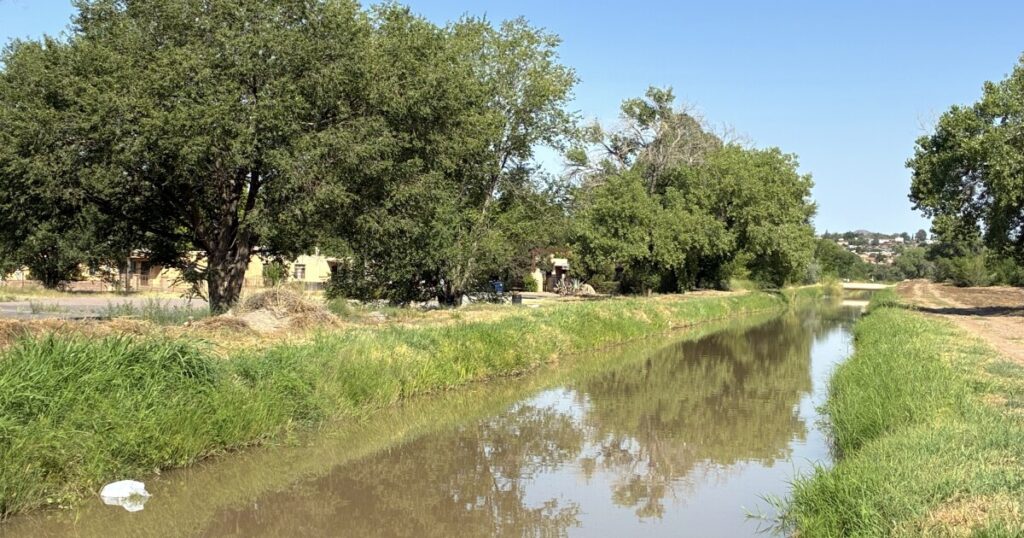
The report also points to community-driven solutions emerging in the Southwest. In Albuquerque’s South Valley, residents are revitalizing traditional acequia irrigation systems and reclaiming open spaces, fostering a renewed connection to land and water.
Researchers suggest that approaches rooted in local leadership and Indigenous knowledge are pivotal in addressing the nation’s expanding “nature gap.”
This article is a product of the Mountain West News Bureau, a collaborative effort involving KUNR, Wyoming Public Media, Nevada Public Radio, Boise State Public Radio in Idaho, KUNC in Northern Colorado, KANW in New Mexico, Colorado Public Radio, KJZZ in Arizona, and NPR, with supplementary support from affiliate newsrooms throughout the region. The Mountain West News Bureau receives partial funding from the Corporation for Public Broadcasting and Eric and Wendy Schmidt.