
The University of Michigan has long been at the forefront of educational innovation, continuously pushing the boundaries of traditional learning. At the heart of this mission is the Center for Academic Innovation (CAI), established in 2014 to champion academic innovation through pioneering design and technology.
CAI, an epicenter for creative collaboration, is dedicated to supporting faculty and staff in developing transformative learning experiences. Since its inception, the center has facilitated the launch of over 300 online courses and more than 10 degree and certificate programs, reaching over 12.5 million learners globally in 195 countries.
Expanding Educational Horizons
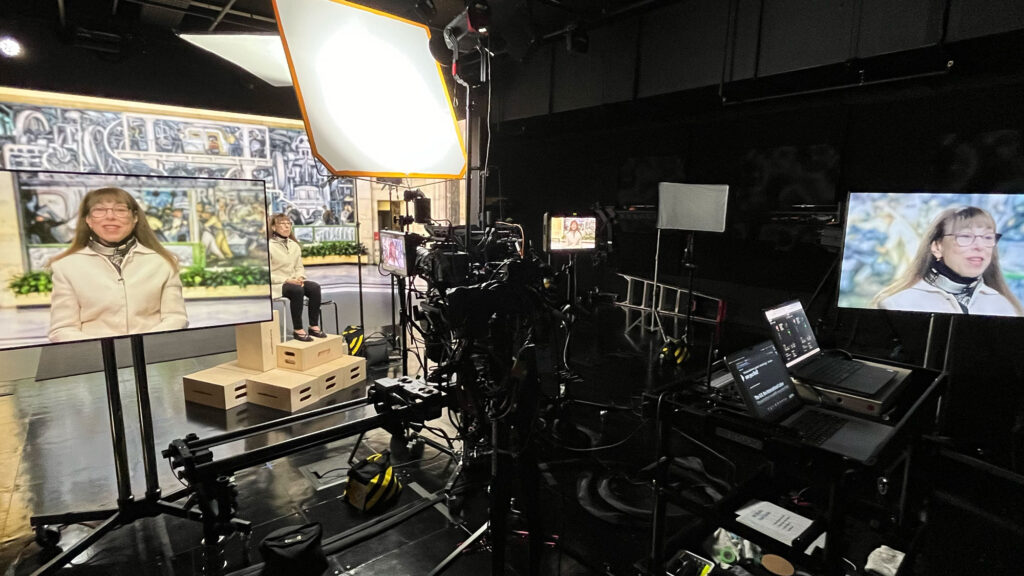
The center’s role is multifaceted, providing faculty with the resources to explore and implement ambitious teaching methodologies. The facilities include cutting-edge studios that offer both traditional and virtual production capabilities, enabling the creation of immersive learning environments. James DeVaney, the founding executive director, emphasizes, “We work with faculty across the university to design new ways for people to learn, explore, and succeed throughout their lives.”
Faculty members are encouraged to bring complex challenges to the center, where they can access tools and creative spaces to experiment and innovate. This support has proven invaluable in extending the reach of a Michigan education beyond the campus borders.
Global Influence and Local Impact
Through initiatives like Michigan Online, CAI offers a plethora of online learning opportunities, including courses on AI, programming, healthcare, and leadership, tailored for lifelong learners. Notably, the introduction of massive open online courses (MOOCs) has empowered individuals to enhance their skill set, potentially opening new career avenues.
Deb Lee, a clinical assistant professor, collaborated with CAI to develop a unique nursing course incorporating XR technology, engaging over 4,000 learners worldwide. Lee notes, “People who haven’t had to handle wound care in two to three years, for example, can get back into it and receive quality instruction.”
The impact of CAI extends locally, with initiatives like the “Saturdays in the D” program in Detroit, supported by Ally Financial. This collaboration aims to enhance skill acquisition among Detroit residents, demonstrating CAI’s commitment to community engagement.
Innovative Spaces and Technologies
CAI’s facilities on Maynard Street in Ann Arbor merge collaborative workspaces with high-tech creative studios. These resources empower faculty to produce innovative online courses. “We work closely with faculty on the course development process because teaching a course online requires more than just putting your lecture on the internet,” says Sarah Dysart, CAI’s chief learning officer.
The center’s extended reality studio, akin to a Hollywood set, offers limitless possibilities for interactive learning experiences. Professor Deb Lee has utilized these resources for simulations that replicate realistic healthcare environments, enhancing the educational experience.
For faculty like Christopher Brooks, associate professor of information, CAI’s collaborative environment has been instrumental. Brooks played a key role in developing the online master of applied data science degree. Despite its global reach, the program’s largest contingent of students is from Michigan, showcasing the program’s local resonance.
Fostering Faculty Creativity
The CAI not only enhances student learning but also empowers faculty by fostering a collaborative and innovative environment. The U-M Academic Innovation Fund has supported over 400 faculty-driven projects, allowing educators from all disciplines to experiment with new teaching methods.
Dysart highlights the benefits of consulting with a centralized resource when integrating technology into teaching, saying, “Michigan faculty are a source of constant invention and experimentation.” This support helps faculty members grow professionally, as exemplified by the experiences of both Lee and Brooks, who have both witnessed the reach and impact of their work through CAI-enabled platforms.



