This coverage is made possible through a partnership between BPR and Grist, a nonprofit environmental media organization.
The National Park System is undergoing a significant change as numerous signs across its parks are potentially on the chopping block. A leaked database has listed hundreds of signs, including those in Great Smoky Mountains National Park, for review and possible removal under new federal guidelines.
This initiative stems from an Executive Order issued on March 27 of the previous year, under the Trump administration, titled “Restoring Truth and Sanity to American History”. This directive mandates the Department of the Interior to examine national park signage, emphasizing the achievements and progress of the American people and the beauty of the natural landscape. The completion deadline for these changes is set for July 4, 2026.
The Great Smoky Mountains National Park, with its diverse waysides, signs, and exhibits, offers visitors insights into its rich flora, fauna, and historical contexts. Notable among these are signs discussing Civil War sites, Cherokee history, and contemporary environmental threats such as climate change. Efforts by the park to mitigate these threats include scientific research and collaborative solutions with local industries.
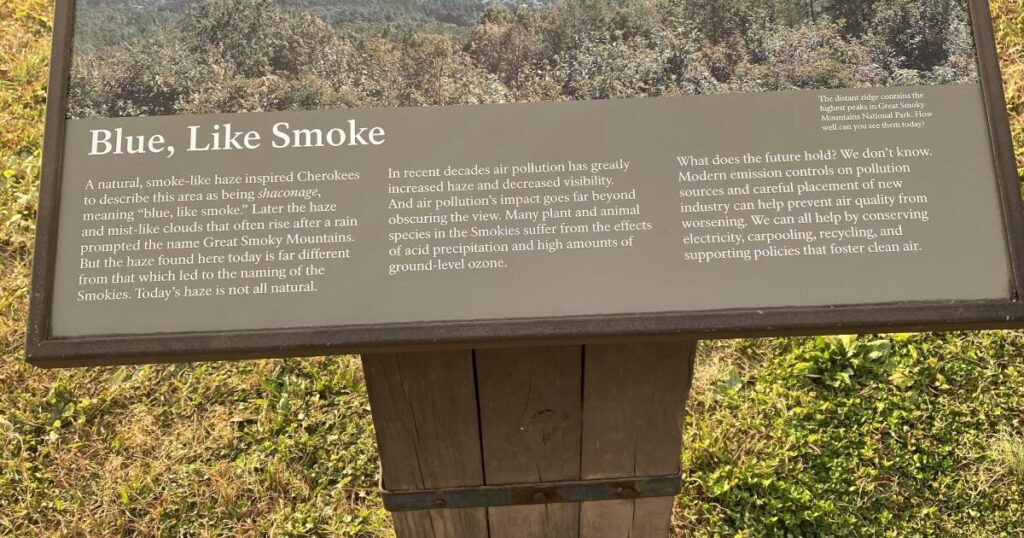
The leaked database highlights some of the educational signs in the park that are under review. One such sign, “Blue, Like Smoke,” explains both the origin of the park’s name and the challenges of air pollution. The sign notes, “Air pollution’s impact goes far beyond obscuring the view… What does the future hold? We don’t know.” Other signs, like “Fish Tales” and exhibits at the Sugarlands Visitor Center, also face scrutiny.
Beyond the Smokies, more than 15 signs on the Blue Ridge Parkway are also marked for review. Included are signs like “What is Bugging the Forest?” and “Forest Decline,” which detail the impacts of the woolly adelgid, an invasive pest linked to climate change. Other signs highlight historical narratives such as the Trail of Tears.
According to Phillip Francis, former deputy director of the Great Smoky Mountain National Park, these signs encapsulate years of educational outreach regarding environmental issues like air pollution. “Now, visibility is much closer than the way it should be,” Francis remarked. However, he voiced concerns that the removal efforts might align with the Trump administration’s focus on energy development, potentially reversing environmental progress.
The Department of the Interior has responded to the leaked documents by stating that they have been misrepresented and do not necessarily indicate final decisions regarding sign removal. “The narrative being advanced is false and these draft, deliberative internal documents are not a representation of final action taken by the Department,” the department clarified in an email.
Despite this, environmental groups, such as the National Parks Conservation Association, have initiated legal action, aiming to stop the removal of specific signs. For instance, climate-related signage at California’s Muir Woods National Monument was recently taken down, prompting further scrutiny.
As the Department of the Interior continues to assess park signage, the future direction of the National Park Service remains uncertain. Following the review directive, a committee was established to determine subsequent actions, but it has since disbanded.