In an era where convenience often drives consumer choices, the popularity of ice and water kiosks has surged across the United States. However, recent research from the University of Iowa has uncovered some surprising results about these kiosks that may give users pause.
“In the past decade or so, a couple of franchises have exploded. They are fast-growing franchises in the U.S. Depending on where you live in the country sort of dictates how common they are,” said Zuhlke, a researcher who was notably “flabbergasted” when initial findings detected lead in some kiosk samples.
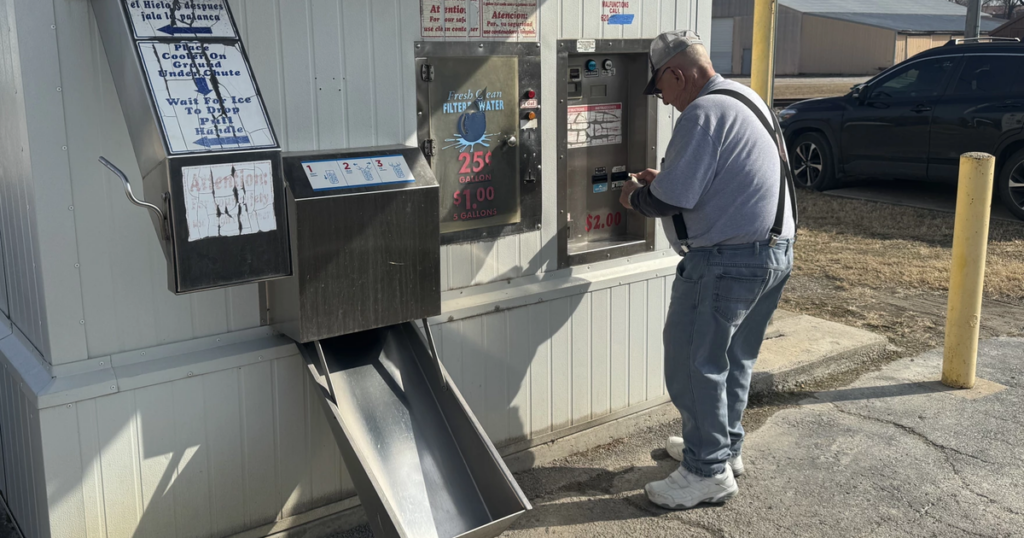
Researchers procured water samples directly from kiosks, observing consumers frequently purchasing 5-gallon jugs for both drinking and cooking purposes. On a chilly mid-February day, Stephen Eby, a Baxter Springs, Kansas resident, filled up at a local Twice the Ice Kiosk, which recorded the highest lead levels in the study. His dog, preferring bottled water, prompted his frequent visits.
After learning about the study from a news report, Eby reconsidered his choices. “I’ve only used that one down there once. I think I’ll use it today,” he remarked, referring to another kiosk nearby.
Researching a puzzle
The University of Iowa’s research suggests that consumer concerns about tap water quality may drive kiosk usage. A study by the Environmental Working Group found that over half of Americans doubt the safety of their tap water.
Leroy Davidson from Opolis, Kansas, exemplifies another reason for kiosk preference—home water quality. He regularly visits a Twice the Ice kiosk in Pittsburg, Kansas, to avoid calcium buildup from his tap water. “You’re looking at $10,000 and you get that thing put in, and then you gotta put salt pellets in it,” Davidson explained, opting for kiosk water over a costly water softener.
Cwiertny, director of the Center for Health Effects of Environmental Contamination at the University of Iowa, emphasizes the need for stricter water treatment regulations. “Whenever we’re applying a technology to water treatment, it needs to be done right and you need to do monitoring to back it up, or else consequences that are unintended can happen,” he stated.
The research highlights a gap in regulatory oversight for these kiosks. In Iowa, neither the Environmental Protection Agency nor the Iowa Department of Natural Resources primarily regulates them. The Food and Drug Administration indicated it “generally” oversees water and ice kiosks, but clarity is lacking on a national scale.
“We had this puzzle of ‘why are people spending so much money on water in these kiosks, despite the fact they’re less strictly regulated than tap water?’” Zuhlke pondered.
Response from kiosk companies
In response to these findings, major kiosk companies like Kooler Ice and Highland Pure Water & Ice allowed researchers to inspect their equipment. Kooler Ice, operating 1,600 locations globally, is scrutinizing the research to ensure compliance with health and safety standards. “What we can say now is that we are committed to producing all of our products in full compliance with applicable health and safety standards,” affirmed Scott Hadwiger, vice president of Kooler Ice.
Highland Pure, with nearly 30 kiosks in several states, also reacted to the study. After a kiosk in Muscatine, Iowa, showed lead levels of 9.23 parts per billion, President McLain Hoogland announced plans to replace metal components with plastic PEX to prevent lead exposure. “Understanding the level is still a very minimal amount and shouldn’t deter people from using it because it is clean water,” Hoogland stated, maintaining confidence in the water’s safety.