Impending Federal Law Shakes Wisconsin’s Hemp Industry
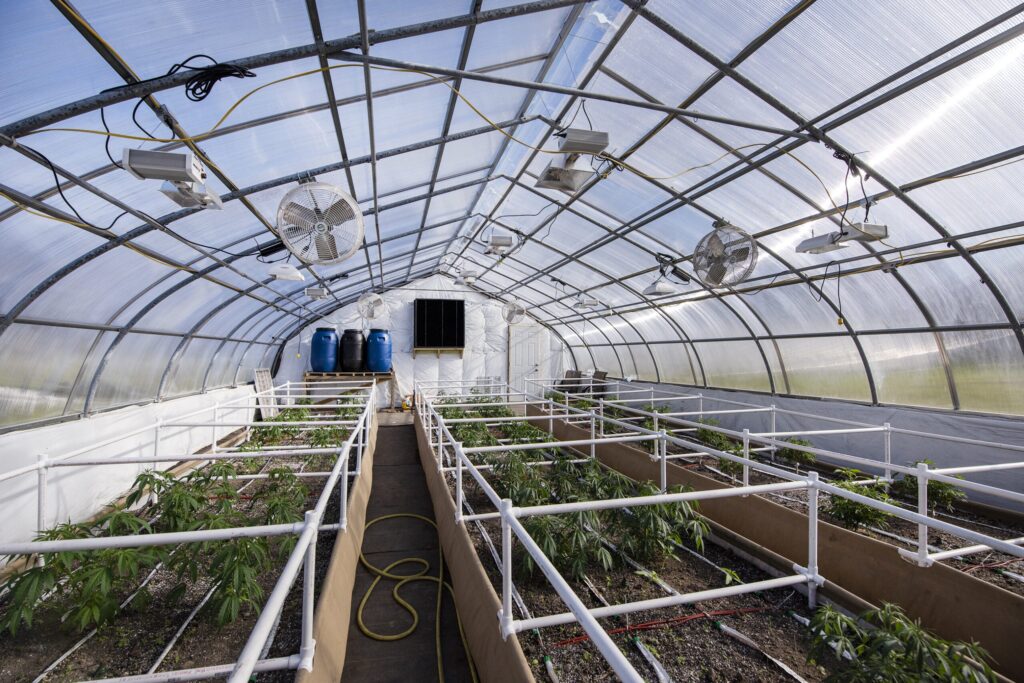
In the serene rural backdrop outside Eau Claire, an old dairy farm has seen a transformation over the years. Since the state of Wisconsin legalized hemp cultivation in 2017, Luke Heidt, the proprietor of Wisconsin Hemp Flower, has cultivated this versatile crop. However, the future of his enterprise now hangs in the balance as impending federal legislation threatens to redefine hemp’s legal status.
Like many hemp growers around the state, Heidt is reducing his planting in preparation for the closure of his business this November. The catalyst for this decision is a federal law set to alter the legal definition of hemp when it takes effect.
Heidt, who depends solely on hemp farming for his livelihood, laments, “I have sustained myself entirely through hemp, as a hemp farmer, and the government put me out of business.” He expresses deep concern for the future of the Wisconsin hemp industry, describing the situation as “a 100 percent disaster for hemp farmers” nationwide.
Currently, both recreational and medicinal marijuana remain illegal in Wisconsin. However, a federal loophole has enabled stores to sell THC and CBD products, provided they are derived from hemp and contain no more than 0.3 percent delta-9 THC. This loophole is about to close, as the new legislation will prohibit all hemp products exceeding a total THC concentration of 0.3 percent.
In February, Governor Tony Evers expressed his concerns to Congress through a letter, warning that the legislative change could eliminate $700 million in production value and 3,500 jobs from the state’s economy.
According to the U.S. Department of Agriculture, Wisconsin is home to 274 licensed hemp growers, a significant decrease from the previous year’s 470. This decline is possibly attributed to growers awaiting the law’s final impact, with many uncertain whether they should renew their licenses.
Heidt, who identifies as an “old-school CBD farmer,” specializes in hemp products that do not contain THC, the psychoactive component in marijuana. Despite this focus, he fears that the proximity of his products to the new THC limit will deter customers. He reflects, “Almost everything I produce will be so close to the line of being illegal that I’ll be too close to the line to do it. What if I get 0.31, am I going to get a felony and get locked up?”

Chris Busky, owner of Wonders of Nature in Eau Claire, collaborates with local hemp farmers. He describes the current atmosphere as “a state of limbo,” with many farmers holding onto unsold crops from last year. The looming legislation poses a significant challenge, as processing these crops into finished products before the November deadline will be difficult.
Busky’s business, which includes a cannabis café and dispensary, faces closure by the deadline, necessitating the layoff of all eight employees. He has observed positive impacts on customers’ lives through his products, from helping an elderly woman sleep to alleviating anxiety in a cancer patient. Busky worries that come November, those reliant on THC products might resort to illegal sources.