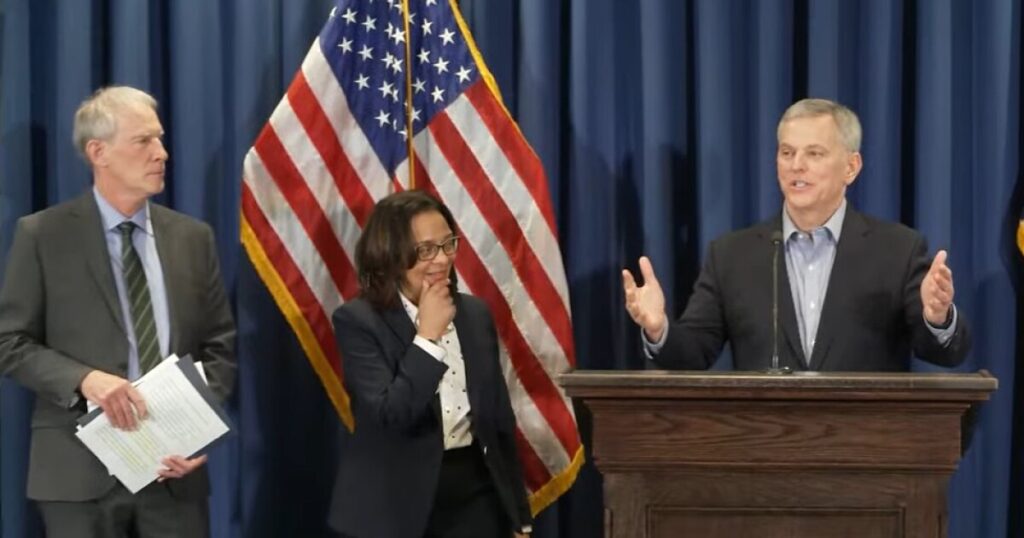
North Carolina has rolled out an extensive program to assist low- and moderate-income families in reducing their utility expenses. Governor Josh Stein and the Secretary of the N.C. Department of Environmental Quality, Reid Wilson, announced that every county in the state is now covered by the Energy Saver NC initiative.
The program, which operates with a budget of $208 million from the Inflation Reduction Act, offers rebates to homeowners for making energy-efficient improvements. Through the Energy Saver NC program, residents can install energy-saving measures, replace appliances, or upgrade their heating and cooling systems.
“The rebates are designed to make your utility bills cheaper now and in the future,” Stein mentioned during a press conference dubbed NC Strong, where the administration shared their progress.
Rebate Options
Two types of rebates are available under this initiative. The Homeowners Managing Efficiency Savings rebate offers up to $16,000 for upgrades affecting the overall energy usage of a home, such as installing a more efficient HVAC system. This rebate could save homeowners nearly $1,000 annually on utility bills, according to DEQ officials.
The second option, the Home Electrification and Appliance Rebate, provides up to $14,000 to help replace existing appliances with more efficient ones, including water heaters, stoves, and dryers, as well as upgrading the home’s electric system. More details can be found here.
The highest rebate amounts are available to those earning less than 80% of their area’s median income, with reduced amounts for those earning up to 150% of the median income. “If you’re of modest income, this program can help you make your home more energy efficient,” Stein emphasized.
Homeowners have the opportunity to apply for both rebates but cannot use both for the same type of equipment. For instance, a heat pump might qualify for the full Managing Efficiency Savings rebate, while the Home Electrification Rebate can be reserved for purchasing new appliances.
Program Expansion
Launched in January 2025, Energy Saver NC has been gradually expanding. Mecklenburg and Wake counties were the last to be included, achieving full state coverage. “When you use less energy, you save more money,” Wilson said.
The program is anticipated to create over 2,000 contractor jobs across North Carolina. “We have so many more households that are going to get these energy efficiency improvements, and they’re going to save a lot of money,” Wilson noted.
In addition to lowering utility bills, the program reduces greenhouse gas emissions. This is particularly beneficial during high demand periods, like recent winter cold snaps, when Duke Energy relies more on its gas- and coal-fired power plants, sometimes reaching record levels.
“It’s a win for our energy grid. The more families who participate, the less strain there will be on the state’s power grid,” Stein stated.
Program Participation
As of now, 4,818 households have applied to the Energy Saver program, with 1,709 approvals. Work has commenced on 51 homes, with energy upgrades averaging about $15,000 each. In Halifax County alone, 800 applications were received, and 319 were approved, largely due to efforts by the Center for Energy Education.
Mozine Lowe, CEO of the nonprofit, explained that her team promotes the program’s benefits through public meetings, church events, and visits to senior centers. “Energy Saver North Carolina allows everyday people to see clean energy technology in their homes,” Lowe said.
Additional Resources
Governor Stein also unveiled a new resource, www.100strong.nc.gov, which provides county-level data on job creation, medical debt relief, and infrastructure investments since he assumed office. “As leaders, we owe transparency on the progress we are making,” Stein concluded.