

Amid ongoing debates over wildlife management, the recent killing of nine gray wolves in Wisconsin’s Price County by federal officials has reignited discussions on the balance between human safety and animal conservation. This action by the Wisconsin Department of Natural Resources (DNR) has drawn criticism for insufficient communication with local Tribal Nations, revealing deep-seated differences in approaches to managing wildlife.
The DNR cited “verified threats” to human safety as the reason for the killings but later issued an apology for not consulting with the tribes or the Great Lakes Indian Fish and Wildlife Commission. This incident underscores a broader, long-standing conflict over wildlife management between the DNR and Ojibwe tribal nations, rooted in differing understandings of human-animal relationships.
Renée Worringer, professor emerita of Islamic, Ottoman, and Middle East history at the University of Guelph, delves into the historical context of human-wolf interactions on The Lee Rayburn Show. She explains how ancient societies often revered wolves as symbols of power. “Ancient nomadic empires in Central Asia had a lot of wolf folklore. The wolf represented predatory and nomadic power to dominate the land,” she notes.
Indigenous North American cultures, including the Ojibwe, hold the wolf in high regard. Stories of Ma’iingan, the wolf, illustrate a relationship of coexistence and companionship with humans. The wolf remains a significant clan symbol and a keystone species, as noted by journalist Frank Vaisvilas.
How Modern Agriculture and Monotheism Changed the Narrative
The advent of agriculture marked a shift in human-wolf dynamics, as wolves began preying on livestock, leading to a more adversarial view. “Once [humans] started raising sheep, goats, and cattle, now [wolves] were a more negative force,” says Worringer.
Additionally, the rise of monotheistic religions like Judaism, Christianity, and Islam brought changes in how nature was perceived, often placing humans above animals. This hierarchical view, particularly in Christianity, contributed to the demonization of wolves, leading to their extinction in some regions, such as the United Kingdom and Ireland.
Efforts to eradicate wolves continued into the 20th century in North America, with wolves becoming locally extinct in Wisconsin by 1960. However, the passing of the Endangered Species Act in the 1970s facilitated their return.
Wisconsin’s Wolves Today
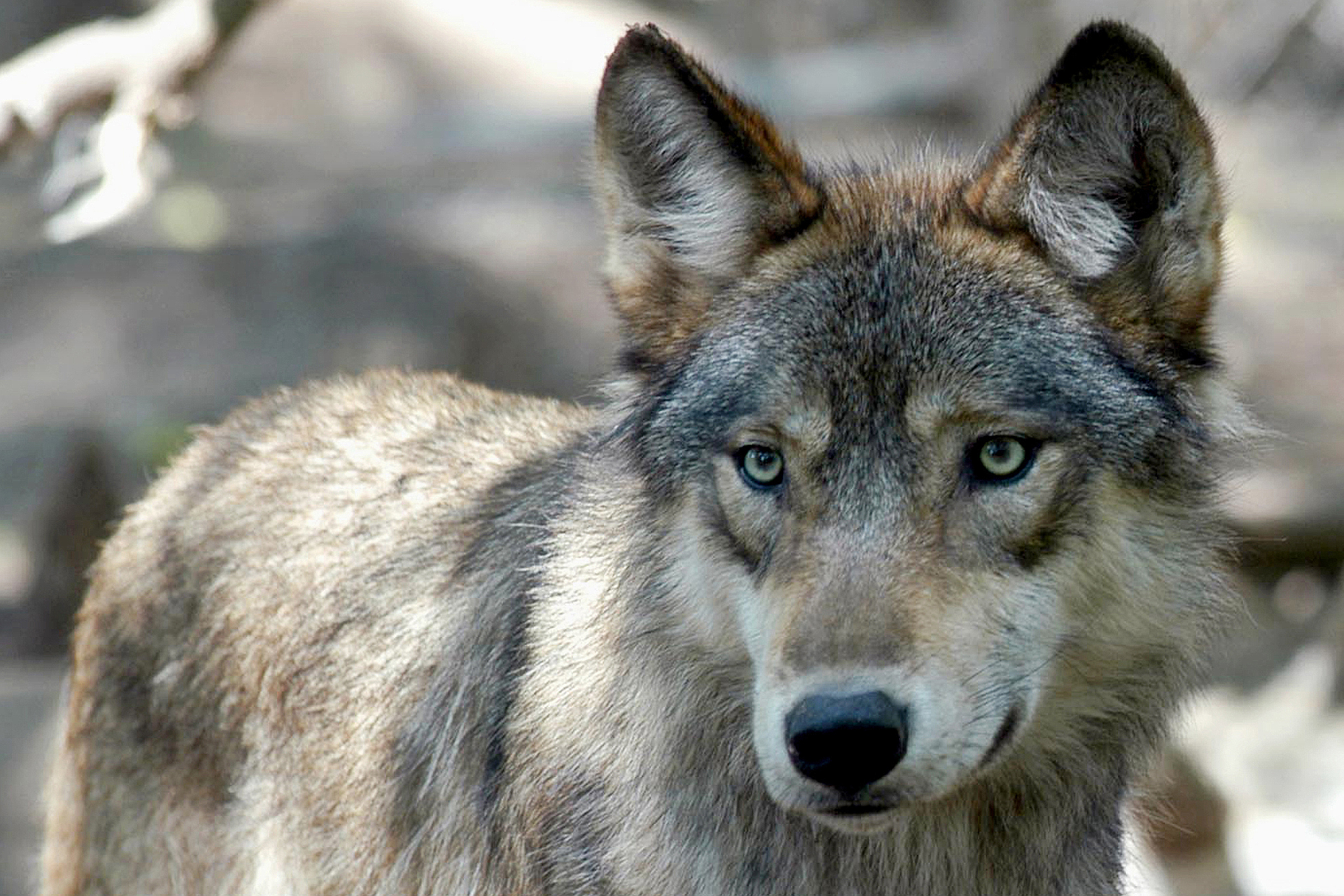
Today, Wisconsin hosts approximately 1,100 gray wolves. Although many may assume these wolves inhabit the northern counties, Steven Meurett from the Timber Wolf Information Network highlights that the central forest region has a higher wolf density due to abundant public land and higher deer populations.
Meurett educates people on conducting track surveys of wolf packs in winter, helping biologists and conservationists monitor wolf populations. Despite their recovery, there is still no agreement on an ideal population size, and federal and state management decisions continue to influence their future.
This ongoing struggle reflects broader ideological divisions. Worringer writes about the “legal battles between pro-wolf environmentalists and conservationists on the one side and many ranchers and hunters on the other.” Her upcoming book, “Shepherd’s Enemy, ‘Enlightened Wolf:’ From Wolves and Wolf Folklore to Sheepherding Dogs in Human Societies,” is set to be released by the University of Calgary Press in spring 2027.


