New Bill Proposes Redesignation for Wisconsin’s Noncompliant Smog Areas
Wisconsin could potentially reclassify areas failing to meet federal smog standards if it demonstrates that the pollution predominantly originates from beyond state borders. This possibility arises from a newly introduced Republican bill.
Republican Representatives Bryan Steil, Scott Fitzgerald, Glenn Grothman, and Tom Tiffany introduced the Fair Air Standards Act. This legislative move follows years of legal battles and regulatory initiatives aimed at aligning Wisconsin with updated ozone standards set by the Obama administration in 2015.
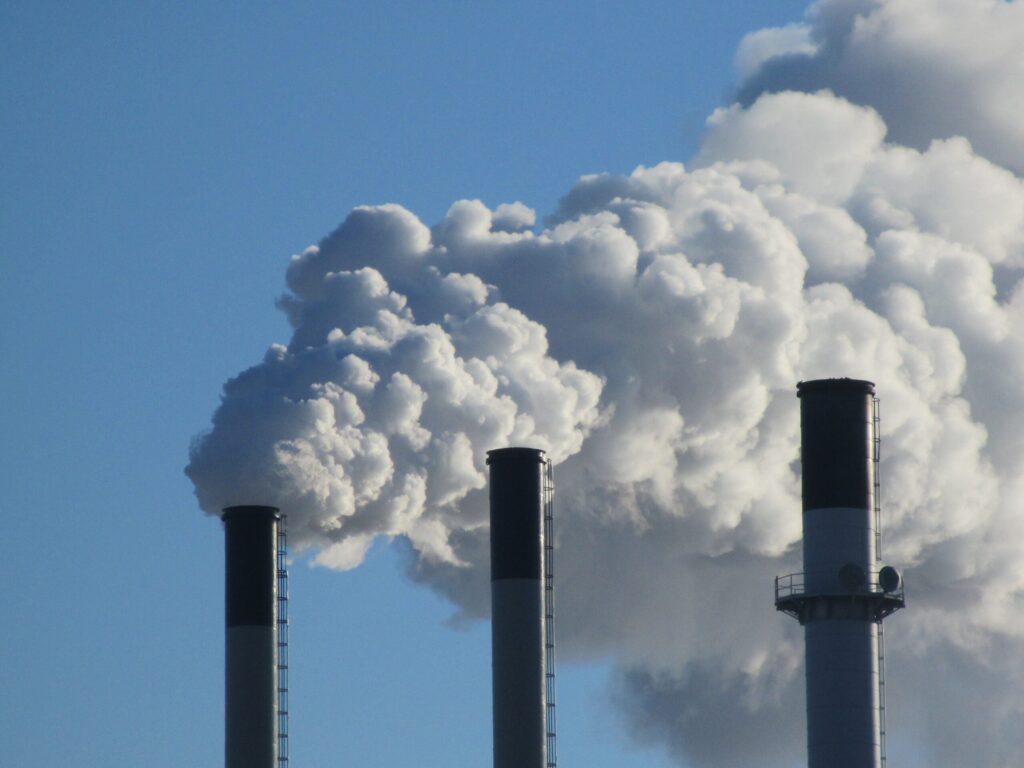
Ozone pollution, commonly referred to as smog, results from the interaction of air pollutants like nitrogen oxides and volatile organic compounds with heat and sunlight. Seven counties in southeastern Wisconsin are currently labeled as “nonattainment” for failing to meet the national ozone standards.
In a statement, Steil emphasized, “The Fair Air Standards Act ensures that Wisconsin’s non-attainment status is tied to activity originating in our state not those in other areas. Our bill reduces burdens for families, employers, and workers across Southeast Wisconsin while holding out-of-state polluters responsible for their actions.”
The affected areas consist of Milwaukee and Ozaukee counties entirely, and parts of Kenosha, Racine, Sheboygan, Washington, and Waukesha counties. The Wisconsin Department of Natural Resources highlights that lakeshore regions are particularly vulnerable due to external pollution sources carried by certain weather patterns.
According to the DNR, around 10 percent of the ozone pollution is locally sourced, with Illinois and Indiana contributing approximately 35 percent.
The proposed legislation empowers a state’s governor to present evidence to the EPA showing an area’s compliance would be achievable if not for cross-border pollution. The EPA administrator would then decide on the potential redesignation. Co-sponsor and gubernatorial candidate Tom Tiffany also advocates for eliminating the “costly and time-consuming” emissions tests required for numerous drivers due to the state’s nonattainment status.
Environmental advocacy group Clean Wisconsin has historically challenged Wisconsin’s smog regulations in court. The organization’s general counsel, Katie Nekola, criticized the bill, stating, “If Tom Tiffany cares about Wisconsin, he should want to actually cut the pollution that’s coming into our state with the tools that are available already, rather than just draft a bill that says we’re going to pretend like the pollution isn’t there.”
Nekola argues the bill doesn’t address improving air quality or mitigating health issues linked to ozone pollution, which can exacerbate respiratory problems. While the Clean Air Act allows the EPA to enforce cross-state pollution control, a recent U.S. Supreme Court decision halted such an EPA rule.
The Trump administration’s rollback of the “good neighbor” plan has led to the EPA classifying southeastern Wisconsin counties as “serious nonattainment” last year. This classification, currently under judicial review, could impose stricter industrial emission controls and affect approximately 382 businesses, potentially costing up to $6.9 million in compliance costs.
Wisconsin Manufacturers and Commerce, a prominent business lobby, supports the bill, with environmental policy director Adam Jordahl stating, “From our point of view, this bill is about creating an avenue for individual states, who are being treated unfairly under the federal regime, to find some relief.”