As Wisconsin’s gardening season reaches its peak, the beauty of blooming perennials and the busy activity of pollinators are challenged by the rise of plant diseases threatening both flowers and vegetables. These diseases have become a significant concern for gardeners across the state.
Brian Hudelson, who leads the University of Wisconsin Extension’s Plant Disease Diagnostics Clinic, recently shared insights on plant health issues during an appearance on WPR’s “Garden Talk” with host Jill Nadeau.
The Most Common Plant Diseases
Throughout his 30-year career, Hudelson has encountered a variety of plant diseases, identifying Rhizosphaera needle cast as the most prevalent. This fungal disease predominantly impacts spruce trees.
“The fungus gets in there, infects the newer needles, but then just kind of sits around and becomes active as those needles end up farther towards the interior of the canopy, and then will cause the needles to drop prematurely,” Hudelson explained. The result is significant aesthetic damage to spruce trees.
Hudelson suggests that gardeners should reconsider using this overused tree, as it is not well suited for Wisconsin’s climate.
Fungal Threats in Wisconsin Gardens
Hudelson highlighted several other fungal diseases troubling Wisconsin gardeners. One such disease is powdery mildew, which thrives in the state’s muggy July weather.
“Because it’s our muggy July weather. Powdery mildew prefers dry leaves but really high humidity,” Hudelson noted.

Another concern is Verticillium wilt, a lethal fungus that blocks water flow in plants by infecting them through the roots.
“This fungus hangs out in the soil and infects through the roots, colonizes the water-conducting tissue inside the plant and blocks it off,” Hudelson explained. “And so that prevents water from getting from the root system up into the branches. It is a lethal disease.”

Airborne and Deadly Plant Diseases
Hudelson warns of gray mold, also known as Botrytis blight, a highly contagious disease that can spread over long distances via spores.
“Botrytis Blight is pretty common in the environment,” Hudelson said. “So even if you get rid of all your infected material, you can still have problems with the fungus. The spores will blow around for a long distance.”

Combatting Canker Diseases
Hudelson provided strategies to manage harmful canker diseases that obstruct water from reaching plant branches.
“The way to deal with that is to basically find that interface between live and dead branches and come down about 4 to 6 inches below and then cut off the top of the tree,” Hudelson recommended.

He emphasized the importance of disinfecting cutting tools with rubbing alcohol for 30 seconds between each cut to avoid spreading pathogens.
Tomato Troubles in the Garden
Among the threats to tomatoes, Septoria leaf spot is particularly concerning due to its destructive potential.
“You get the browning of the leaves at the bottom of the plant and it kind of works its way up the tomato plant. Eventually the browning will get so bad that the leaves will entirely dry up,” Hudelson explained.

Tomatoes are also vulnerable to herbicide exposure, Hudelson warned. “Tomatoes are very sensitive to very low dosages,” he said, advising caution with weed killers.
Colorful Plant Diseases
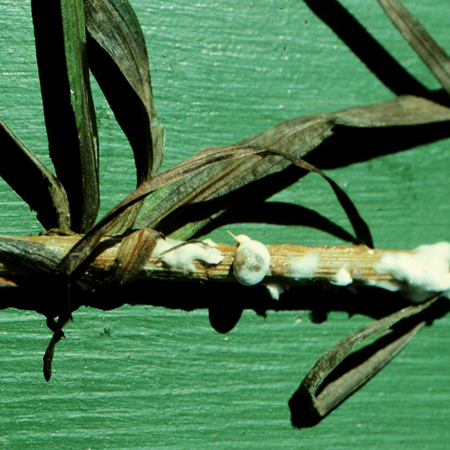
Another fungal issue is white mold, which forms black structures resembling “mouse or rat droppings.”
“If you see those, dig up the plant as quickly as you can, remove the soil around the plant and get that out of your garden,” Hudelson urged.
Meanwhile, Hudelson described black rot as a bacterial infection affecting brassicas, recognized by browning leaves and yellow halos.

Emerging Apple Diseases
Hudelson acknowledged a newer fungal threat in Wisconsin: Marssonina leaf blotch, which he compared to apple scab. He admitted his advocacy for scab-resistant apple varieties might have inadvertently allowed this new disease to spread.
“Nature has a way of making us kind of look foolish sometimes,” Hudelson laughed.
Collaborative Diagnostics
For gardeners struggling with plant issues, Hudelson accepts digital photos or samples to diagnose problems. He collaborates with PJ Liesch, director of the UW-Madison’s Insect Diagnostic Lab, to differentiate between plant diseases and insect issues.
“I work very closely with PJ Liesch,” Hudelson said. “We trade samples all of the time and things that sometimes we think are disease problems are really insect problems, and sometimes things that we think are insect problems turn out to be diseases.”
Hudelson humorously reflected on his expertise, “I have a talk that I give called ‘Confessions of a Black Thumb,’” he laughed. “It’s all about plants that I have killed or at least thoroughly maimed.”