Small Businesses in Twin Ports Face Trade Challenges Amid Declining Cargo Shipments
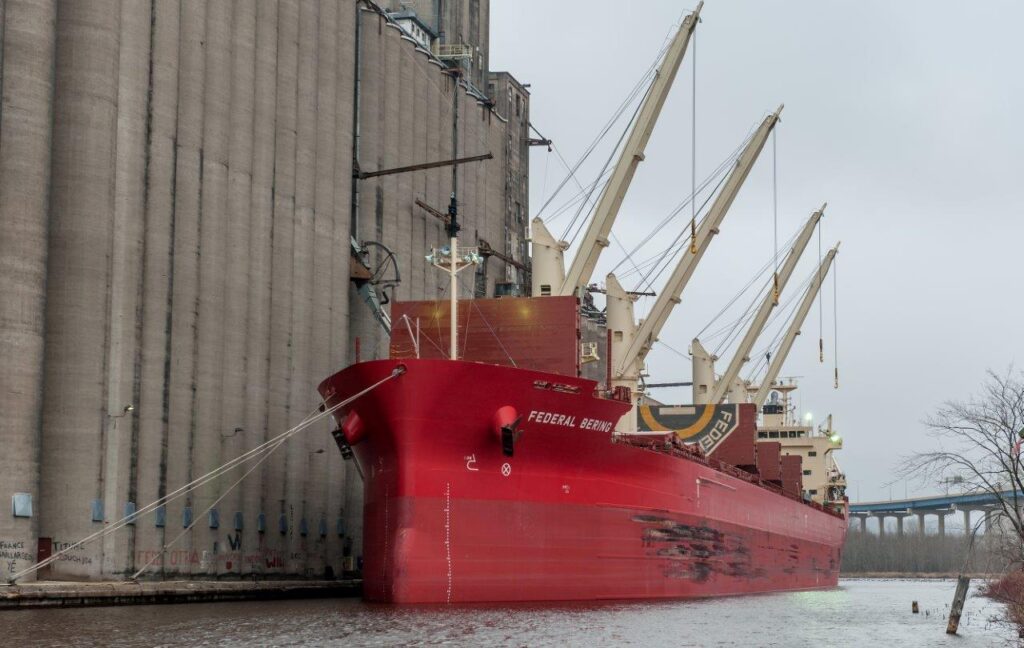
Small businesses around the Twin Ports region, which heavily rely on international trade, have been navigating some turbulent waters. Recent reports from the Port of Duluth-Superior revealed a significant drop in cargo shipments by tonnage, decreasing nearly 15 percent year-over-year, marking the lowest levels since 1938. The situation is even more dire with Canadian trade, which plummeted by 41 percent compared to 2024.
This downturn is largely attributed to President Donald Trump’s tariff trade war, compounded by uncertain conditions across various market sectors.
“Tariffs have affected small businesses,” explained Chris Wojtowicz of the Small Business Development Center at the University of Wisconsin-Superior. “The bottom line for all small businesses has been, ‘How am I going to absorb these costs or pass them on to my customer?’”
Small businesses that source parts internationally face significant challenges due to these economic pressures. Wojtowicz regularly offers guidance on overcoming these hurdles, sharing insights during an interview with WPR’s Robin Washington on “Morning Edition.”
Below is an edited transcript for clarity and brevity.
Robin Washington: We spoke with you last spring when the tariff wars had just begun. Now that the year-end numbers are out, let’s get the bad news out of the way. Most of the tonnage shipped from the port of Duluth-Superior is iron ore and grain. How have the trade wars affected local small businesses who aren’t dealing in taconite or soybeans?
Chris Wojtowicz: For most, the impact has been negative. However, some businesses have discovered opportunities amid reduced competition. Opportunities exist, but sometimes they require a keen eye to spot.
RW: One place you told us last year to look for an opportunity was foreign trade zones at our ports.
CW: Indeed. Duluth hosts a foreign trade zone, and plans for a sub-zone in Superior are underway. There are two principal types. A bonded warehouse allows goods to remain stored until duties and taxes are paid on removal, letting businesses hold onto their money longer. The other is a foreign trade zone where imports are assembled, and duties are based on the finished product, sometimes reducing them to zero.
RW: Are there other techniques — and do you have case histories?
CW: One example involves a woman importing from China. Initially, tariffs soared to 150-170 percent, prompting fears of business closure. We advised negotiating with customers to share tariff costs, as they valued her product. She also learned that shipping with a 20-foot container was nearly as costly as a 40-foot one. Switching to the larger container allowed her to double shipments with only a 15 percent increase in cost, effectively offsetting tariff expenses. Although Chinese tariffs now hover in the double digits, this strategy enabled her small business to thrive.
If you have an idea about something in northern Wisconsin you think we should talk about on Morning Edition — including an opposing view on this subject — send it to us at northern@wpr.org.