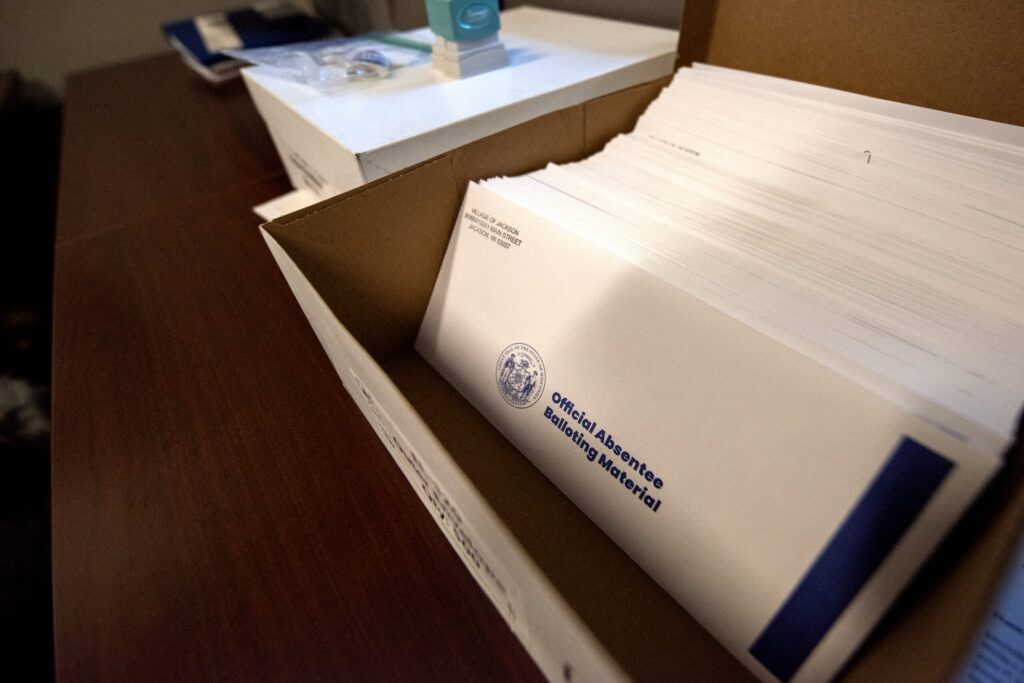
With the midterm elections on the horizon, the U.S. Supreme Court delivered a crucial decision by refusing President Donald Trump’s proposal to modify mail-in voting regulations in Wisconsin. Election officials in the state had previously cautioned that implementing these changes so close to the election would be impractical.
This decision ensures that existing rules governing absentee ballots remain intact. The Trump administration had aimed to establish new federal oversight on mail-in voting, including a federal voter list managed by the U.S. Postal Service. Despite the Supreme Court’s ruling halting these changes, federal efforts to access state voter information, particularly in Wisconsin, persist, under the pretext of addressing noncitizen voting.
Robert Yablon from the University of Wisconsin Law School’s State Democracy Research Initiative commented on the potential impact of federal actions: “A lot of what we’re hearing from the federal government has the potential to generate misperceptions about the state of our election system — to undermine confidence in it.”
As per an unsigned decision, new mail-in voting protocols will not be enacted, allowing absentee voting to proceed without alterations. The Wisconsin Elections Commission reported that over 130,000 absentee ballots were dispatched to voters by Friday. Furthermore, there is an impending deadline of September 17 for sending ballots to military and overseas voters.
Yablon reassured voters: “A key thing for voters to understand right now is — particularly for people who are planning to vote absentee in Wisconsin this year — the rules have not changed, and their ability to vote absentee is the same as it’s been in the past.”
Federal Efforts to Secure Voter Data Continue
The Trump administration sought to enhance federal control over voter registration records by compelling states to share specific voter details with the U.S. Postal Service. Although the Supreme Court has impeded this initiative, other federal efforts to acquire state voter data are still ongoing.
“For more than a year now, the federal government has been trying to get unredacted voter lists from states around the country, including Wisconsin,” Yablon stated.
The State Democracy Research Initiative indicates that the Department of Justice has filed 31 lawsuits to compel states, including Wisconsin, to release voter data. Most have been dismissed at the circuit court level, but appeals continue, including a case involving Wisconsin pending in the 7th U.S. Circuit Court of Appeals.
At the heart of the DOJ’s argument is the necessity for states to maintain accurate voter rolls, which, according to them, justifies federal inspection of these records.
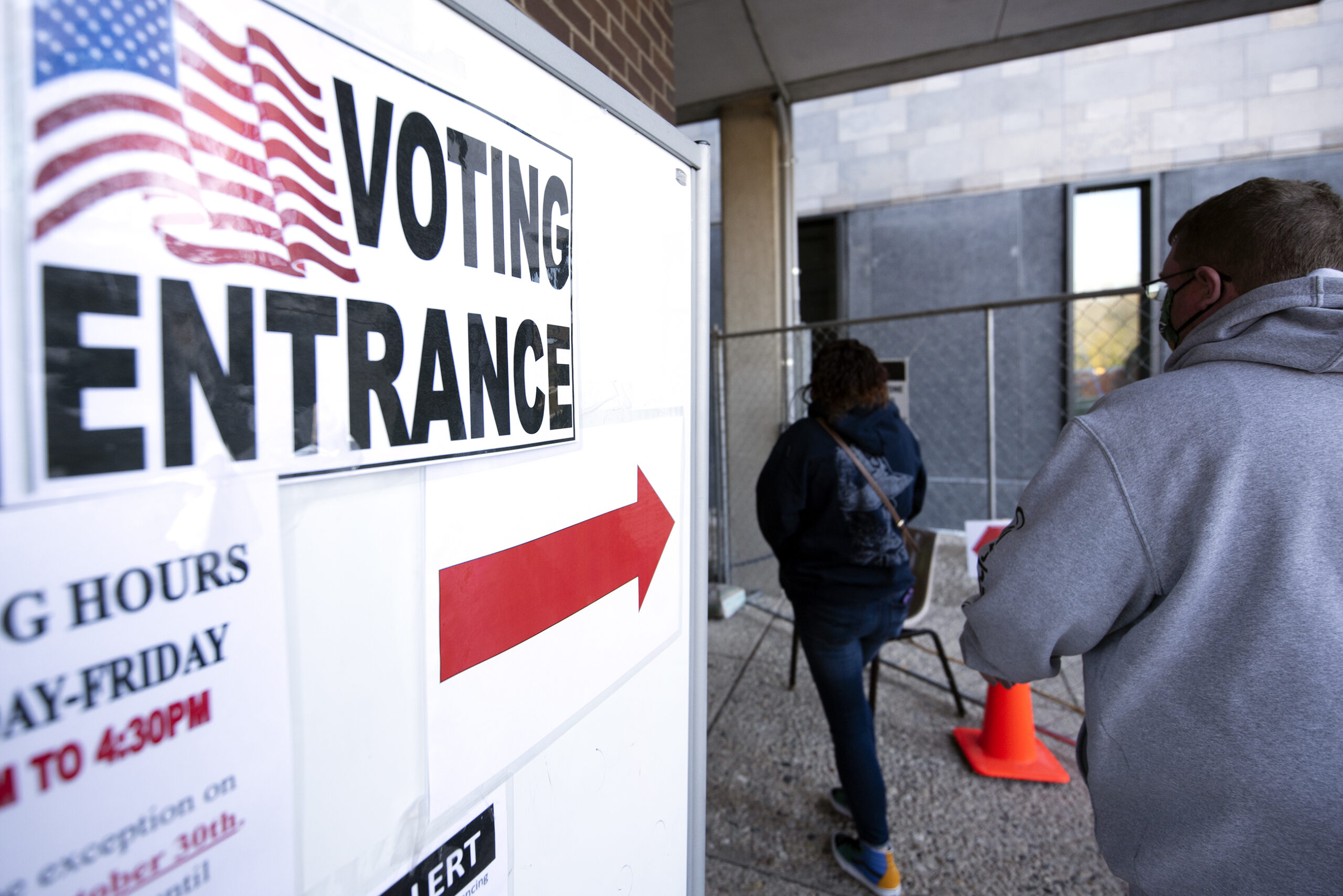
The Associated Press reports that 29 states and the District of Columbia have been instructed by the U.S. Department of Justice to preserve all records related to the 2024 election beyond the federally mandated 22-month retention period.
Wisconsin, along with other states, has been notified in a letter to election administrator Meagan Wolfe that they must retain these records due to ongoing litigation. Eric Neff from the DOJ emphasized the importance of preserving these documents, warning against “spoliation of evidence” which could lead to sanctions.
While Wisconsin Elections Commission spokesperson Emilee Miklas did not respond, Wisconsin state law allows for data deletion after 22 months.
According to Yablon, the primary concern revolves around privacy and the potential misuse of shared data. He noted that federal actions could lead to misinformation and insufficient data protection.

Department of Homeland Security’s Role
The DOJ has acknowledged sharing data with the Department of Homeland Security (DHS) to verify voter citizenship. Reports have surfaced suggesting that DHS might be illegally accessing state voter databases as part of its investigations.
The administration also seeks to involve DHS in voter verification through the Systematic Alien Verification for Entitlements program, known as SAVE, to cross-check state voter rolls with a national citizenship database, pending Supreme Court deliberation.
Trump’s proposed SAVE Act, requiring proof of citizenship for voter registration, faces opposition due to concerns that it could disenfranchise millions without proper documentation, and remains stalled in the Senate.