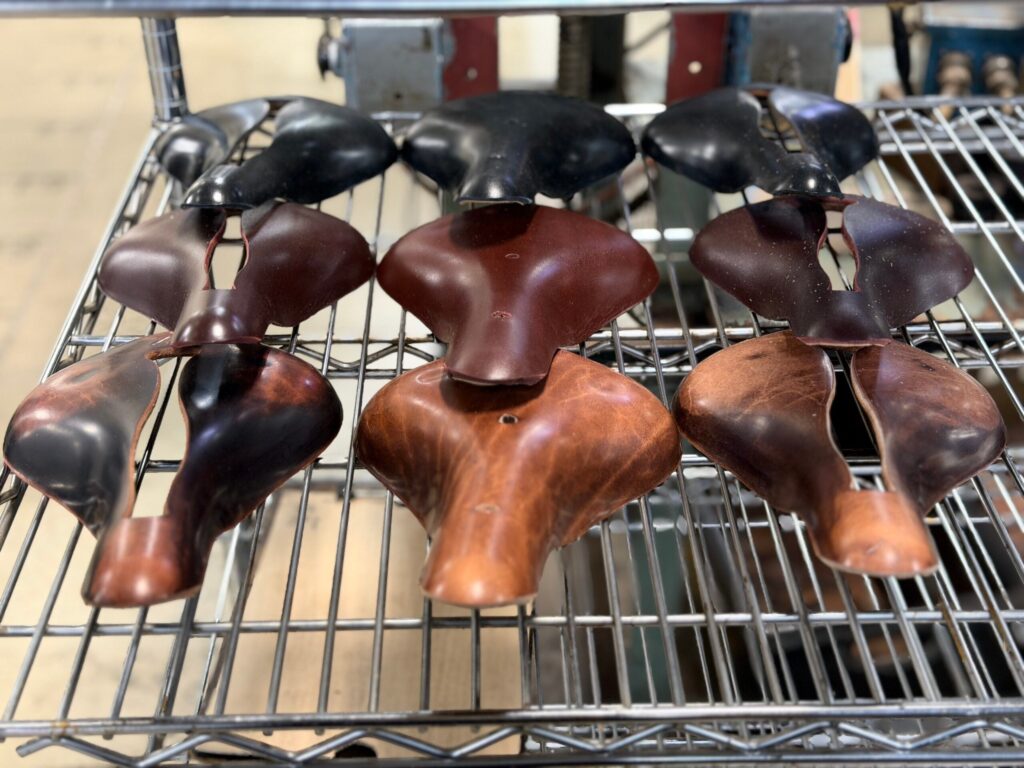
As spring unfolds in Wisconsin, cycling enthusiasts are gearing up to explore the scenic landscapes on two wheels. Among them are fans of Selle Anatomica, the only American manufacturer of leather bicycle seats, known for its distinctively comfortable design.
Based in Elkhorn, Wisconsin, Selle Anatomica has garnered a devoted following for its uniquely crafted bike seats. The brainchild of Tom Milton, a Detroit native with a legacy of speed in his veins—his grandfather was the first to win the Indy 500 twice—this product revolutionized the cycling experience.
Milton, who preferred bicycles over race cars, spent hours riding each day but often found himself uncomfortable on traditional leather saddles, notably those made by Brooks. In pursuit of a more comfortable ride, he embarked on developing a new kind of saddle.
An Unexpected Collaboration
In his quest to create the perfect seat, Milton turned to the Midwest’s leather craftsmen, eventually partnering with Ed Sylvester of Monarch McLaren in Elkhorn. Sylvester’s company, known for making leather seals and flanges, was unfamiliar with bicycle seats, but he embraced the opportunity.
“What he liked is, our name is Monarch-McLaren,” Sylvester noted, referencing the connection to McLaren, the fast car brand.
The partnership wasn’t always smooth. Milton, with his innovative ideas, often clashed with Sylvester, a seasoned leather worker. “I clash with engineers,” Sylvester admitted. “I know what leather can do … they think they know what leather can do.”
Milton’s breakthrough idea was to incorporate a slot in the center of the saddle to alleviate pressure during long rides. They tested this concept by modifying a Brooks seat with the addition, which was met with enthusiasm from riders.
Innovative Techniques Set Selle Anatomica Apart
While the idea resonated with cyclists, it didn’t sit well with Brooks, prompting Sylvester to devise a new production method. Unlike the traditional cold molding technique, Sylvester’s approach involved hot molding the leather, resulting in a seat that felt comfortably broken in from the first use.

Darryl MacKenzie, a bike coach from San Diego, praised the comfort of the Selle Anatomica saddle: “I was shocked at how comfortable the saddle was,” he said. “I immediately purchased two more of them and put one of them on each of my three bicycles.”
The innovation and comfort of Selle Anatomica seats have attracted a loyal following over the years. After Tom Milton’s passing in 2010, his sister continues to oversee the company’s operations in California while maintaining production in Wisconsin.
Today, Selle Anatomica saddles are available in bike shops globally, carrying forward Milton’s legacy of comfort and innovation. In a nod to its impact, Brooks has also introduced seats featuring a central slot in their design.


“Wisconsin Life” is a co-production of Wisconsin Public Radio and PBS Wisconsin. The project celebrates what makes the state unique through the diverse stories of its people, places, history, and culture.