
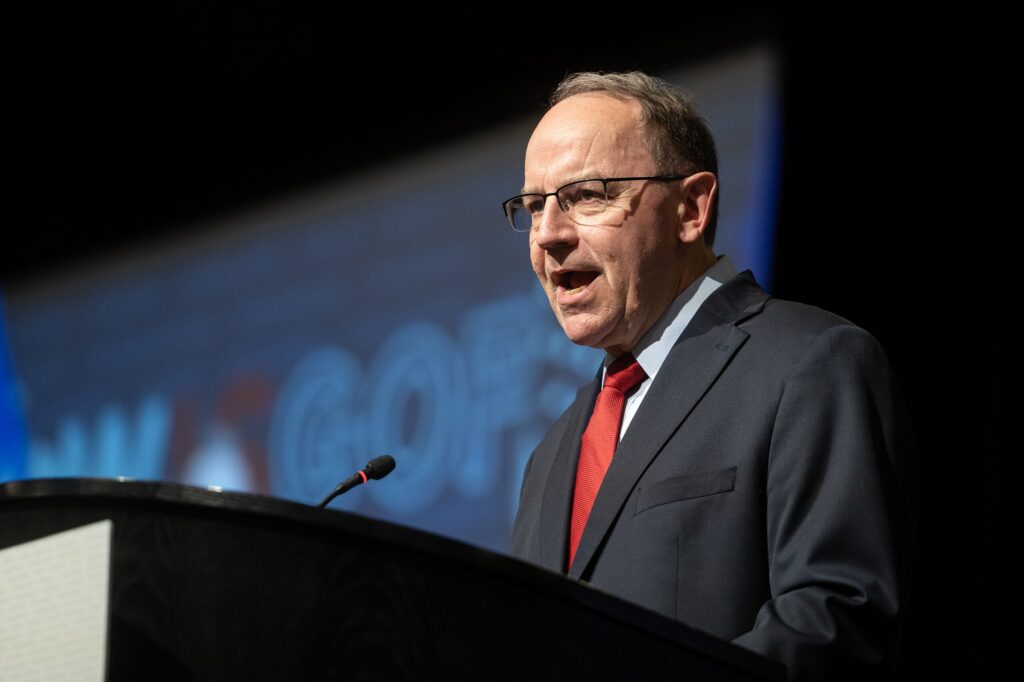
Wisconsin Governor Race: Tiffany’s Promise of DNR Audits Sparks Debate
In an effort to scrutinize state spending, U.S. Representative Tom Tiffany, a Republican, has pledged to audit the Wisconsin Department of Natural Resources (DNR) before considering any increases in fees or taxes to support fish and wildlife management. This comes as Tiffany eyes the governorship with a focus on financial accountability.
According to the Ashland Daily Press, Tiffany shared his plans with a select group of anglers and conservation advocates during a town hall meeting in Ashland on October 1, organized by the Friends of Wisconsin Fisheries. His campaign has emphasized that this audit would extend to all state agencies.
Tiffany’s proposed “Taxpayer Accountability Plan” involves hiring additional state auditors to eliminate waste and fraud, mirroring federal government practices. However, a recent audit by the state’s nonpartisan Legislative Audit Bureau has already assessed the DNR’s fish and wildlife account, affirming appropriate expenditure.
“Before asking Wisconsin families, hunters, and anglers to pay more, we must ensure existing funding is being spent effectively. The previous audit focused only on the Fish and Wildlife Account, and questions remain about how much funding directly benefits sportsmen and women,” Tiffany’s campaign stated.
State Republican lawmakers have highlighted that the audit revealed 49.8 percent of $92.9 million in state funding directly supported hunters and anglers in fiscal year 2023-2024, a decrease from the 57.3 percent noted in a 2006 audit. The DNR maintains that 89.3 percent of the account’s funds benefit hunters, anglers, and other users.
Tom Johnson of the Douglas County Fish and Game League, who attended the meeting, remarked that another audit might be unnecessary, stating, “The department was already reviewed by an independent entity that was chosen by our Legislature, and they found only minor issues.”
Over the past years, the state’s fish and wildlife account has encountered a significant $16 million shortfall due to rising costs, declining license sales, and fees that have remained stagnant since 2005. This financial strain led to the closure of the Brule and Osceola fish hatcheries in northern Wisconsin.
On the Democratic side, Milwaukee County Executive David Crowley, a gubernatorial candidate, emphasizes the importance of well-stocked and accessible fisheries. His campaign stated, “Wisconsin’s outdoor heritage depends on clean water, healthy habitat and good wildlife management. That’s why he will focus on giving it the tools to deliver for hunters, anglers and everyone who enjoys the outdoors.”
Todd Berg from the Friends of Wisconsin Fisheries noted that most voters have supported fee increases in Conservation Congress spring hearings, acknowledging the struggle to keep up with rising costs.
To address the financial challenges, lawmakers have authorized a $15 million transfer from the state’s forestry account in each year of the 2025-27 budget. Despite these efforts, the DNR continues to face budgetary difficulties.
Federal data highlights that boating and fishing contribute approximately $1 billion to Wisconsin’s economy annually. Meanwhile, the DNR is requesting over $1.2 billion for the 2027-2029 budget, though this does not include a solution for the ongoing fish and wildlife account shortfall.
Should Tiffany win the governorship, his campaign promises to pursue “a sustainable, long-term solution that protects wildlife management and Wisconsin’s hunting and fishing traditions.” Crowley’s campaign, on the other hand, aims to collaborate on a comprehensive plan to stabilize the fish and wildlife account without resorting to temporary fixes.


