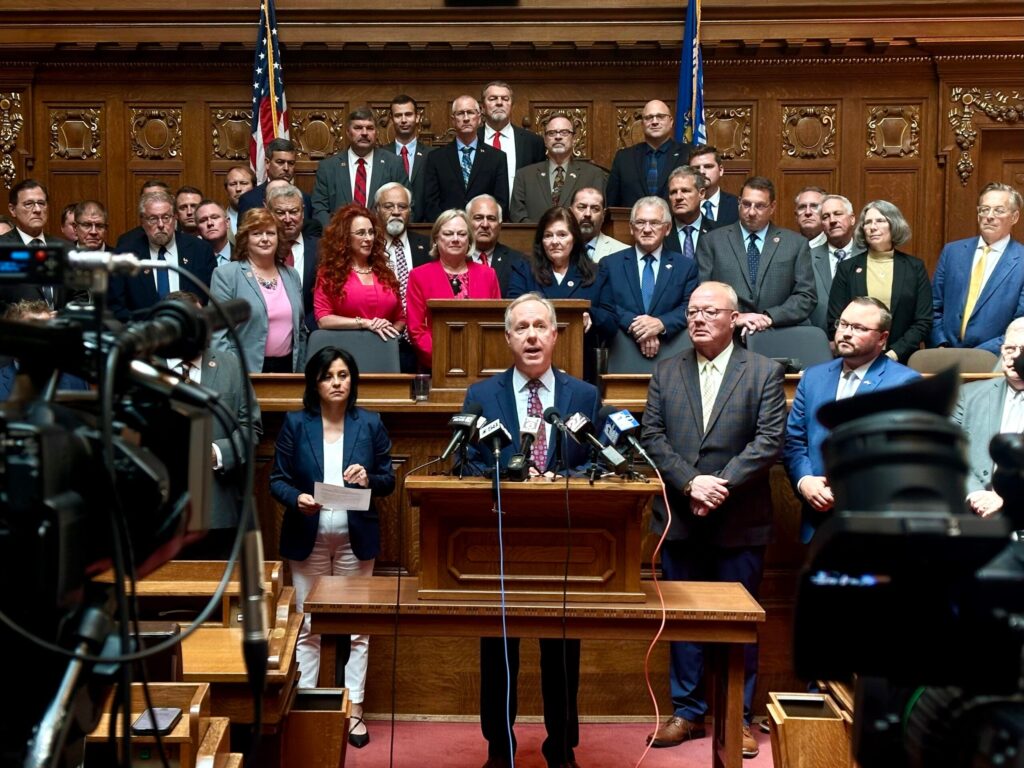
In a move that has sparked a debate on transparency, Wisconsin’s Republican lawmakers are strictly enforcing rules that prohibit the public from recording legislative hearings. This development comes on the heels of WisconsinEye, the state’s equivalent of C-SPAN, going offline due to financial constraints.
Under a 2005 state Senate rule, only credentialed media and legislative staff are permitted to record audio or video of legislative sessions. Additionally, a 2013 Assembly rule bans visitors from using recording devices in the galleries, though media personnel are still allowed to document proceedings.
While Wisconsin’s Open Meetings Law generally supports public recording of open meetings, a memo dated Jan. 7 from Senate Chief Clerk Cyrus Anderson clarifies that Senate or Assembly rules take precedence over this law.
The decision to enforce these recording rules more strictly comes after the shutdown of WisconsinEye, a nonprofit that streamed legislative meetings, due to lack of funds. This has prompted criticism from Democratic lawmakers, who accuse Republicans of reducing transparency by scheduling meetings without the potential for public recording.
Democratic Assembly Minority Leader Greta Neubauer pointed out that, “We did not see this rule enforced that people could not record in committees previously.” She questioned the Republican Party’s motives, asking, “Why are they so intent on not having recordings of what’s going on in committee hearings?”
During a recent session, Rep. Lisa Subeck, a Democrat from Madison, advocated for public recording in light of WisconsinEye’s offline status, noting that many constituents cannot attend sessions in person. Her request was denied due to a rule against using certain electronic devices in the Assembly chamber.
Republican Assembly Speaker Robin Vos responded to the Democrats’ concerns by saying, “I think we have had about 48,000 bills passed before WisconsinEye went into effect, and I think the public was well served by the media reporting on them.” He added, “We’ve got plenty of transparency.”
Transparency group, conservative law firm troubled by recording ban
Bill Lueders, president of the Wisconsin Freedom of Information Council, expressed concerns about the reduction in media personnel since WisconsinEye’s inception, noting that no organization can fully replace its role in covering multiple meetings simultaneously.
Rick Esenberg, president of the conservative Wisconsin Institute for Law & Liberty, raised First Amendment issues with the ban, emphasizing, “The media has first amendment rights, but so does the public.” He suggested that the blanket prohibition and its exceptions could face legal challenges.
WisconsinEye future remains unclear
Both parties have shown interest in reviving WisconsinEye broadcasts. Speaker Vos has been a “strong supporter” since its inception, hoping for a “bipartisan answer.” Meanwhile, Neubauer stated that Democrats are “open to multiple solutions,” potentially including state-managed coverage.
WisconsinEye has initiated a GoFundMe campaign to raise $250,000, with just over $13,000 collected so far. The funds aim to support the network’s operations for the upcoming session while ongoing discussions with the Legislature and governor continue.
WisconsinEye President Jon Henkes has requested the removal of a matching funding requirement from the state budget. However, Gov. Tony Evers expressed opposition, insisting, “there has to be some skin in the game.”