Historic Menominee Canoe Sails into Smithsonian Spotlight
A significant piece of Wisconsin’s Indigenous history is now featured prominently at the Smithsonian Museum of Natural History. This remarkable artifact, a Menominee canoe, is part of an exhibition commemorating the 250th anniversary of the United States.
The exhibit, “From These Lands: Sharing our Natural and Cultural Heritage”, opened in June and will continue until 2029 at the museum in Washington D.C. The expansive 5,000-square-foot exhibit showcases over 600 objects originating from every state in the nation.
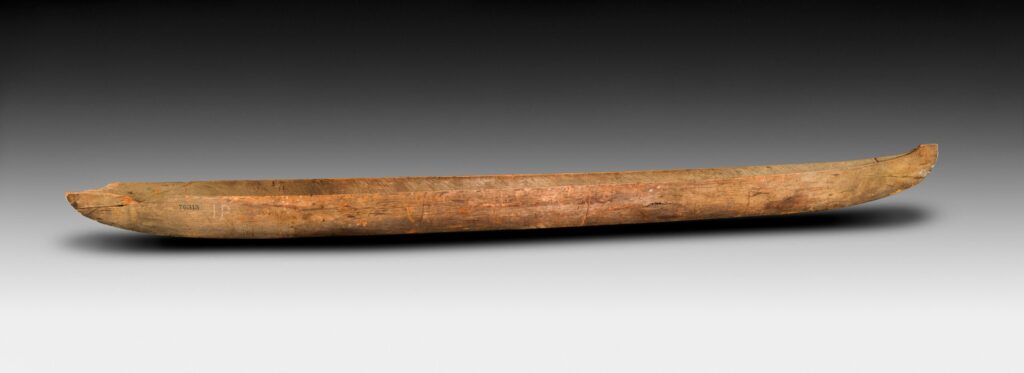
Among these treasures is a 15-foot-long wooden canoe crafted by the Menominee Indian Tribe, believed to date back to the late 1700s. Acquired by the Smithsonian in 1893, it serves as a testament to the tribe’s enduring legacy.
Smithsonian curator Torben Rick collaborated with the Menominee Nation’s historic preservation office to ensure the canoe’s display honors its cultural significance. Rick expressed, “The Menominee chose this because it not only tells about their use of the water and waterways, but it’s a gateway to talk about [the] Menominee’s sustainable forestry practices today.”
Visitors to the exhibit will find the canoe surrounded by immersive panels depicting forest landscapes, alongside video interviews with Menominee tribal members. Dana Waubanascum, the vice chairwoman of the Menominee Nation, emphasized the canoe’s representation of the tribe’s deep-rooted connection to their land. She stated, “Building these canoes required generations of ecological knowledge, the careful selection of trees, and a deep understanding of the forest and waterways.”
Historically, Indigenous people in the region that is now Wisconsin crafted dugout canoes by hollowing out logs using fire and various tools. Archaeological discoveries in Wisconsin have uncovered canoes dating back thousands of years, including one from Madison’s Lake Mendota, which is among the oldest found in North America, dating over 5,000 years old.
According to Dawn Wilber, a Menominee Nation member, dugout canoes played a crucial role in seasonal migrations and food gathering, including sturgeon, maple sugar, and wild rice. She noted, “The canoe (was) considered communal. That was for the community to use, and pretty much our whole world was about that.”
Recently, Wilber participated in crafting a modern dugout canoe, a delicate process involving the careful burning of a pine log’s interior. Wilber reflected on the experience, saying, “There was a spiritual moment that came along for me in the very beginning. It’s the constant watching and paying attention to the fire and what it’s doing, and how it’s acting, and how it’s shaping the canoe.”
This July, Wilber and other tribal members plan to embark on a multi-day journey along the Menominee River with their newly made canoe, organized by the Protectors of the Menominee River. “It’s more than just a canoe being made,” Wilber emphasized. “It’s the importance of the water, as I see it. Because without water everything would cease to exist.”