Wisconsin Judge Rules Felony Forgery Case Against Trump Allies Can Proceed
A legal battle over the 2020 election results has taken a significant turn in Wisconsin, where a judge has determined that there is sufficient evidence to move forward with a trial against two individuals accused of felony forgery. The charges are tied to an alleged scheme involving false electors.
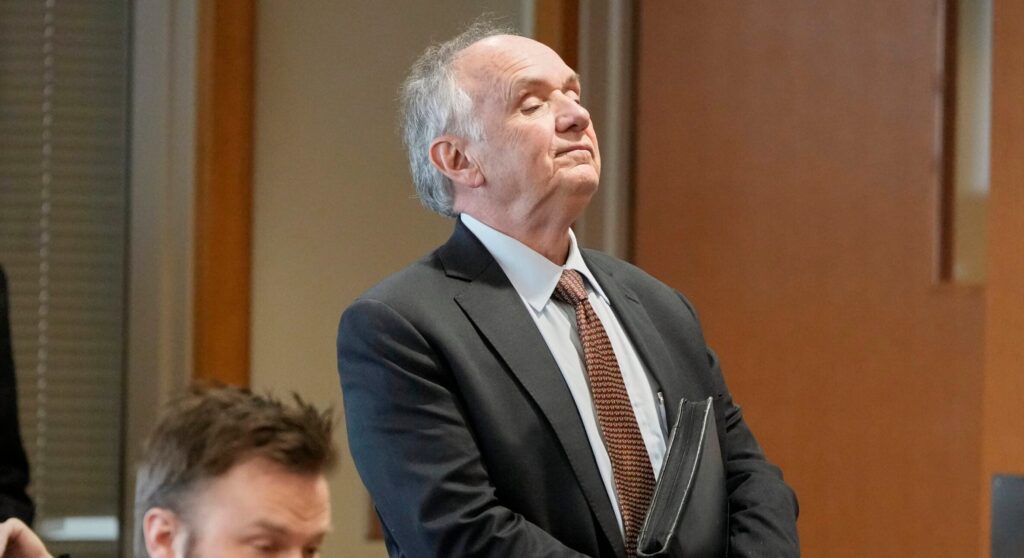
In a detailed preliminary hearing, Judge John Hyland of the Dane County Circuit Court found that the prosecution had provided enough evidence to proceed with the trial against Jim Troupis, who acted as Trump’s Wisconsin attorney during the 2020 election, and Mike Roman, a campaign aide. The case against a third defendant, Ken Chesebro, will be handled separately due to questions about admissible evidence.
The three defendants are facing 11 counts of felony forgery for their purported roles in the 2020 false electors plot. This incident involved a group of 10 Republican electors who convened at the state Capitol to sign documents claiming Trump had won Wisconsin, despite his narrow loss to Joe Biden.
Attorney General Josh Kaul filed the charges last year, asserting that Troupis, Chesebro, and Roman were involved in creating false documents and misleading the electors to sign them. Defense attorneys for Troupis and Roman, Joe Bugni and Nathan Otis, argued that their clients were merely exploring all legal avenues available to challenge the election results.
Bugni contended that the document signed by the electors was legitimate, stating, “That’s not a counterfeit. That’s what it purports to be.” His argument was supported by a visual display of the electoral ballot.
Wisconsin Assistant Attorney General Adrienne Blais emphasized that the criminal complaint, prepared by special agent Mary Van Schoyck, provided enough evidence of misconduct to warrant a trial. Judge Hyland agreed, noting that communications among the defendants suggested the signatures were collected as a contingency plan.
As the case progresses, it marks the latest development in a series of legal actions against Trump allies who contested the 2020 election results in key swing states. Similar cases in Michigan and Georgia have faced setbacks, while proceedings continue in Nevada. Prosecutors argue that the actions of certain lawyers and Trump associates contributed to the events of January 6.
Documents from a related lawsuit imply that Wisconsin was used as a testing ground for the false elector strategy, as reported here.
All three men are included on a recent list of individuals pardoned by Trump, which comprises 77 others involved in the false electors scheme. However, federal pardons do not affect state-level investigations.
Previously, Troupis and Chesebro settled a civil lawsuit related to the false electors incident in Wisconsin in 2023.