This story was produced in partnership with the University of Wisconsin-Madison’s Investigative Journalism class taught in the School of Journalism and Mass Communication.
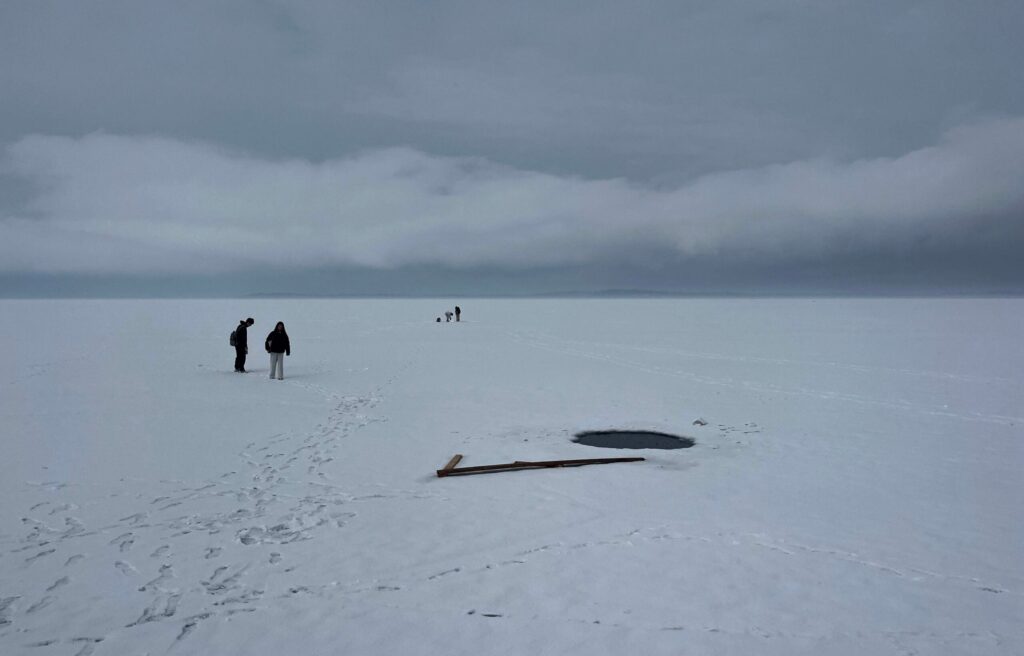
As the sun set over Lake Wingra one frigid January evening, Alec Hembree faced a chilling reality when the ice beneath him unexpectedly gave way. The temperature had dipped to a biting 2 degrees, and Hembree was biking home across the frozen expanse, a route he had safely navigated just a week prior. However, on this particular night, the thin ice couldn’t support him.
“It was instantaneous,” Hembree recalled. Fortunately, he managed to pull himself and his bike out of the icy water within seconds, his Eagle Scout training kicking in to help him survive the ordeal. Despite the immediate danger, there was no time for fear, and he quickly sought refuge at a co-worker’s house.
Hembree’s close call is becoming increasingly common on Wisconsin’s lakes, where several incidents have turned fatal. The state’s Department of Natural Resources reported five deaths last winter from similar falls, highlighting a growing concern for public safety.
In Madison, the Lake Rescue Team has been busier than ever. In recent years, they responded to several emergencies involving individuals who had fallen through the ice, demonstrating a troubling trend. Lt. Jacob Holsclaw of the Wisconsin DNR noted, “This (past) year has probably been one of the more dangerous years on ice that I can remember.”
A Growing Trend
Walking on frozen lakes is a favored winter activity for many in Dane County, Wisconsin. A 2010 survey indicated that 28% of respondents engaged in this activity, surpassing other popular winter sports. Events like the Frozen Assets Festival bring crowds to Lake Mendota each year, boosting local businesses.
However, unpredictable winter weather casts doubt on the future of these activities. With climate change reducing the number of days lakes remain completely frozen, the risks are rising. Lake Mendota’s ice cover has been notably shorter in recent years, with a record low of just 44 days in the 2023-24 season.
There’s No ‘Safe’ Ice
The adage that “no ice is ever safe” rings true, with factors like wind, sunlight, and water movement all affecting ice strength. Ph.D. candidate Adrianna Gorsky from UW-Madison explains that “black ice can withstand a lot more force” compared to its snow-mixed counterpart.
Temperature fluctuations, too, play a role in destabilizing ice. In January and February of 2025, Dane County experienced temperature swings of tens of degrees within days, further compromising ice integrity. These conditions underscore the need for caution, as even experienced individuals can find themselves in perilous situations.
The Cost of Thin Ice
Madison’s lack of fines for ice rescues encourages enjoyment of the lakes, but the financial toll is undeniable. Events like the Frozen Assets Festival have faced cancellations, impacting fundraising efforts. Businesses like D&S Bait and Tackle are feeling the pinch, as warmer winters lead to decreased demand for ice fishing equipment.
Beyond Madison
The issue extends beyond Dane County, with fatalities occurring across Wisconsin. A study published in Nature Reviews Earth & Environment warns that some areas may lose all safe ice within this century, pointing to an urgent need for further research into the effects of climate change on lake ice.
For Hembree, the experience was a stark reminder of nature’s unpredictability. While he plans to be more cautious in the future, he continues to embrace the winter landscape while it’s still accessible.
Tips for Going on the Ice
The Madison Fire Department advises the following for those venturing onto the ice:
- No ice is ever completely safe, regardless of thickness or duration of cold temperatures.
- Always bring a cellphone and avoid going alone.
- Stay clear of areas with cracks or upheaval signs.
- Carry safety gear like flotation devices and ice picks for emergencies.