Enbridge to Cover Policing Costs Amid Line 5 Pipeline Reroute Protests
In a move aimed at mitigating potential unrest during the construction of its Line 5 pipeline reroute, Canadian energy giant Enbridge has agreed to reimburse Ashland County for policing expenses. This decision comes after the Ashland County Board of Supervisors narrowly voted 10-7 in favor of the agreement, with one member abstaining and another absent.
The Wisconsin Counties Association played a key role in brokering the deal, securing funds from Enbridge to be held in an escrow account. This account will cover the “public safety response” costs related to the construction of the new 41-mile segment of the pipeline, as confirmed by Andy Phillips, the association’s attorney. The reroute bypasses the reservation of the Bad River Band of Lake Superior Chippewa, a plan that recently received judicial backing despite ongoing legal challenges from environmental groups and the tribe itself.
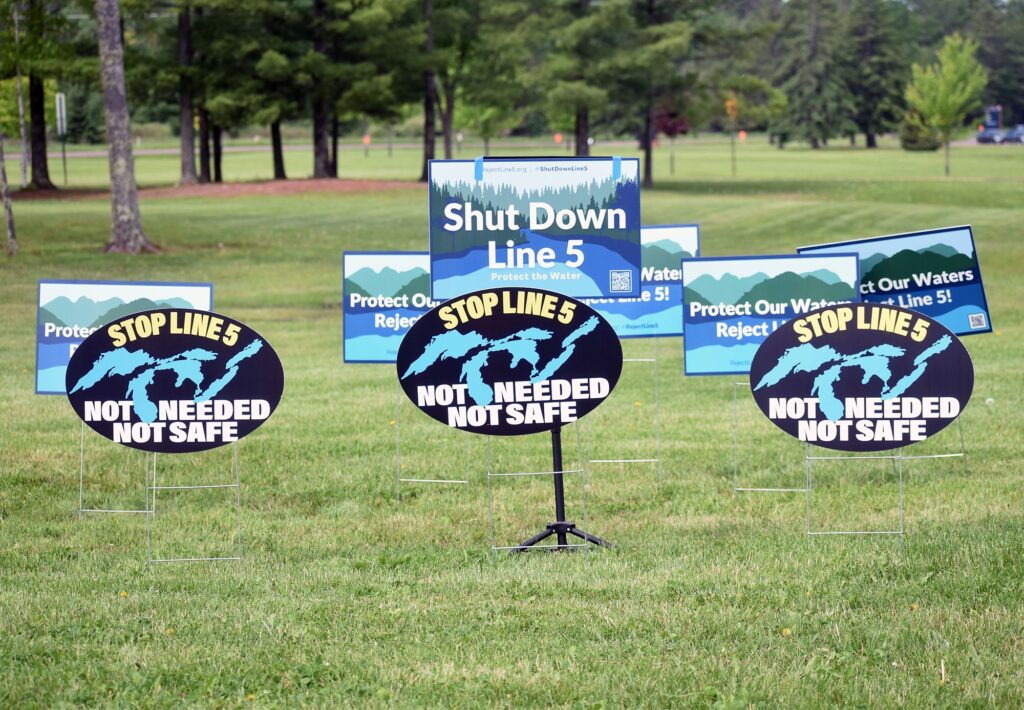
Despite the board’s decision, community concerns remain high. Approximately twelve residents voiced their opposition at the meeting, fearing local law enforcement might become de facto security for Enbridge. “Local law enforcement should be protecting the people of Ashland, not protecting a Canadian company with a bad track record,” argued Bailey Kroll, an Ashland resident.
Concerns echo from different corners, with Bad River tribal member Edith Leoso cautioning against trusting Enbridge. “They will feed you what you want to hear, and then they will take everything from this area and leave you to pick up the pieces,” Leoso warned.
Nevertheless, the local sheriff’s offices from Ashland, Bayfield, and Iron counties have reviewed and supported the agreement. Chief Deputy Dave Dawson of the Ashland County Sheriff’s Office emphasized their primary responsibility is the safety of all parties involved. “Our major concern is to protect the people, everyone, both sides,” Dawson stated.
The confidentiality of communications regarding policing services and reimbursement requests is a stipulation of the deal, although Phillips noted that complete confidentiality is not feasible under the state’s open records law. However, caution is advised to protect public and officer safety.
The financial implications weighed heavily on board member Pat Kinney, who supported the deal despite reservations about the potential strain on the county’s finances. He expressed his concerns, stating, “It’s a really emotional issue for a lot of people, myself included, but the alternative of not approving this leaves us, I think, in a less desirable place than approving it.”
On the other hand, board member Liz Franek voiced strong opposition, likening Enbridge to a bully. “You have to stand up. You have to say, ‘No. No more,’” she declared. “We cannot drink oil. We want our land safe and sound.”
Enbridge has previously funded policing costs for its projects, notably in Minnesota during the Line 3 replacement. In that instance, the company paid about $5 million to cover law enforcement expenses, a move criticized by opponents who accused Enbridge of using law enforcement as private security—a claim the company attributes to permit conditions.
Under the current agreement, counties and other local and tribal agencies can request reimbursement for various services, such as patrols, crowd control, and incident response. The boards of Bayfield and Iron counties are also slated to review the agreement.