As the race for Wisconsin’s governor heats up, the Democratic primary is drawing significant attention with a large number of candidates, contrasting sharply with the Republican race, which is rallying around a single contender.
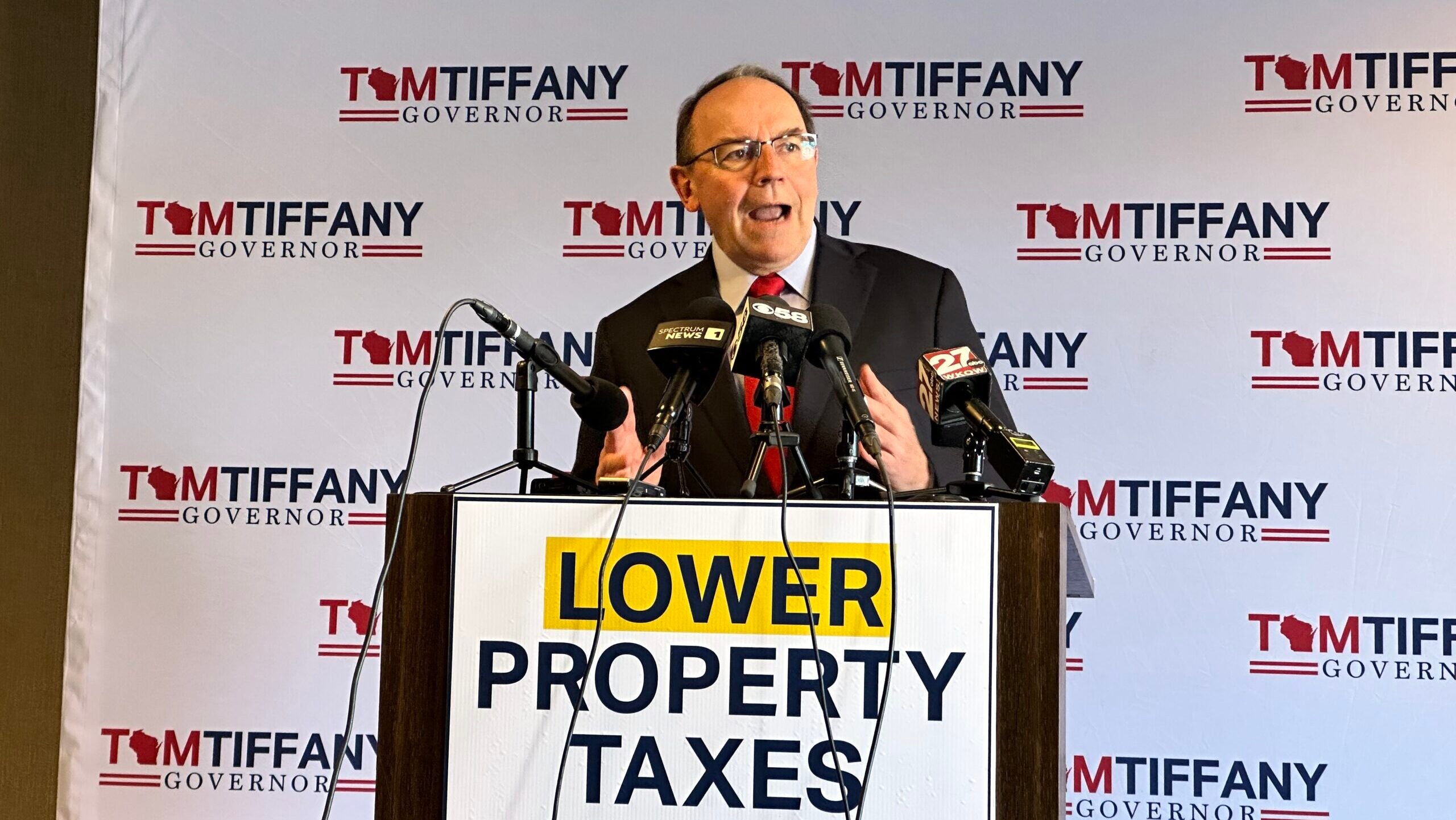
Recently, Washington County Executive Josh Schoemann exited the Republican race, following U.S. Rep. Tom Tiffany’s acquisition of former President Donald Trump’s endorsement. More details here.
With incumbent Democratic Governor Tony Evers stepping down, seven Democrats have announced their intention to run, setting the stage for a packed primary.
Challenges and Opportunities in a Crowded Primary
The crowded Democratic field is expected to focus on several key issues, including education funding, PFAS regulation, data centers, and federal immigration policies, according to Barry Burden, a political science professor at the University of Wisconsin-Madison. Burden suggests that the competitive nature of the primary could push candidates to adopt more progressive stances, which might energize the base but also risk alienating moderate voters in the general election.
Burden noted that while Republicans are consolidating their resources around Tiffany, Democratic candidates might face challenges in fundraising due to the divided attention among the multiple contenders.
David Crowley, Milwaukee County Executive, has emerged as a leading fundraiser among Democrats, amassing nearly $800,000 in the latter half of 2025. However, Tiffany has outpaced all Democratic candidates, reporting $2.1 million in contributions. For more on fundraising efforts, read here.
Democratic operatives are not sitting idly by; they are preparing for a robust support system for the eventual primary winner through the “Wisconsin Governor Readiness Project,” focused on messaging, field operations, and general election fundraising.
Generating Pre-Primary Excitement
According to Democratic strategist Joe Zepecki, this period before the primary is a golden opportunity for Democratic candidates to capture media attention and generate buzz, which might be more challenging for Tiffany despite his Trump endorsement.
Zepecki, who has financially supported candidates Rodriguez and Hong but hasn’t endorsed any, emphasizes the depth of talent in the Democratic field and is optimistic about a united front post-primary.
Reflecting on past primaries, Zepecki sees potential for Democrats to establish a progressive agenda under new leadership, following Tony Evers’ tenure.
Unpredictability of Wisconsin Voters
Wisconsin’s political landscape remains unpredictable, as highlighted by political scientist Mordecai Lee, who points out the potential volatility of a crowded primary. He notes that voter behavior in such circumstances is difficult to forecast.
Lee also warns of the impact of cross-party voting, where conservatives or independents might participate in the Democratic primary due to its competitive nature, potentially influencing the outcome.
With aggressive campaigning expected, the Democratic primary could result in a narrow victory margin, emphasizing the uncertainty of Wisconsin’s electorate. “The Wisconsin voter insists on being absolutely unpredictable,” Lee remarked, underscoring the state’s dynamic political environment.
Wisconsin Public Radio, © Copyright 2026, Board of Regents of the University of Wisconsin System and Wisconsin Educational Communications Board.