For more than two decades, Julie Shiff has made a routine of exploring the trails at Lion’s Den Gorge Nature Preserve in Ozaukee County. The Grafton resident frequents the 73-acre park weekly, if not more often. However, a recent development has caught her attention.
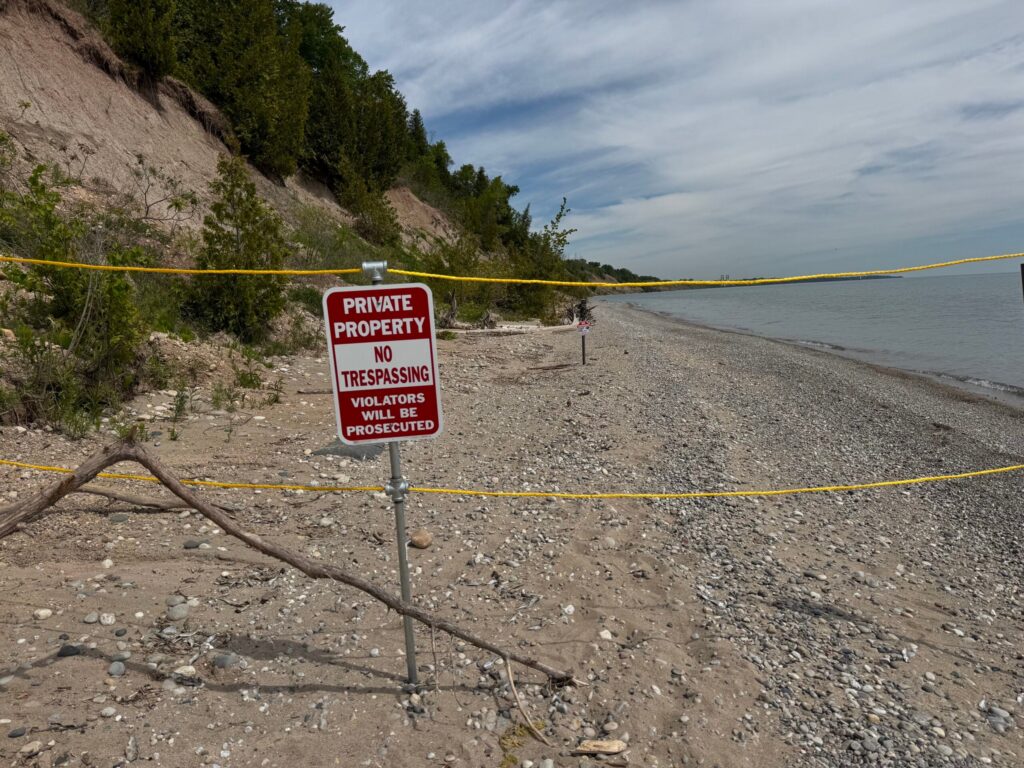
While visiting the park with a friend on Wednesday, Shiff encountered new signage along Lake Michigan’s shoreline, marking certain areas as private property. The signs, which have stirred reactions among park-goers, state, “private property, no trespassing, violators will be prosecuted,” and are accompanied by a rope fence and surveillance cameras.
Shiff expressed her disapproval, emphasizing, “That lake is for everybody, that shoreline is for everybody.” This sentiment reflects a growing concern among locals, like Megan Birkett of Glendale, who frequents the park with her dog but limits their walks to the county-owned beachfront.
Neighbors Express Concerns Over Beach Use
Mark Harris, a Grafton resident, is among the neighbors who installed the signs and fencing. Harris, who recently returned to his childhood home near the preserve, cited issues such as litter, dog waste, and individuals climbing the bluff near his property as reasons for the restrictions. He stated, “If people could just simply walk back and forth, I probably would have had no issue with that.”
Susie Rieck, another neighbor, echoed these concerns. While she isn’t opposed to beachgoers, she is worried about safety and liability issues due to people climbing the bluff.
Local Authorities and Legal Perspectives
Travis Schroeder from the Wisconsin Department of Natural Resources (DNR) has acknowledged the situation, noting that the department learned of the issue through its tip line. The DNR plans to establish the ordinary high water mark, which will determine public access rights along the shoreline. Schroeder mentioned, “The department is trying to verify that any navigation that happens in the water, or folks keeping their feet wet, is allowed.”
Ozaukee County Sheriff’s Office has been involved, with Undersheriff Marshall Hermann advising the public to stay below the ordinary high water mark to remain on public land. “Individuals walking along the beach should remain within the area below the ordinary high-water mark and avoid entering private property,” Hermann stated.
Potential Legal Implications
A similar legal battle is unfolding in Shorewood, where Paul Florsheim is appealing a trespassing citation received for walking past a no trespassing sign on Lake Michigan’s shore. This case could set a precedent in Wisconsin, as it may reach the state Supreme Court.
Rob Lee, representing Florsheim, is optimistic about the case’s potential, while legal expert David Strifling anticipates the case could advance to higher courts. The outcome could influence public access rights along Wisconsin’s Great Lakes shorelines.
As the debate continues, the community awaits further clarification on shoreline access rights, with many hoping for a resolution that balances private property rights with public access.