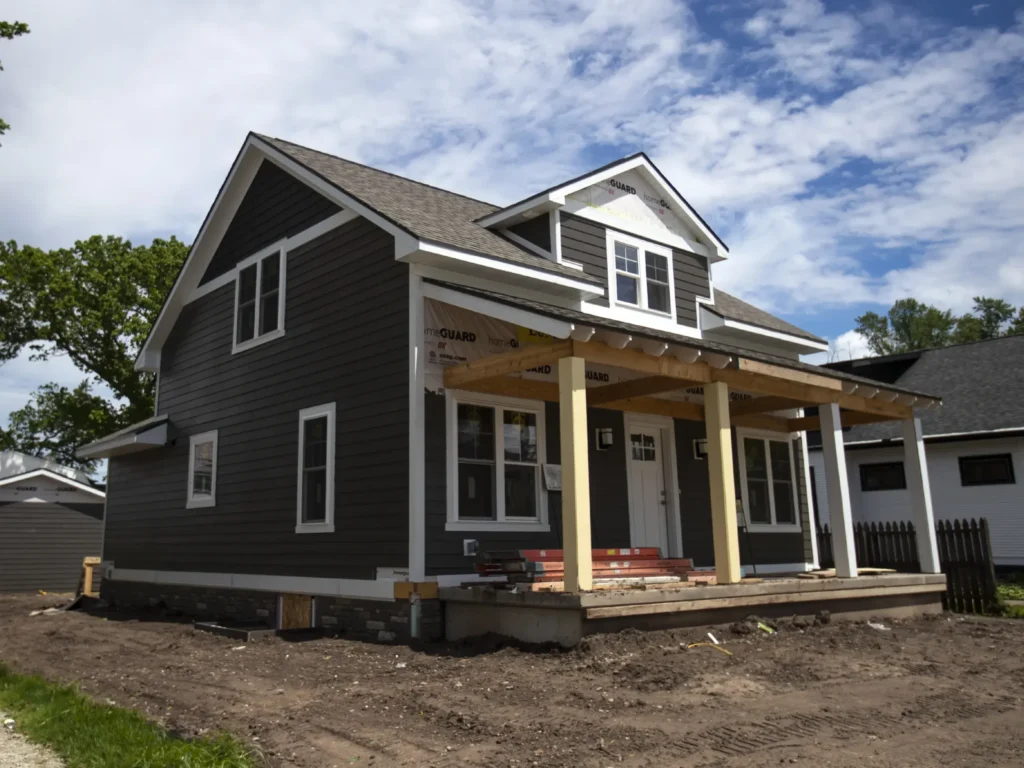
A bipartisan effort to address housing shortages has resulted in a significant bill passing through Congress, aiming to facilitate new housing development and community rezoning. However, its future remains uncertain as President Donald Trump hesitates to sign it into law.
Wisconsin, in particular, is experiencing a severe housing deficit, with estimates suggesting the need for up to 140,000 new units by 2030 to meet population demands, according to Forward Analytics. The bill received rare bipartisan support from Wisconsin’s congressional delegation, with only a few dissenting votes.
Despite its passage in Congress, the bill faces a hurdle as President Trump withholds his signature, seeking further legislative actions on unrelated issues. Housing experts caution that even if enacted, the bill alone will not solve the housing crisis in the U.S.
Paul Aylesworth, director of affordable and sustainable housing development at the University of Wisconsin-Madison, commented on a local radio show, saying, “I think absolutely it’s a big deal. This is a bill that’s trying to crack the big nut that is increasing housing supply in our state, which most folks agree is the main contributor to the high housing costs.”
The legislation, known as the “21st Century Road to Housing Act,” incorporates various proposals, such as deregulating new house construction, incentivizing zoning changes, and piloting new financing models for development projects. It also restricts private entities from buying more than 350 single-family homes, aiming to preserve housing stocks for residential use.
Kurt Paulsen, a UW-Madison professor specializing in housing policy, noted the incremental nature of the bill’s approach. “It walks this very bipartisan line by providing a study here, a report there, a recommendation, an incentive, a little pilot project,” he said. “Taken together cumulatively, if implemented, (it) could possibly bend the supply and cost curves in the long run.”
Politics of Bipartisan Bill Upended by Trump
While the bill garnered strong bipartisan backing, political complexities have emerged. Most notably, U.S. Sen. Ron Johnson was among the few to oppose the bill, and Republican Rep. Tom Tiffany abstained from voting. Trump’s decision to delay signing the bill, pending other legislative priorities, further complicates its trajectory.
If Trump vetoes the bill, Congress would need to attempt an override, testing Republican willingness to challenge the President on this issue.
Housing is Largely a Local Issue
Stephen Malpezzi, professor emeritus at UW-Madison, emphasized the localized nature of housing policy. “Most of the action in improving housing supply, and hence affordability, will remain at the local level,” he explained via email.
Critics argue the bill does not adequately address the needs of low-income renters, who face persistent housing barriers. While the legislation aims to boost construction, experts highlight that new units may not be affordable for lower-income households, especially given current high material costs.