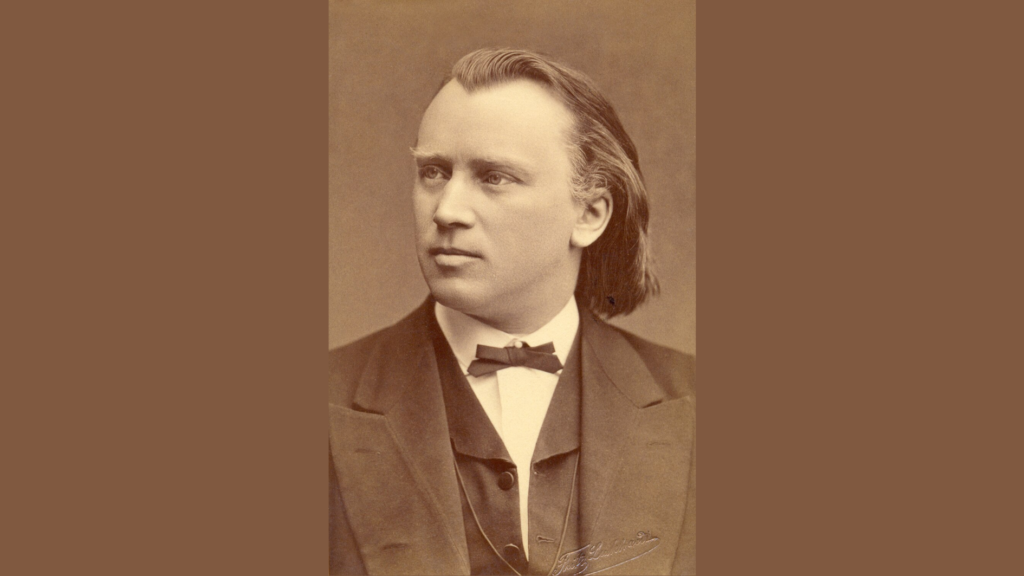
Brahms: The Reluctant Successor to Beethoven’s Legacy
In the mid-19th century, the music scene was abuzz when Robert Schumann proclaimed a young Johannes Brahms as the next great composer, destined to “give voice to the highest expression of the times.” This declaration set the stage for Brahms to be compared to the legendary Ludwig van Beethoven, a comparison that would both haunt and drive him.
Brahms revered Beethoven above all others and was daunted by the prospect of living up to such a towering legacy. With no aspirations to follow in Wagner’s operatic footsteps or rival Liszt’s virtuosity on the piano, Brahms saw the symphony as his path to greatness. Yet, this was the very genre that Beethoven had revolutionized.
Struggling with immense pressure, Brahms took over twenty years to complete his First Symphony, discarding numerous drafts. He often described his creative challenges as feeling the heavy footsteps of Beethoven behind him, a giant’s presence that loomed large over his work.
A major turning point came with the triumphant reception of his “German Requiem.” Finally, in 1876, Brahms unveiled his Symphony No. 1 in C Minor, a work that echoed Beethoven’s Ninth despite lacking a choral finale.
Following this breakthrough, Brahms’s creative dam burst open. He completed his Second Symphony the following year and introduced his Third Symphony in 1883. However, by the time he presented his Fourth Symphony in 1885, Brahms decided to retire from symphonic writing. He spent his remaining years focusing on smaller compositions, including choral music, chamber pieces, and piano works.
Brahms’s four symphonies, though just a fraction of his oeuvre, each represent a unique world. The Milwaukee Symphony Orchestra captures these worlds vividly in their recordings. Under the baton of Edo de Waart, who served as the orchestra’s music director from 2009 to 2017 and is now conductor emeritus, these symphonies were recorded live at Milwaukee’s Marcus Center for the Performing Arts in 2016.
As the orchestra’s retired principal violist, Robert Levine, noted, “These concerts represent both Edo and the MSO at their best. We’ve always been a good Brahms orchestra, but Edo’s mixture of musical honesty, semplice, and thorough rehearsal made all of these highlights of Edo’s tenure with the MSO.”