Trump’s Budget Bill Expands Immigration Detention Capacity
The latest budget bill introduced by President Trump aims to institutionalize substantial aspects of his immigration strategy, significantly reshaping immigration enforcement and detention practices in the United States. A substantial increase in funding is directed towards expanding the nation’s immigration detention infrastructure, a development that could prove challenging for future administrations to reverse. This initiative proceeds as the government resists congressional oversight attempts concerning detention conditions, amidst rising concerns about the treatment of undocumented immigrants.
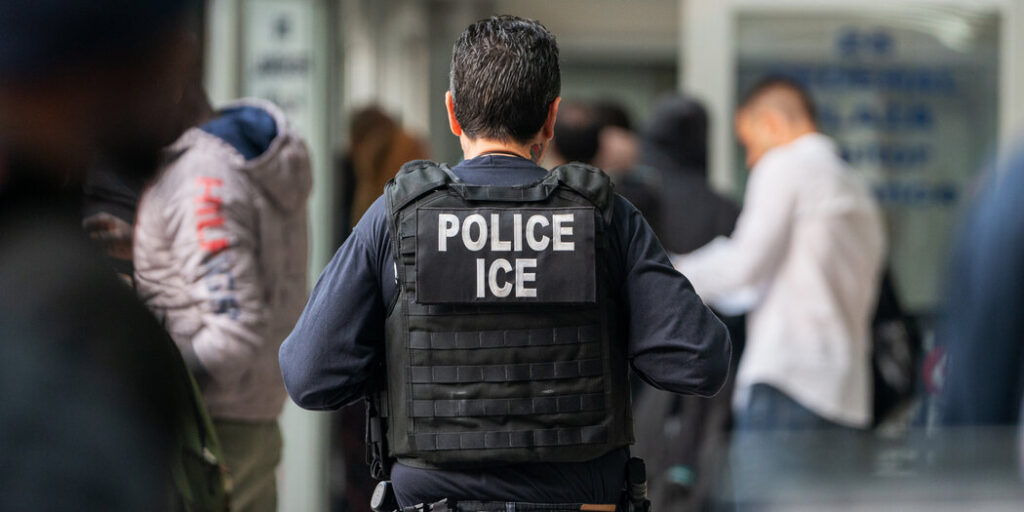
Under the new legislation, the U.S. Customs and Immigration Enforcement (ICE) is set to become the most extensive federal law enforcement agency, receiving $45 billion to construct additional detention centers. An extra $14 billion is allocated for deportation activities, with $3.5 billion dedicated to reimbursing state and local governments for expenses incurred through immigration enforcement and detention efforts.
The bill proposes to nearly double the current detention capacity, increasing from around 56,000 to over 100,000 beds. This expansion is poised to benefit private prison companies significantly, many of which have been financial backers of Republican candidates and President Trump’s campaign. Currently, nearly 90 percent of ICE detainees are housed in privately-operated facilities.
CoreCivic’s CEO acknowledged this trend during a recent investor call, stating, “Never in our 42-year company history have we had so much activity and demand for our services as we are seeing right now.” This budget will likely consolidate the business model of CoreCivic, GEO Group, and other private detention facility operators.
In anticipation of these funds, the administration has already started awarding lucrative contracts to GEO Group and CoreCivic without competitive bidding, citing a “compelling urgency” to increase detention capacity. These contracts include reopening facilities like the Dilley Immigration Processing Center in Texas and Delaney Hall in New Jersey, along with potential reactivations at other sites.
President Trump has defended his immigration policies by inaccurately claiming migrants contribute significantly to violent crime in the U.S. However, research from the Brennan Center contradicts these claims, showing immigrants tend to commit crimes at lower rates than native-born citizens. Moreover, 72 percent of those in ICE detention have no criminal record, and many of those with records are tied to minor offenses.
The proposed bill also introduces new immigration fees, including $550 for Temporary Protected Status and $100 for asylum applications. Children traveling alone would face a $250 fee for seeking protection, while the cost to appeal an immigration judge’s decision would rise from $110 to $900, effectively limiting access to the immigration system based on financial means.
Controversial plans have emerged for a new detention center in the Florida Everglades, labeled “Alligator Alcatraz” by Florida Attorney General James Uthmeier. The state intends to seek federal reimbursement for this facility, underscoring concerns about detainees’ access to essential services.
Amidst these developments, oversight of detention facilities by the Department of Homeland Security (DHS) has been curtailed, with reports of deteriorating conditions. At least 10 detainees have died in these facilities this year, tripling the average death toll over the previous four years.
Additionally, the administration has shown a marked reluctance to allow congressional oversight, despite legal provisions permitting such inspections. ICE has recently implemented a new policy requiring at least 72 hours’ notice for visits, contravening current laws designed to enhance transparency.
The budget’s unprecedented financial commitment to immigration enforcement, particularly when existing oversight mechanisms have been dismantled, raises significant concerns about the treatment and rights of undocumented immigrants in detention facilities.