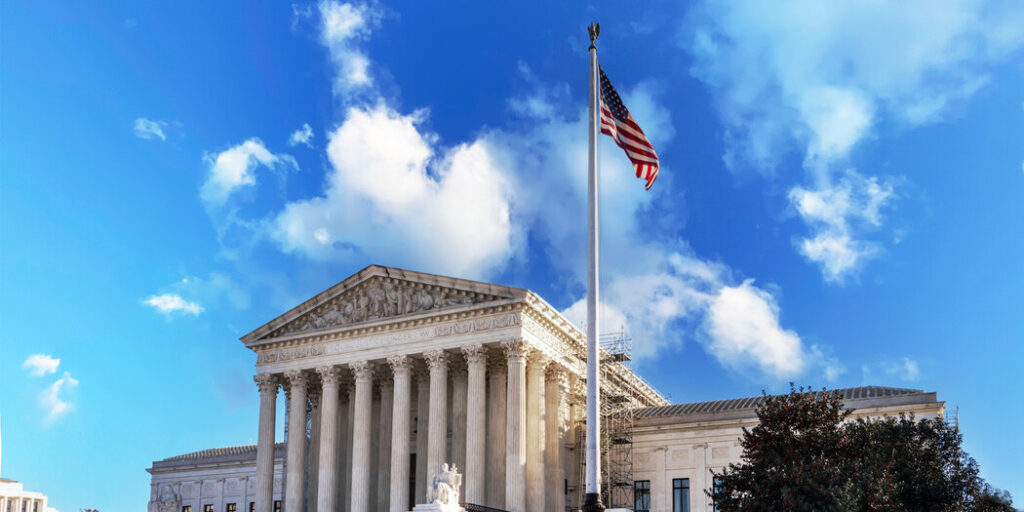
Supreme Court Retirements: Timing and Implications
As the end of June approaches, speculation often increases surrounding potential retirements among Supreme Court justices. This period marks the release of the last opinions for the term and the start of their summer recess. The decision of when a justice retires can have profound and lasting impacts on the law and society, given that these lifetime appointees have the discretion to choose their retirement timing.
The political landscape plays a significant role in these decisions. Justices often prefer to retire when the president shares their ideological views, ensuring a like-minded successor. This strategic timing, however, raises concerns about impartiality, as it conflicts with the expectation that justices decide cases based on legal principles rather than personal or political motivations.
Some advocate for imposing term limits on justices and restricting each president to two appointments per term to curb such strategic retirements. The potential influence of Supreme Court appointments is considerable, highlighted by the conservative supermajority’s decision in Dobbs v. Jackson Women’s Health Organization to overturn Roe v. Wade, eliminating the constitutional right to abortion.
Under the Constitution, federal judges, including Supreme Court justices, are appointed for life, intended to ensure decisions are based on the law and Constitution rather than political pressures. However, the longevity of justices’ power has increased as life expectancies have grown, extending their influence well beyond the 18th century standards.
Strategically timed retirements allow justices to shape the Court’s future by considering the political party of the nominating president and the Senate in charge of confirmations. Such retirements are not limited to one political ideology or the Supreme Court alone. The last instance of a justice retiring when an opposing ideology’s appointment was likely occurred over 30 years ago, with Justice Thurgood Marshall’s retirement under President George H. W. Bush.
Research indicates that since President Ronald Reagan’s era, Democratic-appointed judges and the most conservative judges have shown a tendency to retire strategically. Meanwhile, moderate judges appointed by Republicans have sometimes delayed retirement under presidents perceived as excessively conservative.
This strategic retirement not only affects the composition of the Supreme Court but also perpetuates the perception of the Court as politically motivated. This perception undermines the principle that the rule of law should guide American jurisprudence.
Strategic retirements also impact presidential influence on the Court. Presidents such as Donald Trump and Reagan had multiple Supreme Court nominations, while Jimmy Carter appointed none. This discrepancy results from the unpredictable nature of retirements during their terms.
The declining trust in the Supreme Court underscores the need to address strategic retirements. Contributing factors include political polarization, ethics scandals, contentious confirmation battles, and decisions perceived as partisan victories. Concerns also arise from reports of justices engaging in covert discussions with presidents regarding successors, as in the case of Justice Anthony Kennedy’s retirement and his reported recommendation of Brett Kavanaugh to President Trump.
Efforts to persuade justices to retire, such as the public campaign pushing for Justice Stephen Breyer’s retirement, further illustrate the tensions and complexities surrounding these decisions. Conversely, decisions not to retire can also have significant consequences, exemplified by Justice Antonin Scalia’s unexpected death in 2016 and the subsequent political maneuvering regarding his replacement.
Congress has the authority to address strategic retirements by enacting term limits and limiting presidential appointments, proposals supported by constitutional scholars and retired judges. Such measures would ensure predictability and stability in the appointment process, reducing undue influence over the Court’s composition.
A proposed system involving an 18-year term for justices, supplemented by a senior status allowing participation in lower courts, could offer a balanced approach to judicial tenure. This model, which mirrors existing practices in lower federal courts, would guarantee regular appointments, allowing each president two nominations every four years.
Through these reforms, public confidence in the Supreme Court’s impartiality and fairness could be restored, ensuring that its composition is not solely the result of strategic retirements.