Tariff Impact on Minnesota Farmers: A Closer Look at Finstad’s Support
While President Donald Trump’s tariff policies have significantly impacted Minnesota’s agricultural sector, they continue to receive backing from Rep. Brad Finstad. These tariffs, initially imposed last year, have led to increased costs for essential farm inputs such as fertilizer and machinery.
The financial strain on farmers remains, despite the U.S. Supreme Court invalidating the tariffs in February. Among those affected is Matt Purfeerst, a fifth-generation farmer from Finstad’s district. He described the tariffs’ effect on the soybean market as creating volatility, which poses significant challenges for family farms. His insights were shared with the Guardian in October 2025.
The agricultural outlook has further deteriorated this year. Ryan Mackenthun, vice president of the Minnesota Soybean Growers Association, expressed concerns to KSTP in March, warning that “farmers might not be able to survive this for too long.” The situation has led some farmers to skip the planting season to cut costs, as reported by CBS News in April.
Additionally, the war in Iran has disrupted shipping routes, exacerbating fertilizer costs. Despite these challenges, Finstad remains optimistic about the long-term benefits of the tariff policy. Shortly after the tariffs were implemented, he acknowledged the potential for short-term challenges during an interview in April 2025, expressing hope for improved trade relations.
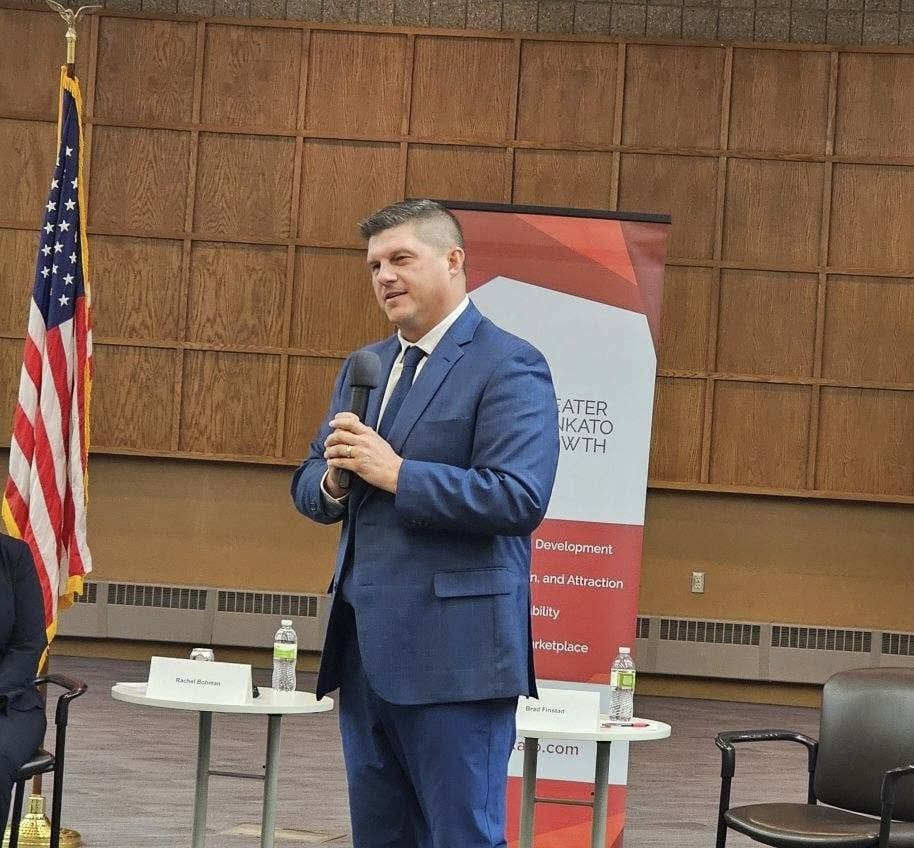
Finstad has consistently maintained this viewpoint, even after the tariffs’ adverse economic effects became apparent. In an August 2025 meeting with small business owners, he recognized the “disruption and uncertainty” caused by the tariffs but also emphasized Trump’s role as “the ultimate disruptor in chief.” He acknowledged, “There’s a certain amount of resetting the depth that’s happening, and that has caused short-term uncertainty.”
At a subsequent roundtable with community leaders, Finstad reiterated that while the tariffs create “uncertainties in the marketplace,” they also facilitate negotiations for better trade deals. His stance remained unchanged into the new year, as he stated on the Made in Minnesota podcast in February, “The big lever of tariffs that the president pulled created a little bit of instability and uncertainty in the short term, but what it did is it brought people to the table and we’re seeing opportunities we haven’t seen before.”
In Congress, Finstad has taken a firm stance, casting votes to preserve Trump’s tariffs and opposing a resolution to end the Iran war. As he runs for a third term, his Democratic challenger is set to be determined in the upcoming August 11 primary.