Lech Walesa: A Voice of Experience in Democracy’s Struggles
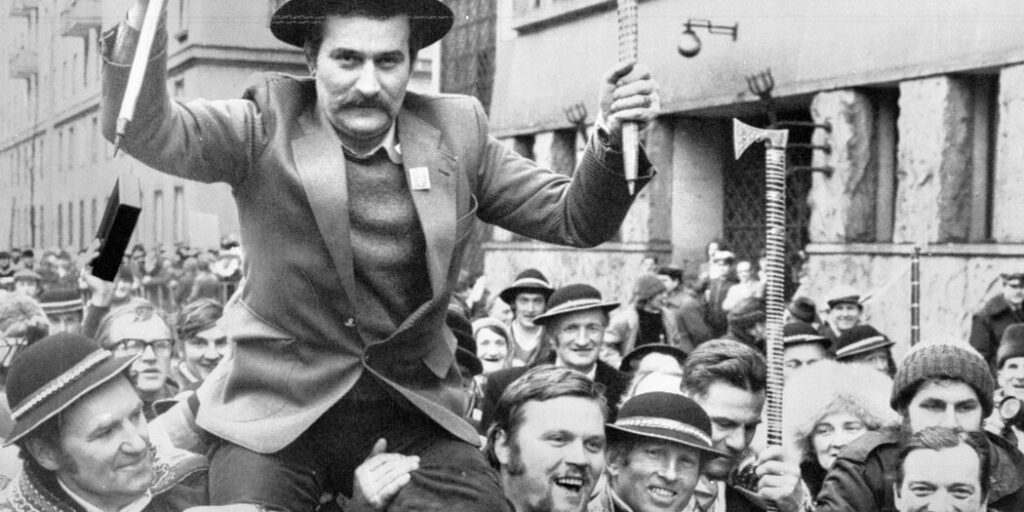
In August 1980, a young electrician named Lech Walesa made a pivotal move that would change the course of history in Poland. Climbing over a security fence at the Lenin Shipyard in Gdansk, Walesa initiated a strike that led to the formation of Solidarity, an independent labor union. This movement quickly expanded beyond its initial goals, growing to include a third of Poland’s population from various professions, and becoming a formidable civic force.
Although the Polish government responded by declaring martial law and arresting Walesa, his efforts laid the foundation for the peaceful revolution that, by 1989, brought an end to Communist rule in Poland and inspired similar movements across Eastern Europe. Walesa served as Poland’s president for five years, guiding the nation’s transition to democracy and market economies, and was awarded the Nobel Peace Prize for his contributions.
Despite the passage of time, Walesa remains an influential figure in discussions about confronting tyranny. On a recent Saturday, he addressed an audience at the Jacob Javits Convention Center in Manhattan, drawing parallels between past and present democratic challenges. With characteristic sharpness, Walesa noted that Poland, like the United States, faces threats to the rule of law and democratic principles. He highlighted the coalition between Poland’s center-right and center-left factions as a successful strategy to counter populist forces.
Anne Applebaum, an Atlantic writer and spouse of the Polish foreign minister, reflected on these issues at the event, recalling her participation in a No Kings march earlier that day. Walesa’s address included a surprising endorsement of a Western leader he credited with having the decisive resolve to aid Poland. Contrary to expectations, he identified Bill Clinton—not Ronald Reagan—as pivotal in securing Poland’s integration into NATO and the European Union, suggesting that Clinton deserves a Nobel Peace Prize for his efforts.
Walesa emphasized the importance of building broad coalitions to combat authoritarianism, both historically and in the present day. He raised crucial questions about the vision needed to inspire change, urging for a focus beyond merely opposing authoritarian regimes. His call for reforms resonated with familiar themes, such as imposing term limits on presidents, addressing corruption through transparency, and safeguarding democratic processes.
Recent polling data from a CBS/YouGov poll highlights that Americans view corruption as a major threat to national interests, second only to the erosion of democracy. Walesa’s insights offer a timely reminder of the necessity for proactive reform, especially as the United States navigates political turbulence, including government shutdowns and contentious Supreme Court decisions.
Emulating the spirit of the No Kings rallies, Walesa’s message underscores the need for public engagement and the rejection of political complacency. He advocates for a forward-thinking reform agenda aimed at revitalizing government functionality, expanding voting rights, and addressing pressing societal issues such as environmental protection, healthcare access, and economic fairness.
The origins of Walesa’s revolutionary journey, which began with a strike over economic grievances, serve as a testament to the power of grassroots movements in challenging entrenched systems. As Walesa suggests, the path to reform does not necessitate dramatic gestures; rather, it calls for collective determination to redefine governance in pursuit of a more equitable future.