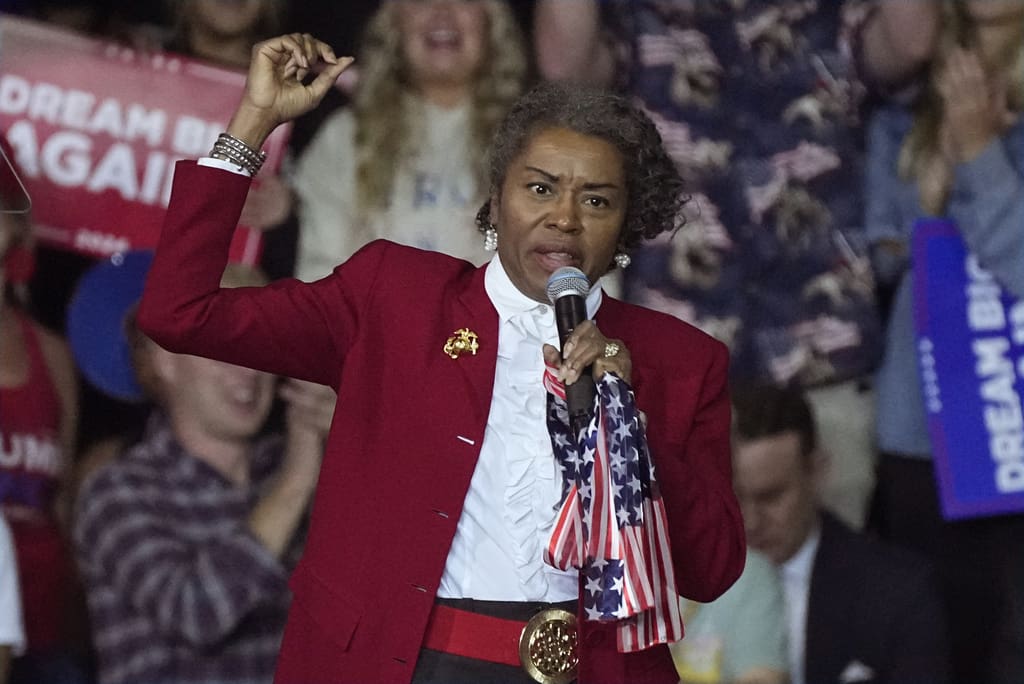
Winsome Earle-Sears, in collaboration with the American Petroleum Institute, previously advocated for offshore drilling initiatives aimed at Virginia. This initiative aligned with a Trump administration proposal that many experts believed posed a significant threat to the state’s fishing and tourism sectors, potentially leading to substantial job losses.
The joint efforts of environmental advocates and community activists managed to halt the advancement of the plan. However, with Donald Trump once again in the presidential office and Earle-Sears contending for the governor’s seat, the proposal might resurface.
In June 2018, Earle-Sears became affiliated with the American Petroleum Institute’s Explore Offshore Coalition. This coalition focused on garnering support from Black and Hispanic communities for Trump’s strategy to initiate new offshore drilling projects spanning from Cape May, NJ to Cape Canaveral, FL. That same month, Earle-Sears authored an opinion piece in the Daily Press, asserting that the proposal could foster job creation and lower energy expenses in Virginia.
“With the exploration and potential for development of offshore energy resources, Virginia could gain 25,000 jobs, many with an average salary of $116,000 — more than double the commonwealth’s average,” Earle-Sears wrote.
Notably, the op-ed omitted details of Earle-Sears’ involvement with the American Petroleum Institute, the foremost lobbying entity for the oil and gas sector. It also lacked references for her assertions. However, similar statistics regarding job growth and economic impact were evident in various American Petroleum Institute documents, including other opinion pieces from Explore Offshore Coalition participants.
Environmental organizations countered the assessments of Earle-Sears and the American Petroleum Institute. According to a study from the nonprofit Oceana, although expanding offshore drilling could generate numerous jobs, it would simultaneously endanger millions more. A potential spill, akin to the 2010 Deepwater Horizon disaster which inundated the Gulf of Mexico with oil for five months, could devastate the coastal fishing and tourism sectors for an extended period.
Specifically, in Virginia, a spill might jeopardize 46,000 jobs and potentially harm military facilities, including the Norfolk naval base.
Moreover, the benefits of offshore drilling were predicted to be short-lived, as the oil production would only satisfy demand for two years.
Groups like Oceana, together with other environmental organizations such as the Sierra Club, initiated a lawsuit against the Trump administration in 2018. They argued that the permits for seismic testing related to offshore oil and gas exploration breached the Marine Mammal Protection Act, the Endangered Species Act, and the National Environmental Policy Act (NEPA). While the lawsuit did not reach a conclusion in court, it significantly contributed to delays and opposition against offshore drilling. That same year, 20 localities in Virginia officially declared their opposition to the plan. These collective efforts, along with the Democratic gains in the 2018 midterm elections, effectively stalled the Trump administration’s offshore drilling agenda indefinitely.
In April, Trump instructed the Interior Department to solicit public feedback on a new five-year offshore drilling strategy. This action followed his reversal of an executive order from former President Joe Biden that had prohibited offshore drilling in certain Atlantic and Pacific regions.
While Earle-Sears has not publicly commented on the revival of offshore drilling in Virginia, her Democratic opponent, former Rep. Abigail Spanberger, has expressed her opposition on her campaign website.
“In Congress, Abigail built a record of working with both parties to lower greenhouse gas emissions in a responsible way,” the website states. “She focused on increasing energy efficiency, protecting Virginia’s coastline from offshore drilling, and safeguarding Virginia’s natural resources for future generations.”
A 2024 Ipsos survey commissioned by Oceana revealed that 64% of registered voters support the protection of coastlines from offshore drilling, and 63% advocate for transitioning from offshore drilling to renewable energy solutions.
Attempts to reach Earle-Sears’ spokesperson for comment on this matter were unsuccessful.