Challenges Arise for Texas Voters Due to New Voting Laws
Amidst the 2022 midterm elections, Texas voters encountered significant hurdles posed by newly implemented voting regulations. Among these voters was a Bowdoin College student, Abigail Martin, who experienced firsthand the complexities of these rules. Despite her efforts, she remains uncertain whether her vote was counted.
Senate Bill 1, enacted in 2021, introduced several changes to the voting process. It imposed stricter penalties on those assisting voters and curtailed voter outreach efforts by community and faith-based groups. Complications arose for Martin when she had to decide between using the last four digits of her driver’s license or Social Security number on her mail ballot application, a requirement she found particularly confusing.
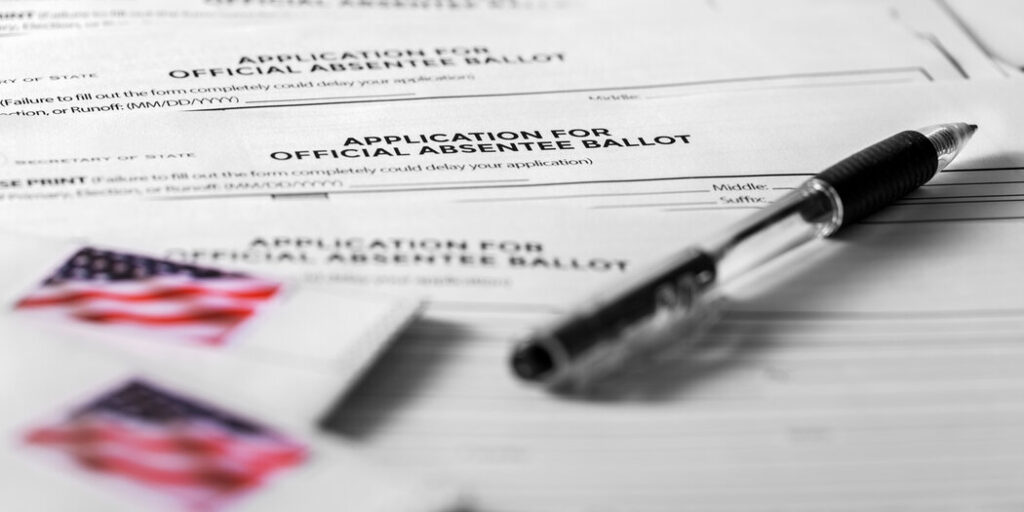
Residing in Comal County but studying in Maine, Martin relied on absentee voting. A month before the election, she submitted her mail-in ballot application with her driver’s license number. However, the application was rejected as the provided identification did not match her voter registration details, which had been submitted over a year prior. Unable to recall whether she initially registered with a driver’s license or Social Security number, Martin faced uncertainty.
Seeking clarity, Martin contacted the county clerk’s office but received little guidance. Advised to resubmit her application without knowing which identification to use, she turned to online resources. Social media suggested a cautious approach: include both forms of identification. This method proved successful, but the delay in receiving her ballot forced her to express ship it at a cost of $50.
Tracking revealed that her ballot arrived the day after the election. However, Texas’s tracking website did not confirm receipt, leaving Martin in doubt about whether her vote was counted.
Martin’s experience is not isolated. Inspired to advocate for voting rights, she interned at the Brennan Center. Their research indicated that the new requirements resulted in widespread voter disenfranchisement. For the March 2022 primary alone, around 12,000 mail-in ballot applications and 25,000 mail-in ballots were rejected in Texas. Voters of color faced higher rejection rates compared to white voters. A follow-up study suggested that these rejections discouraged future voting attempts.
The Brennan Center and allied organizations have filed lawsuits challenging S.B.1’s provisions. Although a federal court recently struck down parts of the law, the decision is on hold pending appeals. These legal battles invoke the Voting Rights Act, passed nearly 60 years ago, emphasizing the continued significance of its protections.
However, recent Supreme Court decisions have weakened the Voting Rights Act, complicating challenges to voter suppression. Advocates argue that legislative efforts should facilitate, rather than hinder, electoral participation.
Abigail Martin is a Brennan Center intern and a student at Bowdoin College.