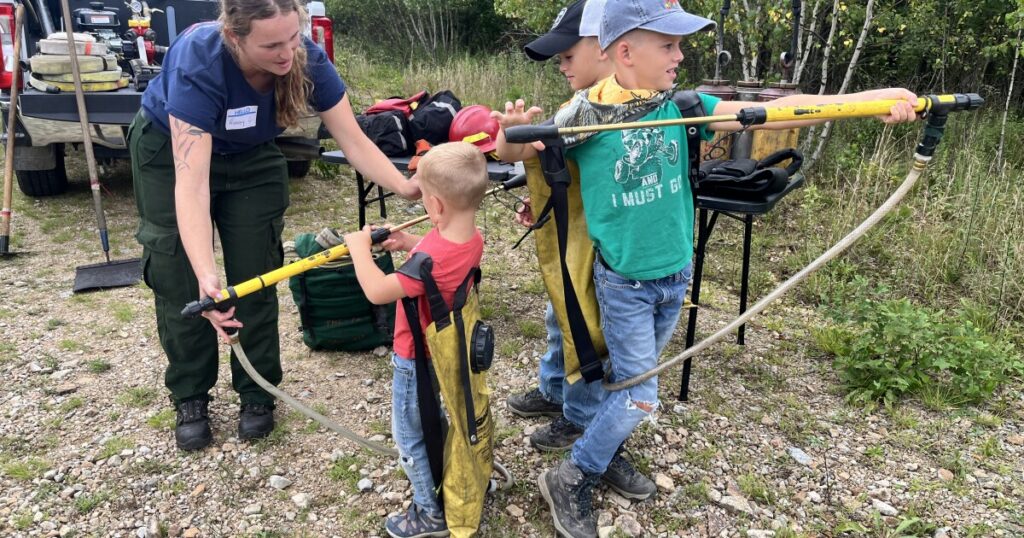
Long-standing traditions of burning barrens on Moosic Mountain have been carried forward by land stewards in Lackawanna County, aiming to mitigate forest fires and sustain the mountain’s unique ecosystem. This practice, rooted in indigenous customs, is now utilized to nurture the flora and fauna of the region.
“I would say we’d probably like to use fire more, but we’re trying to make sure that we’re doing effective fire where we are,” said Pat McElhenny, Director of Stewardship for The Nature Conservancy (TNC).
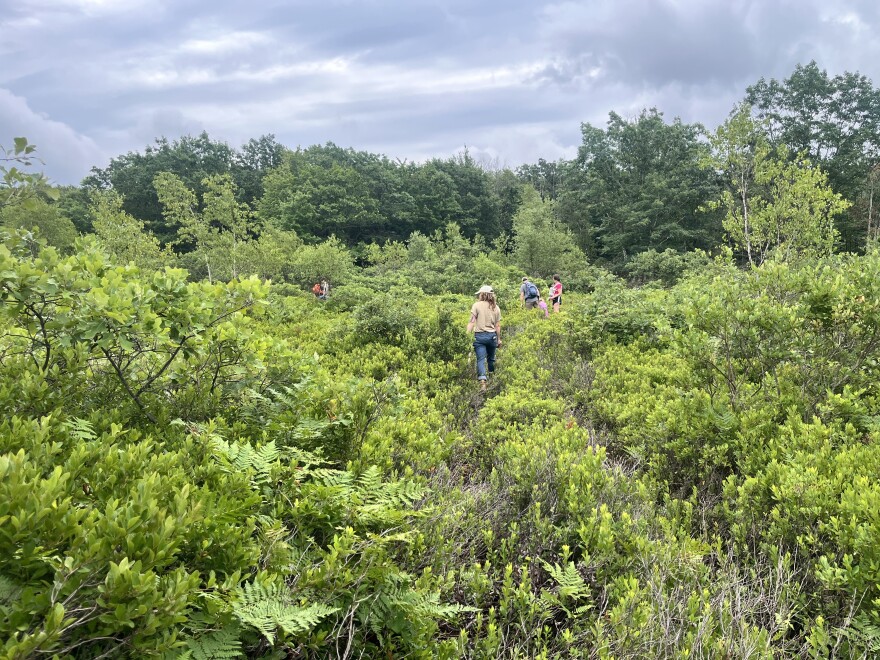
In August, TNC organized a ‘Blueberries and Fire’ festival at the Eales Preserve on Moosic Mountain, Jessup, where hikers picked berries and learned about the benefits of controlled burns on the mountain’s barrens.
TNC, a global environmental nonprofit, has safeguarded over 125 million acres worldwide, focusing on key landscapes like Kenya, Borneo, the Amazon, and the Appalachian Forests.
The Appalachian Mountains extend over 2,000 miles from Alabama to Canada, serving as a natural corridor for species migration.
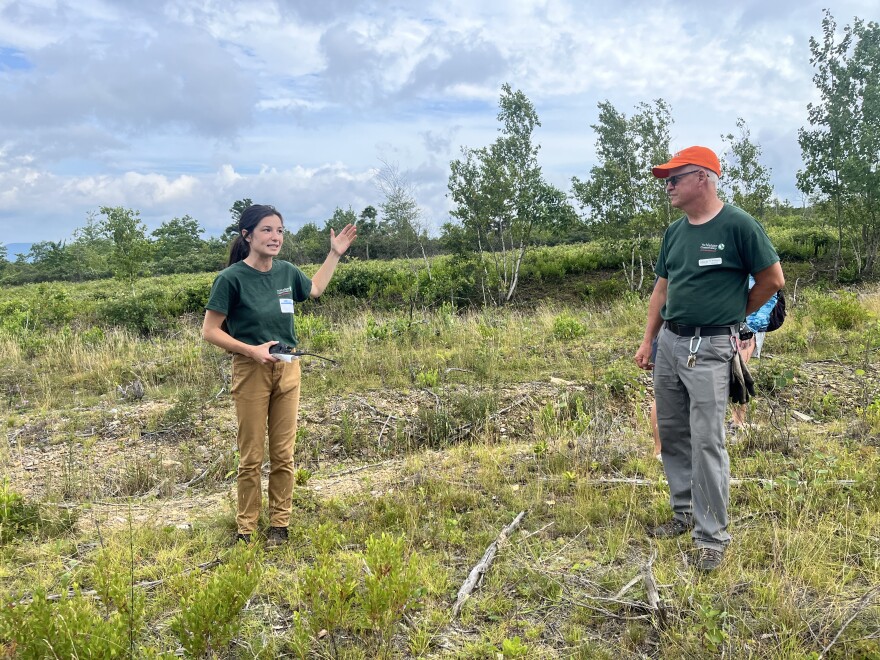
Guiding the berry-picking hikes, Emily Tramontano, TNC’s preserve manager for Northeast Pennsylvania, emphasized the abundance of berries after burns. “Please don’t feel any need to hold back. The birds got their … fill. The deer are coming. There’s plenty to go around,” she encouraged participants.
Development plans lead to preserve
Adjacent to State Game Lands 300 and Pinchot State Forest, the 2,250-acre Eales Preserve, along with 260 acres protected by the Lackawanna Valley Conservancy, forms an ecological island.
Pat McElhenney highlighted the challenge of maintaining connectivity amidst development pressure. “As we’re starting to get more pressure from outside of the preserve and the adjacent property owners, we have more fragmentation… we had that 10,000 acres of connectivity, but that’s what we have,” he said.
The preserve’s origin story is rooted in a mid-1990s proposal for a business park and federal prison on the land, halted by a federal lawsuit citing environmental concerns. Eventually, the Nature Conservancy and Pennsylvania’s government preserved the land with a $2.2 million purchase in 1999.
Development threats persist, notably from proposed data centers and energy projects in the area.
Rare barrens enjoy fire
Moosic Mountain is distinguished by its ridge-top heath barrens with acidic, rocky soil, hosting species like scrub oak, pitch pines, and ericaceous shrubs. This unique habitat, favored by migrating birds and insects, thrives after controlled burns.
Tramontano explained the impact of burning on blueberries: “You burn a patch of blueberries. The next year, the following year, those berries are coming back thicker, juicier and more abundant.”
Pitch pines, adapted to fire, rely on it for reproduction, with serotinous cones needing heat to release seeds, McElhenny added.
Barbecue for birds, sun for snakes
Post-burn environments become rich feeding grounds for birds, feasting on insects, as Tramontano described: “All of these birds swoop in like a horror movie, and they like to feast on the bugs that have been barbecued to perfection.”
Research funded by TNC is using acoustic recording units to study bird migrations, providing data on how burns influence avian populations.
Rattlesnakes benefit from the increased sunlight post-burn, a finding supported by studies from the Pennsylvania Game Commission and local universities. Darren Wolfgang, a forester with the Commission, noted that snakes quickly move into sunlit areas after fires.
Such prescribed burns also enhance insect diversity, crucial for the ecosystem’s health, Wolfgang added.

Fighting fire with fire
Legalized by the 2009 Prescribed Burning Practices Act, controlled burns are now a recognized tool for reducing wildfire risks and managing vegetation on Moosic Mountain.
By burning sections of the mountain in rotation, TNC ensures habitat continuity for various species. Tramontano explained the strategy of not burning more than 30% of the area at once, maintaining habitat for wildlife.
Wolfgang emphasized the precision of burn plans, tailored to specific ecosystem goals, and highlighted Pennsylvania’s collaborative approach to prescribed burns among state agencies.
Partnering to burn
While the Western U.S. focuses on fire suppression and the Southeast on prescribed burns, Pennsylvania excels in inter-agency collaboration for forest management, Wolfgang noted.
McElhenney and Wolfgang advocate for increased engagement with private landowners, aiming to broaden understanding and application of prescribed burns.
“I think now moving into 2026 … we’re on the cutting edge with bringing the family together and disseminating the information for sure,” Wolfgang added.