Amid a tense congressional standoff, Pennsylvania communities faced the loss of crucial federal funding after a short-term spending bill eliminated all Community Project Funding (CPF) grants for fiscal year 2025. This unexpected financial blow has left several local projects in the Lehigh Valley and Poconos in limbo, including vital infrastructure and public safety initiatives.
Approved in March, the continuing resolution maintained government operations but removed funding for local projects that had seemingly been secured. Monroe County’s ambitious opioid interdiction and prosecution initiative was among the casualties, leaving Commissioner John Christy grappling with the loss of over $2 million earmarked to combat drug distribution networks. Christy expressed his dismay, stating, “We thought the money was coming,” only to be informed otherwise by former U.S. Rep. Susan Wild.
The initiative’s collapse poses a significant setback in addressing opioid-related overdoses, which account for hundreds of deaths annually in a region serving as a conduit to New York’s drug trade. Wild, who had submitted 15 CPF requests for public safety and infrastructure projects, was taken aback when she discovered none were funded, describing the experience as “very disheartening.”
Understanding CPF and Its Importance
Community Project Funding, the revamped version of earmarks, was reintroduced in 2021 to allow local communities to pursue federal funding transparently. Unlike its predecessor, CPF enforces rigorous ethical guidelines to prevent misuse, limiting each congressional member to 15 projects and requiring full disclosure online.
Despite its rigorous application process, CPF has been instrumental in addressing local capital needs, particularly in public safety and infrastructure. However, the fiscal 2025 omnibus budget, which would have included CPF requests, was never passed due to a budget impasse, leading to the short-term resolution.
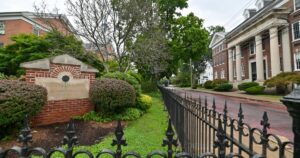
In Bethlehem, plans to convert one-way streets to two-way streets were shelved due to funding gaps. City Councilor Grace Crampsie Smith emphasized the safety benefits of the conversion, noting, “The argument is it will be safer because, when it is one way, people tend to travel at a much higher rate of speed, and it is dangerous in that respect.” However, immediate public safety concerns, like insufficient firefighters, have taken precedence.
Political Tensions and Future Prospects
The political fallout from the funding cuts has sparked accusations between former Rep. Wild and her successor Rep. Ryan Mackenzie. Wild criticized Mackenzie for supporting the resolution that omitted CPF funding, while Mackenzie countered by emphasizing the resolution maintained prior fiscal year funding levels and was supported by leaders from both parties.
Mackenzie announced new CPF requests for fiscal 2026, including a firehouse project in Lower Macungie, which he actively promoted on social media. Wild criticized this focus, questioning the selective promotion of funded projects while others were left without support.
Some counties, like Lehigh, have sought alternative funding methods, such as floating bonds for radio upgrades, a necessity due to new state digital technology requirements for emergency systems. Commissioner Geoffrey Brace noted, “It was something we were hoping for, but there was never a commitment made to that federal request.”
For more insights, visit our partners at WHYY.