Pennsylvania’s role in powering data centers is becoming increasingly significant, with energy needs extending across state borders. A recent report highlights the impact of this on the state’s energy landscape.
“Pennsylvania has a lot of data center proposals, but so do the states around them, and Pennsylvania will be exporting electricity to surrounding states to support the data center load growth,” said Eva Morgan, project manager for the Clean Energy Group.
The report titled “The High Cost of AI: How Data Centers are Reshaping Pennsylvania’s Energy Landscape” was a collaborative effort by the Clean Energy Group, Clean Air Council, and Physicians for Social Responsibility Pennsylvania. A discussion about the report took place at the University of Scranton, where local officials and residents expressed their concerns.
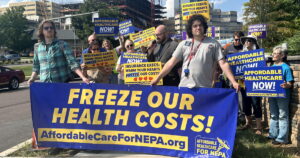
The report indicates that the swift increase in energy demand, coupled with insufficient data on projected needs and an energy system reliant on fossil fuels, has led to significant costs for Pennsylvanians both financially and environmentally. Residents from Archbald, who oppose the proposed development of six data center campuses, were notably present.
Pennsylvania’s Energy Reach
Morgan shed light on PJM, a nonprofit organization managing the electrical grid across several states, including Pennsylvania. PJM is the largest regional electricity market in the U.S., supplying power to 67 million people. Besides Pennsylvania and West Virginia, the other states within the PJM network depend on energy imports to satisfy the growing data center demands.
Virginia, which hosts 35% of the world’s hyperscale data centers, is a major energy importer within PJM. The report outlines that Virginia’s significant energy demands are met through imports from states like Pennsylvania, Ohio, and West Virginia.
The findings predict a rise in emissions due to the energy generated for data centers. Morgan noted, “And as we learned in the report and as we can see every day, PJM and Pennsylvania are doubling down on fossil fuels to meet this predicted energy demand.”
Health Implications
Josephine Gingerich, from Physicians for Social Responsibility Pennsylvania, highlighted the lack of long-term health studies on data centers. However, the adverse effects of diesel and gas-fired power plant pollution are well-documented.
Morgan referenced a study estimating that data center demand could contribute an additional 24 to 44 million metric tons of CO2 by decade’s end, potentially adding $20 billion to the public health burden by 2028. Gingerich further warned about potential asthma cases and premature deaths linked to increased pollution.
Community Concerns
During the discussion, residents voiced worries about air quality and the financial impact on electricity bills. Gingerich explained how distribution charges are spread across rate payers and how infrastructure developments might lead to long-term financial obligations.
Concerns about increased traffic during construction and the potential environmental impact were also raised. Archbald Borough’s decision to hire an environmental engineer reflects the community’s proactive approach to addressing these issues.
The panel underscored the importance of local governance, informed residents, and legislative efforts like state Sen. Katie Muth’s proposed moratorium on data centers. Gingerich concluded, “AI is poised to drive [a] 160% increase in data center power demand. And I’m here to say right now, we do not need all of these hyperscale data centers. We are not benefiting from this proposed AI boom.”