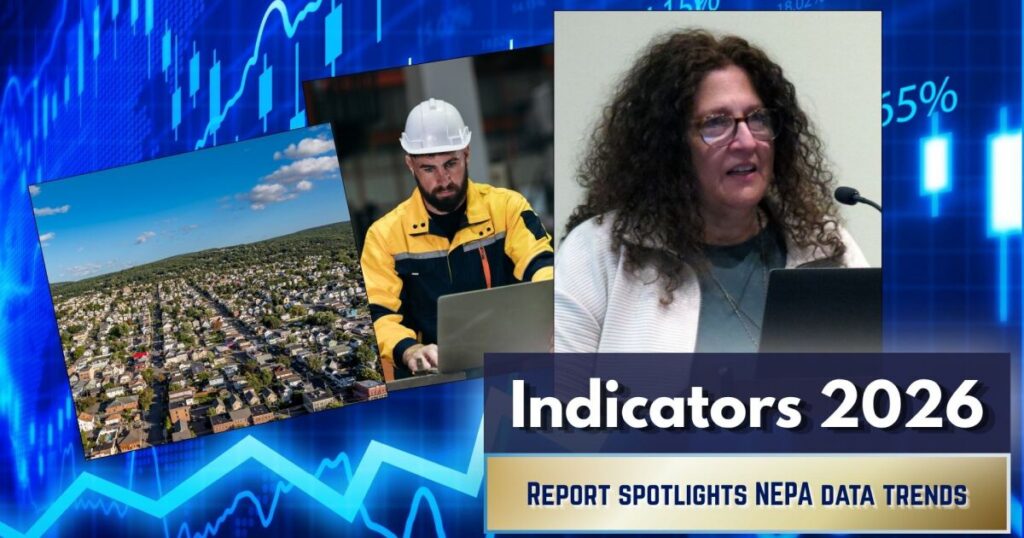
For over two decades, The Institute has been a lens through which Northeast Pennsylvania’s economic and social landscapes are examined. This year, the annual indicators report highlights significant national issues that are shaping the region, such as the emergence of Artificial Intelligence, data centers, Medicaid funding shifts, and the impact of tariffs.
Current Economic Challenges
Artificial Intelligence and data centers are major topics in the latest report. Ethan Van Gorden, a research analyst with The Institute, stresses that tariffs have increased the cost for American exporters, particularly in the manufacturing sector, which includes plastics, metals, and food products. “When we have countries and other organizations based outside the United States that want those products, [tariffs] will limit demand … and it will consequently hurt those businesses or affect them adversely,” he explained.
The legal battles over tariffs continue to create a volatile business environment. Van Gorden noted, “I think those numbers are going to be changing a lot, and it’s gonna be hard for those companies to predict what they’re going to be seeing.”
The Institute’s Role and Report Findings
Since its first report in 2006, The Institute—a collaboration of 14 regional colleges, universities, and businesses—has expanded its analysis to include 150 metrics, covering areas like housing, education, and transportation. Teri Ooms, founding CEO of The Institute, remarked, “The report is a compilation of data about Northeastern Pennsylvania from 14 different categories, 150 different metrics trended over time that tell the story not of just who we are now, but where we’ve been and where we’re likely to go in the future.”
Ooms emphasized the need for informed decision-making based on “independent, non-biased research” to strengthen regional resilience and capitalize on opportunities.
Housing and Workforce Dynamics
Ooms pointed out that despite the region’s strengths, housing remains a critical issue. “We are challenged, just like every region in the country, with a limited workforce, in part due to just shifting demographics across the country,” she said. The report reveals that many homes in the area date back to pre-1940, highlighting the need for modernization and affordability.
Recommendations include updating zoning codes, increasing housing production, and enhancing regional collaboration. Charles Kasko of Classic Properties noted the economic impact of Pennsylvania’s inconsistent zoning framework.
Impact of Medicaid Changes
Dr. Julie Byerly, chair of the Institute’s Health and Health Care task force, addressed the impact of Medicaid changes introduced under President Trump’s ‘One Big Beautiful Bill’. These changes, aimed at significant federal savings, could increase the uninsured population by millions, including 310,000 in Pennsylvania.
Byerly stressed the importance of planning and informed decision-making to mitigate adverse effects, noting, “Policy makers and community leaders must take proactive steps to safeguard coverage and reduce disruption.”
AI and Data Centers
Exploring the region’s potential for data centers, Don Brominski of UGI Utilities highlighted the area’s strategic advantages, including abundant land and infrastructure. However, Brominski cautioned that “the ultimate impact on Northeast Pennsylvania is not predetermined” and depends on policies and planning.
Robert Luciani of the Jobs, Economy and Economic Development Task Force discussed the influence of AI on the workforce. “AI is already shaping how work gets done across our region,” he stated, emphasizing the need for preparedness and strategic adoption of AI technologies.