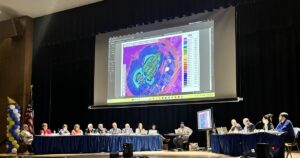
The appointment process for a mass transit agency board in Lackawanna County has sparked debate, with Commissioner Bill Gaughan raising concerns over the county’s decision to appoint a Scranton resident without seeking other candidates. This move has opened discussions about transparency and governance in the county’s appointment practices.
Attempts were made by Gaughan to delay the appointment of Larry Wynne to the County of Lackawanna Transit System (COLTS) board, urging fellow commissioners to consider other applicants. However, Commissioners Thom Welby and Chris Chermak proceeded with reappointing Wynne, who has a longstanding history with the board.
Wynne’s Tenure on the COLTS Board
Larry Wynne has a notable history with the COLTS board, having joined in 2015 and serving as its chairman since 2018. His previous attempts to continue on the board were thwarted in 2025 when Gaughan and former Commissioner Matt McGloin replaced him despite his interest in staying. Wynne’s replacement was Robert Durkin, the president of the Greater Scranton Chamber of Commerce.
Gaughan explained that upon taking office, he and McGloin implemented an unwritten rule to annually solicit applications for county boards through public advertisements. “We were honestly overwhelmed by the amount of people who submitted applications, resumes and letters of interest,” Gaughan stated. “And these were people from all over the community. Ninety percent of them I had never heard of before, but they were interested in public service. We did it because openness, transparency and competition are not obstacles to good government. They are the foundation of it.”
Calls for Transparency
Gaughan emphasized the importance of transparency in board appointments, particularly for influential boards like COLTS, which manages multi-million dollar budgets. He remarked, “The people of Lackawanna County deserve to know when opportunities exist to serve, and they deserve a fair chance to raise their hand. That process did not happen here.” He further argued that bypassing this process undermines efforts for reform and sends a message that access can overshadow openness.
He stressed that good governance involves adhering to best practices and maintaining consistency, even when it might be more convenient to do otherwise.
Questioning the Appointment’s Timing
Gaughan expressed skepticism over the hastiness of Wynne’s appointment, sarcastically suggesting that the urgency demonstrated by Welby and Chermak was due to their commitment to public transportation. “I can only assume the sudden rush is driven by Chairman Welby and Commissioner Chermak’s deep and abiding concern for public transportation. Nothing else could possibly explain it,” he remarked.
Wynne’s Professional Commitments
In addition to his previous role on the COLTS board, Wynne serves as a full-time shift supervisor at the county’s criminal suspect booking center and as a full-time employee of Scranton’s Department of Public Works, where he is also the union president. Gaughan remarked, “I’ll be honest. I’m impressed. I’m deeply impressed. I don’t know where this man finds the hours in a day,” highlighting the demands of board service and questioning the ability to serve effectively with multiple commitments.
Defending Wynne’s Appointment
Commissioner Chermak, who admitted to not personally knowing Wynne, defended the appointment, acknowledging Wynne’s prior contributions to the COLTS board. “I know he did a good job. I know he applied to remain on the board back when he was taken off. I certainly don’t have a problem since he did apply and did want to remain on the board, and I think he could do a good job just like he did before,” Chermak stated.
Welby also supported Wynne, praising his public service record and questioning why Gaughan objected only to this board appointment and not to others made earlier in the meeting. Welby concluded that no candidates could match Wynne’s institutional knowledge, reinforcing the decision to proceed with his appointment.
Policy Awareness and Future Steps
Following the meeting, Welby acknowledged his unawareness of the unwritten policy to advertise board vacancies but expressed support for adopting this practice moving forward. “So, I do think that that is a good idea, and we’re going to be doing that starting today or moving forward,” he remarked.