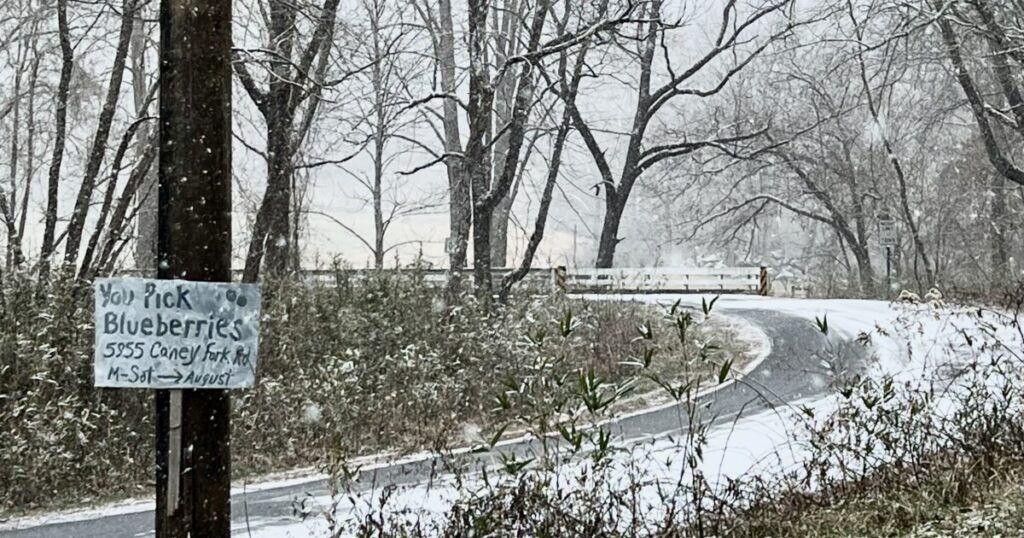
Winter Storm Threatens Infrastructure in Western North Carolina
As Western North Carolina braces for an impending winter storm, concerns grow over potential disruptions to the region’s infrastructure. While forecasts remain uncertain about the storm’s severity, the possibility of power outages and water line breaks looms.
Jeffrey Brooks, representing Duke Energy, mentioned the company is on alert for outages in the region. “We will be evaluating whether we need to bring in additional crews,” he noted, though no decision has been made yet.
As meteorologists refine their predictions, Brooks highlighted the risk to power lines due to the tree canopy. Heavy snowfall beyond six inches could bring down tree limbs, potentially damaging power lines. However, a smaller ice accumulation of just a quarter inch could pose similar threats.
The critical factor is determining the boundary between snow and ice, as well as the total precipitation, Brooks explained.
Duke Energy is hopeful that their advanced “self-healing lines” will mitigate outages in densely populated areas. These lines automatically reroute power, a system already implemented in 80% of Buncombe County and significantly present in Transylvania, Swain, and Rutherford counties. Nevertheless, rural areas might not benefit as much due to the lack of alternative lines.
Reflecting on past challenges, Brooks expressed confidence in the region’s power grid, more than a year after Hurricane Helene caused extensive disruptions. “We’ve inspected most of those lines. We’ve looked for all the obvious types of threats,” he reassured. “So, I think the grid as a whole is in good shape going into this season and ready to respond to winter weather.”
In Haywood County, the emphasis is on power supplies, especially for residents using medical devices. Allison Richmond from Haywood County Emergency Services stated that an emergency shelter might be set up if snow exceeds six inches. “The biggest reason why we would open a shelter is because of power outages and the need to supply people with oxygen and keep their concentrators going,” she emphasized, noting the county’s significant senior population.
Meanwhile, Asheville’s city officials are reinforcing water infrastructure. Clay Chandler from the Water Resources Department explained the measures being taken to protect water facilities. “Water production personnel at the treatment facilities will fill storage tanks throughout the system and take basic steps to freeze-proof a handful of outdoor components, using things like heat tape, insulation wrap, etc,” Chandler stated in an email.
Chandler also mentioned that snow could benefit Asheville’s water system by increasing reservoir levels at North Fork and DeBruhl treatment plants, crucial for mitigating the effects of recent drought conditions.
Tips for Winter Storm Safety:
- Stock Up on Essentials: Ensure you have sufficient food, water, pet supplies, and medications. Check flashlights and smoke detectors and keep spare batteries available.
- Charge Your Devices: Fully charge phones, laptops, and backup batteries to maintain communication during potential power outages.
- Prepare Your Vehicle: Equip your vehicle with snow tires or chains if travel is necessary, and carry an emergency kit with blankets, snacks, and water.
- Generator Safety: Keep generators at least 12 feet away from buildings for ventilation. Never use them in enclosed spaces to prevent carbon monoxide poisoning.
- Travel Safety During the Storm: Avoid unnecessary travel due to hazardous road conditions. Untreated roads may remain icy through the weekend, posing risks to both residents and emergency services.