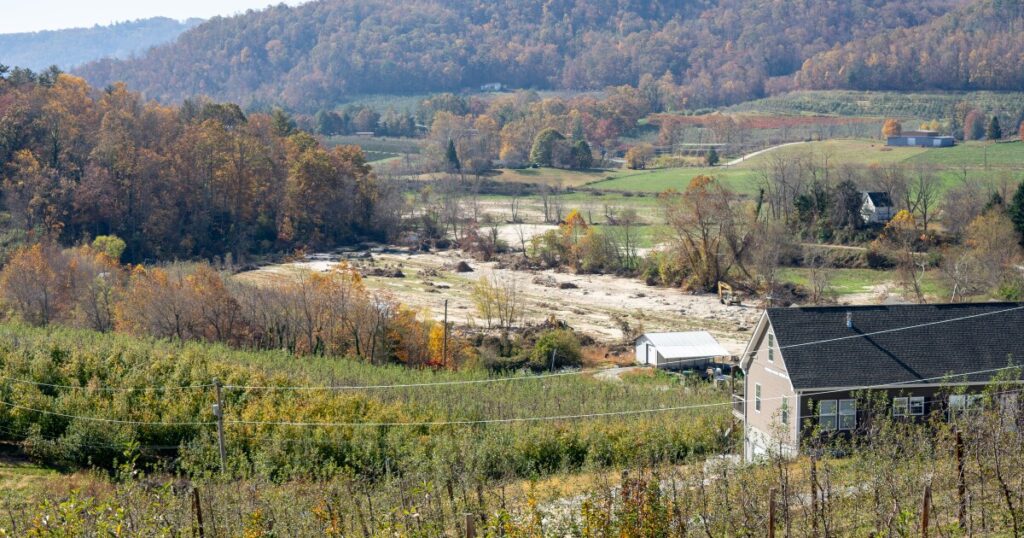
In a significant boost for North Carolina’s farming communities, the North Carolina Agromedicine Institute has secured an impressive grant exceeding $292,000 from the U.S. Department of Agriculture. This funding aims to assist those affected by Helene, focusing on mental health support within the agricultural sector.
The grant will be utilized by three prominent universities—N.C. State University, East Carolina University, and N.C. A&T State University—to enhance the Farm and Ranch Stress Assistance Network (FRSAN-NC). Alyssa Spence, who serves as the interim director for FRSAN-NC, emphasized the critical need for such resources. “A lot of people don’t realize all of the stress that is associated with farming in the best of times, let alone following up with a natural disaster,” Spence noted.
The funds are set to bolster the organization’s 24/7 farm helpline, which provides essential support in areas like mental health, agricultural guidance, and financial advice. The helpline has witnessed a surge in calls related to emotional distress, highlighting a gap in the current service capabilities. “What we started to see on the helpline was that people would call in and they would need emotional support,” explained Spence. “While our staff is trained on QPR (a suicide prevention training program) and suicide prevention, that’s not our expertise.”
To address these emotional needs, FRSAN-NC will collaborate with North Carolina’s statewide mental health helpline, ensuring specialized support for those in distress. Furthermore, the grant will facilitate free behavioral and mental health counseling by professionals who have undergone agriculture-specific competency training. “Our counselors, the ones that we recommend through that program, they understand farming,” Spence stated. “They have some cultural understanding of farmers are hardworking.”
Additional initiatives funded by the grant include updating the farmer stress directory, offering free psychological first-aid training, and generating project impact reports. The overarching aim is to provide farmers and their communities with the tools necessary to navigate these challenging times effectively.
Spence encapsulated the mission by stating, “Of course we can’t control the weather. We can’t control tariffs. We can’t control the market, and what commodities will bring, and all of those factors but we can help farmers deal with that stress so that they can better face all of those things.”