This coverage is made possible through a partnership between BPR and Grist, a nonprofit environmental media organization.
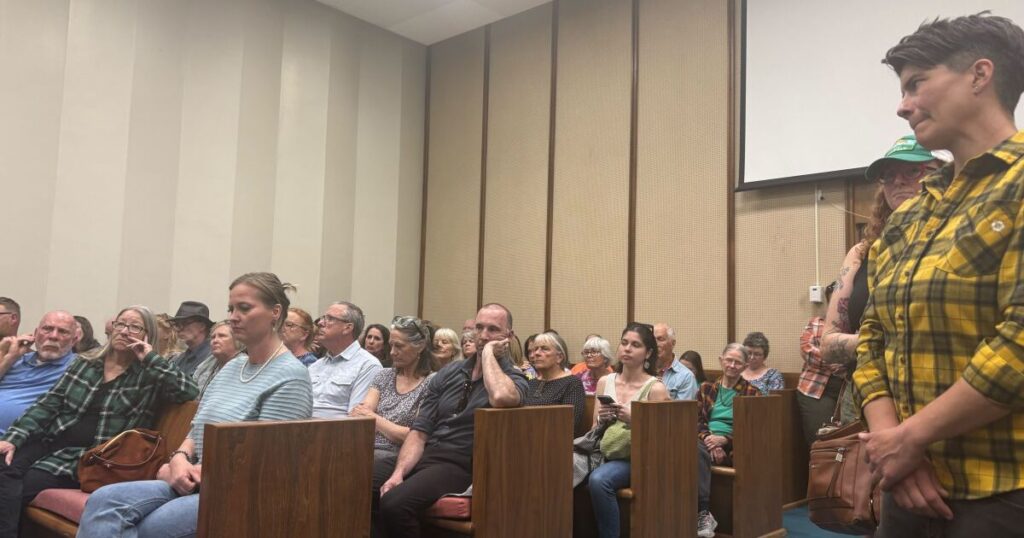
In a packed public hearing on Tuesday, Swain County officials faced a crowd eager to discuss a proposed temporary halt on the establishment of data centers. This meeting, according to officials, marked one of the highest turnouts ever seen, with attendees filling every available space, including the hallways.
The rise of data centers, driven by advances in AI and cloud technologies, is prompting concerns due to their intensive water and energy consumption, comparable to that of a small town. These facilities, including the massive ‘hyperscale’ ones, have recently been drawn to regions like Cherokee County, which offer plentiful water resources.
Public comments at the meeting highlighted Swain County’s historical struggles with eminent domain and environmental exploitation, such as the displacement of the Cherokee people and the resource extraction activities in Appalachia, including fracking and mining.
Celia Baker, a local resident and veteran in data security, voiced her concerns about the industry’s impact on rural areas. “The data center developers are targeting rural counties, poor poor rural counties, low on the tax burden, low on the educated workplace burden, high on the natural resource availability,” Baker said, drawing applause. “They are coming in to exploit that. That is what they do. That’s what they’ve always done. That’s not going to change, okay?”
Fred Crawford, a land surveyor from Whittier, supported the moratorium and advised the Commission to draft robust regulations. “As a land surveyor, I have seen firsthand the impact of poorly written development restrictions and the loopholes that they can leave behind,” he stated. “And we don’t have to start from scratch. We can look to what other counties have already put in place to handle these kinds of facilities.”
The move follows similar actions taken by other Western North Carolina communities, including Canton’s yearlong moratorium in February, and recent decisions by Clay County, Brevard, and Boone to implement temporary bans. These measures allow local authorities time to conduct thorough research before reaching a permanent decision.
Swain County Commission Vice Chair Tanner Lawson expressed skepticism about the benefit of data centers to the area, aligning with what he perceives as the prevailing public sentiment against such developments. “As a whole, I don’t see a benefit to it,” Lawson remarked.
Amidst the discussions, only one attendee cautioned against the moratorium, suggesting it was premature to dismiss the potential benefits without full understanding. This viewpoint was met with disapproval from the crowd.
Although no data center projects are currently planned in Swain County, a recent inquiry from Paces Technologies regarding zoning regulations has heightened concerns among officials.
The county commission is scheduled to vote on the proposed moratorium at its upcoming meeting on April 21. If enacted, the measure would provide a 12-month period for the county to craft specific ordinances addressing data center development.