This article is published through a collaboration between BPR and Grist, a nonprofit focusing on environmental issues.
In the serene setting of Nantahala National Forest, a surprising noise disrupts the natural tranquility: the persistent clatter of jackhammers. Amidst this remote forest, a crew is busy in a deep excavation site, constructing a significant infrastructure project aimed at safeguarding local wildlife. Thomas Hawkins, a devoted trout conservationist, explains that the initiative is crucial for the protection of the area’s fish population.
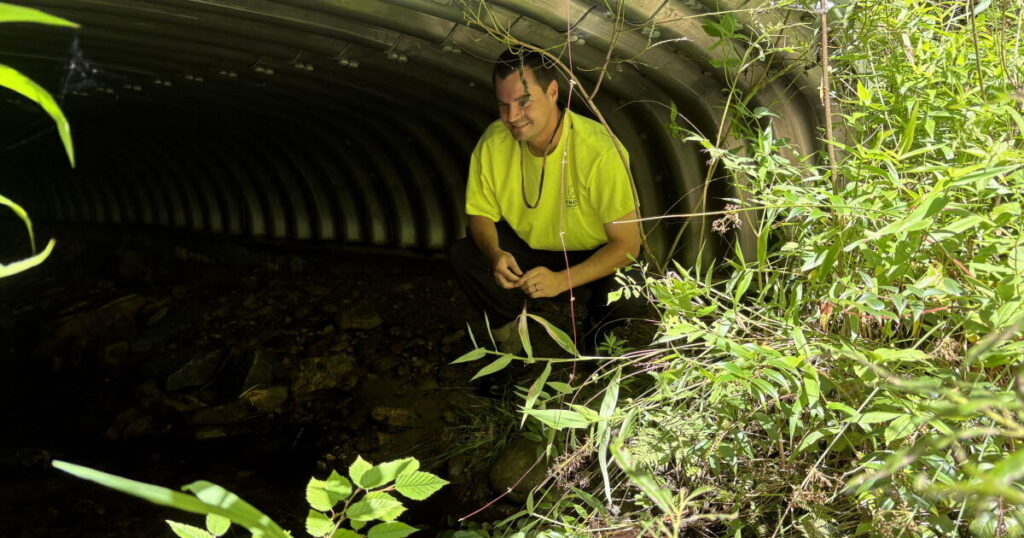
Hawkins points to the muddy site, indicating where a new culvert is being installed to allow a stream to flow safely beneath a mountain road. This culvert, measuring approximately 18 feet wide, will guide the stream under the road, reducing interference with the natural habitat.
Challenges such as increased storm frequency and rising temperatures have already impacted the native Appalachian brook trout, diminishing their habitats significantly. Invasive weather systems like Helene have further damaged these environments, disrupting essential rock formations. However, scientists are devising strategies to ensure the survival of these ancient species, which have called Appalachia home since the Ice Age. More on these efforts can be found here.
Hawkins, along with colleagues Benjamin Bradley, an engineer, and Jacob Rash, director of Trout Unlimited’s southern Appalachian program, spearheads these conservation projects. They traverse upstream areas, inspecting culverts previously constructed to ensure their continued functionality.
Bradley describes the extensive process involved in these projects, which includes temporarily redirecting streams and preserving aquatic life before restoring the natural environment. “It probably takes about two years to do the whole engineering design, the whole permitting process, to find a contractor, get the construction going and get it built,” Bradley notes.
Such efforts are necessary to address the impact of roads on natural ecosystems. Poorly designed culverts can lead to debris buildup and flooding, while restored creek bottoms can mitigate flood risks by dispersing water flow.
The goal is to minimize the interaction between roadways and streams, allowing each to function independently. “We like to kind of let the road be the road, stream be the stream, and they don’t really know either one is there, and we’re not having those two systems interact a whole lot,” Bradley explains.
Maintaining shaded, cool streams is essential for brook trout, which thrive in cold, oxygen-rich waters. Rash emphasizes that improving habitat conditions gives these fish a fighting chance against climate challenges. “If you can fix the habitat, you give the fish a chance,” he asserts.
As the team returns to the ongoing construction site, the sound of jackhammers resumes. Yet in a few years, this area will once again be a peaceful stream, allowing both human and aquatic paths to coexist harmoniously.