This coverage is made possible through a partnership between BPR and Grist, a nonprofit environmental media organization.
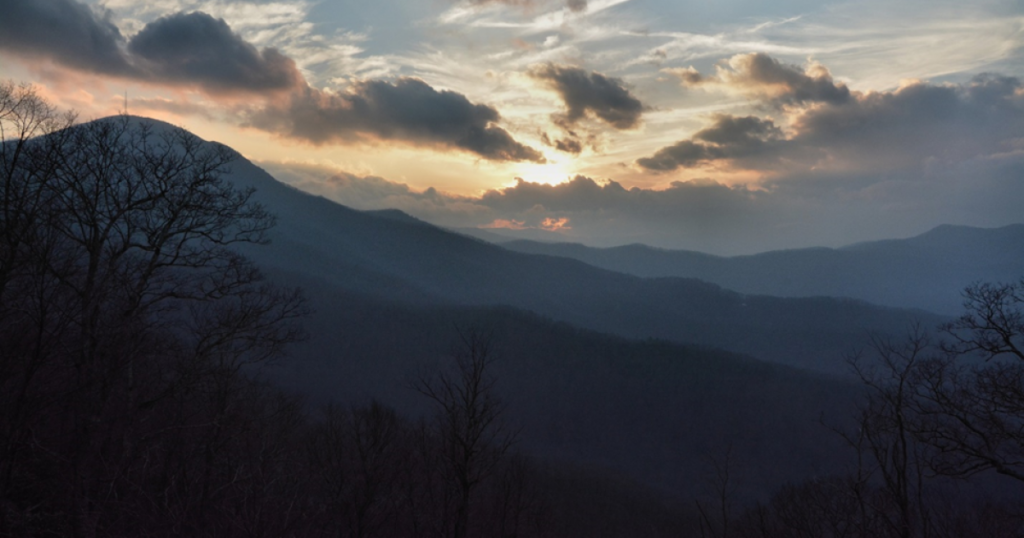
In the coming months, visitors to the Blue Ridge Parkway may notice more than just scenic views. The National Park Service (NPS) has initiated a controversial tree removal operation aimed at reducing fire risks, but not everyone is on board. An online petition with 1,377 signatures urges the NPS to halt the use of aerial spraying and heavy machinery, citing environmental concerns.
The NPS explains that the project, scheduled to start in late summer and conclude by spring 2027, is necessary for reducing hazards posed by drying vegetation. However, the practice of salvage logging—removing and selling downed trees—has raised eyebrows among environmentalists. While some scientists argue that this approach can harm ecosystems if not carefully executed, others contend it may foster tree diversity under the right conditions. The Park Service’s project will impact both their lands and sections of Forest Service territory, recently reopened for similar work.
“Fuel reduction treatments will be followed by targeted native revegetation of storm-impacted landscapes and invasive plant control on NPS-managed lands,” according to the Park Service website.
The undertaking spans 3,000 acres across North Carolina and Virginia. Specific areas include:
- 72 acres between milepost 280 and 300 in Boone
- 77 acres between milepost 310 and 319 in Linville Falls
- 110 acres between milepost 324 and 341 in Little Switzerland
- 208 acres of mechanical and 428 acres of aerial treatments between milepost 374 and 396 in Asheville
Forest ecologist Josh Kelly from MountainTrue, an environmental nonprofit, raised concerns about the project, pointing out that the line between commercial salvage logging and disaster recovery is blurred. “The short story on why so many conservation groups are skeptical of this, or even opposed, is that scientific study after scientific studies show that salvage logging does not reduce wildfire risk,” Kelly stated. He also highlighted that smaller wood and branches, often left behind, are more flammable and that the practice might disrupt the ecosystem by compacting soil and inviting invasive species.
The Southern Environmental Law Center voiced similar apprehensions. In a letter sent in April, the group questioned the NPS’s delayed response and lack of public consultation. “An agency cannot sit on its hands for nearly two years then complain that it doesn’t have time to consult the public or other federal, tribal, and state agencies,” the letter asserted.
Despite attending project open houses, conservation groups like MountainTrue feel communication from the Parkway has been lacking. “Beyond that, there’s been vanishingly little communication,” Kelly remarked, noting the Parkway’s reluctance to engage with environmental organizations.