North Carolina Senate Moves Forward with Election Law Overhaul
In a significant legislative development, the North Carolina Senate has pushed forward a set of bills that could reshape the electoral process in the state. The measures, which were advanced on Tuesday, grant State Auditor Dave Boliek new oversight powers over elections and adjust the process for appealing decisions made by the State Board of Elections.
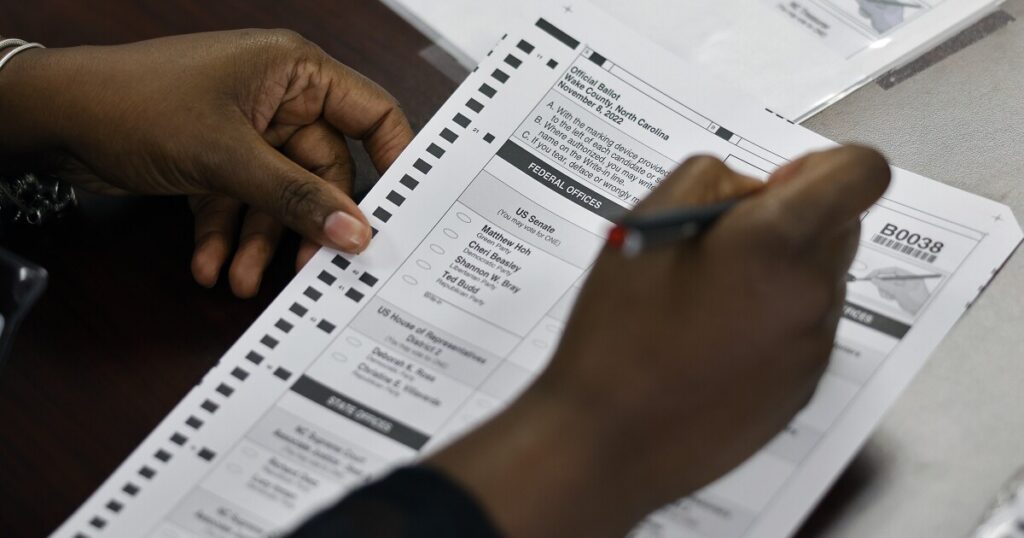
Among the changes in the revised House Bill 958 is a reduction in early voting days for primaries and certain other elections, alongside alterations in campaign finance reporting requirements. Boliek is now tasked with auditing election systems across North Carolina counties at least once every six years—a move that has sparked debate over potential political implications.
These developments follow a shift in control of the State Board of Elections from the Governor’s office to the auditor after the 2024 elections, a transition that has kept Democrats in the Governor’s seat while the Republican Boliek assumed the auditor’s role.
Senator Warren Daniel, a Republican from Burke County, clarified that the new legislation does not permit Boliek to challenge election outcomes, emphasizing a clause in the bill: “No findings in audits under this section shall be used as grounds to challenge the final result of an election.” He further explained that the auditor’s role is to evaluate election procedures, not data.
Disagreement emerged with Senator Mujtaba Mohammed, a Democrat from Mecklenburg County, who expressed concerns about the auditor’s involvement in election audits, suggesting that the State Board of Elections should handle such tasks.
Another key provision of the bill extends the required period of party membership for candidates from 90 to 365 days, unless a waiver is granted by the party’s executive committee. The bill also reduces early voting days for non-general elections from 17 to 10 days, a change advocated by Senate leader Phil Berger following his primary loss.
Senator Daniel justified the reduction by citing the “administrative burden” on election boards during low-turnout elections. However, this drew criticism from Mohammed, who argued for maintaining 17 days of early voting, given the decisive nature of primaries in the state due to gerrymandering.
Mary Potter Surma, a former Republican member of the Mecklenburg County Board of Elections, supported the reduction, noting limited activity during the initial week of early voting outside general elections. Conversely, Democracy NC’s policy director, Brian Kennedy, voiced opposition, highlighting that the shortened period now lags behind Virginia and South Carolina.
“Rather than saying this is not something that we need because of relatively low voter turnout, we should be doing all that we can to encourage voter turnout during every election, whether a primary or a general,” Kennedy said.
The legislation also modifies campaign finance regulations, increasing the reporting threshold for expenses and donor identities from $50 to $100 and raising the limit for immediate reporting of donations near elections from $1,000 to $2,000.
During Senate debates, Democratic lawmakers attempted to introduce various amendments, including making the State Board of Elections independent and revising redistricting rules, but these efforts were defeated along party lines.
The bill was approved by a 28-13 vote, strictly following party affiliations.
Changes to Appeal Process in House Bill 834
In addition to House Bill 958, the Senate also advanced House Bill 834, which adjusts the process for appealing decisions by the State Board of Elections. Under the new bill, individuals can file lawsuits in their home county’s Superior Court as well as in Wake County, a shift from the current requirement that all such cases be filed in Wake County.
Senator Brad Overcash, a Republican from Gaston, emphasized the fairness of allowing voters to appeal in their own counties, highlighting the current disparity that prioritizes Wake County judges over local judges elected by their communities.
The bill also extends the period for correcting voter registration forms from three to five days post-election and mandates that county boards inform voters of curable ballot issues within one business day.
House Bill 834 received unanimous support, passing with a 42-0 vote. Both bills now await approval from the State House before being presented to Governor Josh Stein. The House will reconvene in Raleigh next week.